cool

The definition of cool is slightly chilly, but not cold, or a slang term for popular or in style.

(adjective)

  1. An example of cool is typical New England fall weather.
  2. An example of cool is the latest fashionable pair of jeans.

YourDictionary definition and usage example. Copyright © 2013 by LoveToKnow Corp.

See cool in Webster's New World College Dictionary

adjective

  1. moderately cold; neither warm nor very cold
  2. tending to reduce discomfort in warm or hot weather: cool clothes
    1. not excited; calm; composed: cool in an emergency
    2. ☆ marked by control of the emotions; restrained: cool jazz
    3. Slang emotionally uninvolved; uncommitted; dispassionate
  3. showing dislike or indifference; not cordial: a cool manner
  4. calmly impudent or bold
  5. not suggesting warmth: said of colors in the blue-green end of the spectrum
  6. Informal without exaggeration: he won a cool thousand dollars
  7. Slang very good, pleasing, etc.; excellent

Origin: ME & OE col < IE base *gel-, cold, to freeze > chill, cold, L gelu

adverb

in a cool manner

noun

  1. a cool place, time, thing, part, etc.: the cool of the evening
  2. Slang cool, dispassionate attitude or manner

intransitive verb

to become cool or colder

Origin: ME colien < OE colian, to cool

transitive verb

to make cool or colder

Related Forms:

See cool in American Heritage Dictionary 4

adjective cool·er, cool·est
  1. Neither warm nor very cold; moderately cold: fresh, cool water; a cool autumn evening.
  2. Giving or suggesting relief from heat: a cool breeze; a cool blouse.
  3. Marked by calm self-control: a cool negotiator.
  4. Marked by indifference, disdain, or dislike; unfriendly or unresponsive: a cool greeting; was cool to the idea of higher taxes.
  5. Of, relating to, or characteristic of colors, such as blue and green, that produce the impression of coolness.
  6. Slang
    a. Excellent; first-rate: has a cool sports car; had a cool time at the party.
    b. Acceptable; satisfactory: It's cool if you don't want to talk about it.
  7. Slang Entire; full: worth a cool million.
adverb
Informal In a casual manner; nonchalantly: play it cool.
verb cooled, cool·ing, cools
verb, transitive
  1. To make less warm.
  2. To make less ardent, intense, or zealous: problems that soon cooled my enthusiasm for the project.
  3. Physics To reduce the molecular or kinetic energy of (an object).
verb, intransitive
  1. To become less warm: took a dip to cool off.
  2. To become calmer: needed time for tempers to cool.
noun
  1. A cool place, part, or time: the cool of early morning.
  2. The state or quality of being cool.
  3. Composure; poise: “Our release marked a victory. The nation had kept its cool” (Moorhead Kennedy).

Origin:

Origin: Middle English cole

Origin: , from Old English cōl; see gel- in Indo-European roots

.

Related Forms:

  • coolˈish adjective
  • coolˈly adverb
  • coolˈness noun
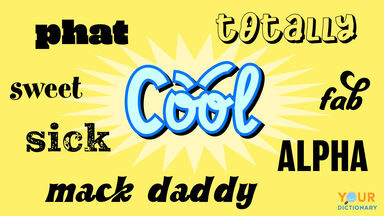
Our Living Language The usage of cool as a general positive epithet or interjection has been part and parcel of English slang since World War II, and has even been borrowed into other languages, such as French and German. Originally this sense is a development from a Black English usage meaning “excellent, superlative,” first recorded in written English in the early 1930s. Jazz musicians who used the term are responsible for its popularization during the 1940s. As a slang word expressing generally positive sentiment, it has stayed current (and cool) far longer than most such words. One of the main characteristics of slang is the continual renewal of its vocabulary and storehouse of expressions: in order for slang to stay slangy, it has to have a feeling of novelty. Slang expressions meaning the same thing as cool, like bully, capital, hot, groovy, hep, crazy, nervous, far-out, rad, and tubular have for the most part not had the staying power or continued universal appeal of cool. In general there is no intrinsic reason why one word stays alive and others get consigned to the scrapheap of linguistic history; slang terms are like fashion designs, constantly changing and never “in” for long. The jury is still out on how long newer expressions of approval such as def and phat will survive.

Learn more about cool

link/cite print suggestion box