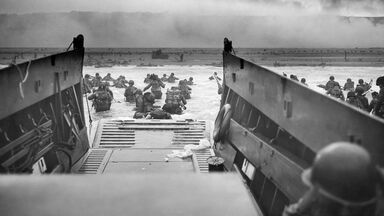
attack
at·tack (ə tak′)
transitive verb
- to use force against in order to harm; start a fight with; strike out at with physical or military force; assault
- to speak or write against, esp. with vigor; criticize, denounce, censure, etc.
- to begin working on energetically; undertake (a problem, task, etc.) vigorously
- to begin acting upon harmfully or destructively the disease attacked him suddenly
Etymology: Fr attaquer < It attaccare < *estaccare < Goth *stakka, stake: see stick
intransitive verb
to make an assault
noun
- the act of attacking
- any hostile offensive action, esp. with armed forces; onslaught
- the onset of a disease, or the recurrence of a chronic disease
- a beginning of any task, undertaking, etc.
- act or manner of such beginning
- Music promptness and precision in beginning a passage or phrase
attack
n.
Offensive tactical action
assault, raid, onslaught, advance, charge, thrust, lunge, offense, drive, strike, aggression, offensive, onset, irruption, outbreak, offensive military operation, push, storming, assailment, broadside, volley, sally, coup de main (French), shooting, barrage, bombardment, fusillade, cannonade, siege, firing, trespass, blockade, boarding, cross-fire, assailing, initiative, invasion, incursion, forced entrance, intrusion, intervention, increased presence, onrush, inroad, encroachment, counterattack. Types of military attack include: commando raid, air strike, air raid, blitzkrieg, charge, sortie, foray, counterforce, siege, bombardment, bomb run, invasion, infiltration, encirclement, wave, pincer movement, strafing, fire mission, firing pass, low-level attack, mast-level attack, kamikaze, suicide attack, atomic thrust, nuclear armored thrust, torpedo attack, mechanized attack, amphibious landing, depth charge, shelling, banzai charge, mortar attack.
Antonyms
withdrawal, retreat*, defense. Verbal attack
libel, slander, denunciation, censure; see blame 1.Illness
Physical assault
attack
v.
To fight offensively; used of an army
assault, strike, invade, storm, advance, beset, besiege, beleaguer, infiltrate, take offensive action, raid, assail, encircle, march against, take the initiative, take the offensive, charge, fire at, shoot at, snipe at, come at, run at, shell, ambush, take by surprise, sally forth, make a push, bombard, bomb, go over the top, fall on, fall upon, burst upon, fire the first shot, fan out, mushroom out, lay siege to, open fire, bear down on, swoop down on, launch an attack, spring on, advance on, turn on, strafe, waylay, aggress, engage, tilt against, set upon, torpedo, stone, fire at, fire on, push, combat, attempt violence to, trespass against, launch an offensive, mount an offensive, begin hostilities against, take up arms against, rush, fusillade, barrage, strike the first blow, counterattack, enfilade, bayonet, saber, stab, pelt, blitz, pounce on, close with*, pepper*, rake*, light into*, sail into*, go for*, have at*, open up on*, let have it*. Antonyms
retreat*, fall back, defend. To assault; used of an individual
assault, assail, combat, knock down, seduce, rape, punch, kick, molest, beat, hit, overwhelm, kidnap, strike, club, stab, knock unconscious, throw oneself on, throw oneself upon, lift a hand against, tackle, fly at, lay into*, tear into*, pitch into*, gang up on*, lower the boom on*, go for the jugular*, mug*, jump*; see also sense 1.Antonyms
retaliate*, resist, fight back. To assail with words
revile, denounce, criticize, blindside*; see censure.To proceed vigorously
take up, deal with, set to work, start in on, undertake, come to grips with, set to, buckle down, tackle, plunge into*, dive into*, wade into*, tear into*.
attack implies vigorous, aggressive action, whether in actual combat or in an undertaking to attack a city, to attack a problem; assail means to attack by or as if by repeated blows or thrusts assailed by reproaches; assault implies a sudden, violent attack or onslaught and suggests direct contact and the use of force; beset implies an attack or onset from all sides beset with fears; storm suggests a rushing, powerful assault that is stormlike in its action and effect; bombard means to attack with artillery or bombs, and in figurative use suggests persistent, repetitious action to bombard a speaker with questions
The various types of attacks on computer systems are many and include the following: passive attacks, which, when using sniffers, can take place by eavesdropping and may not be detected; active attacks, which require some interaction such as altering data and can be detected; remote attacks, which do not occur on-site; a hit-and-run ping of death attack, which crashes a computer; a smurf or persistent attack, which affects the targets machine for a limited amount of timeand then lets it return to normal; a replay attack, which is an active attack whereby the cracker tries to capture message parts and then resend a message sometime later with changes; a brute-force attack, which is a fatiguing attempt to try all combinations until a successful break-in occurs; a man-in-the-middle attack, which involves either eavesdropping on an existing connection or interposing oneself in the middle of a connection and changing data; a hijack attack, which literally hijacks one side of a connection; and rewrite attacks, which change an encrypted message without first decrypting it.
Targeted attacks that have the goal of taking over control of a computer system typically contain five distinct phases. In the reconnaissance phase, the attacker tries to find potential candidates for an attack; he or she gathers information about the infrastructure of a network, the people involved in using and managing the network, and the computers attached to it. The second phase includes a scan of the system or a range of systems for vulnerabilities. In the third phase, the vulnerabilities are exploited, either by gaining access to the system or denying service to it. In the fourth phase, the attacker uses a variety of methods to gain access by installing a back door listener, a RootKit, or a Kernel-level RootKit. The last phase of an attack typically involves the attackers covering his or her tracks so that the administrator of a computer system would find it difficult to detect that the system has been compromised.
See Also: Active Attacks; Back or Trap Door; Cracker; Kernel; Man-in-the-Middle Attack; Passive Attacks; Ping of Death Attack; Replay Attack; RootKit; Smurf; Vulnerabilities of Computers.
Converse of object
- launch: Yes, Clinton launched a cruise missile attack on the mountains of Afghanistan.
- suffer: She said, " Every two minutes someone in the UK will suffer a heart attack, with only half of them surviving.
- mount: It was 13 minutes before Cardiff mounted a serious attack but Jason Koumas ' corner flew across goal without anyone getting the final touch.
- prevent: The state, presumably secure in its own legitimacy, has the duty to prevent attacks on its citizens for any reason.
- survive: He survived the attack and eventually became a successful businessman.
Subject
- mob: Forced to leave country after being attacked by mobs in street July 1993 Unscom prevented from installing monitoring cameras at two missile test stands.
Adjective modifier
- terrorist: I write to comment on the recent terrorist attacks on London.
- racist: In 1991 he led his first successful civil action against the police for a racist attack.
- violent: Poetry must be conceived as a violent attack on unknown forces, to reduce and prostrate them before man.
- vicious: Gwah screwing Drusifer out of his title to Matty D, then some vicious attacks followed from Drusifer.
- unprovoked: But an entirely unprovoked attack by Al-Qaeda on the US.
Modifies a noun
- helicopter: The primary mission of attack helicopter units is to destroy armor and mechanized forces.
Noun used with modifier
- panic: I felt as if all the panic attacks were holding up my progress.
- heart: A person having a heart attack will usually complain of a tight pain in the chest.
- arson: The students will tour shools in West Yorkshire from December 3-14, targeting areas prone to arson attacks.
- bomb: While the number of Americans killed in action per month has declined slightly bomb attacks are now the largest killer of American troops.
- terror: The Birmingham Post - Monday 24th September 2001 Article regarding a student at Aston being questioned in connection with the terror attacks in America.
- asthma: That same year, his father - who had been separated from his mother - died from a massive asthma attack.
Preposition: by
- mob: Forced to leave country after being attacked by mobs in street July 1993 Unscom prevented from installing monitoring cameras at two missile test stands.
It takes a certain brashness to attack the accepted economic legendsbut noneat all toperpetuatethem. So theyare perpetuated.
I always cheer up immensely if an attack is particularly wounding becauseit meansthat they have not a single political argument left.
The Frenchwant to attack, the Americans want to bomb, and the British want to have another meeting.
Was none who would be foremost To lead such dire attack; But those behind cried 'Forward!' 526 And those before cried 'Back!'
'Good-morning; good-morning!'the General said When we met him last weekon our way to the line. Now the soldiers he smiled at are most of 'em dead, And we're cursing his staff for incompetent swine. 'He's a cheery old card,'grunted Harry to Jack As they slogged up to Arras with rifle and pack. But he did for them both by his plan of attack.
Whatever isfunny issubversive, every joke isultimatelya custard pie A dirty joke is not, of course, a serious attack uponmorality, but it is a sort of mental rebellion, a momentary wish that things were otherwise.
Browse dictionary entries near attack
- attachment unit interface
- attachment
- Attached Resource Computer Network
- attachable
- attaché case
- attaché
- attach
- attaboy
- att
- ATSC
- attacked
- attacker
- attagirl
- attain
- attainable
- attainder
- attainment
- attaint
- attainture
- attar