Abstract Definition
ăb-străkt, ăbstrăkt
abstracted, abstracting, abstracts
adjective
Considered apart from concrete existence.
An abstract concept.
American Heritage
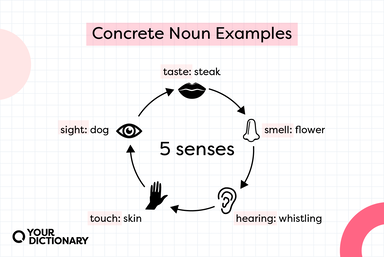
Thought of apart from any particular instances or material objects; not concrete.
Webster's New World
Not applied or practical; theoretical.
American Heritage
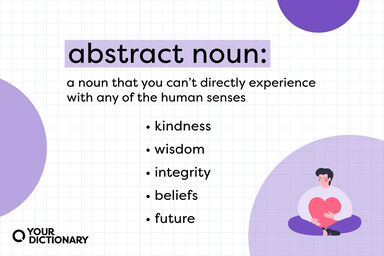
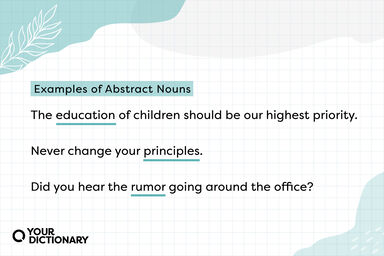
Expressing a quality thought of apart from any particular or material object.
Beauty is an abstract word.
Webster's New World
Difficult to understand; abstruse.
Abstract philosophical problems.
American Heritage
Synonyms:
noun
abstracts
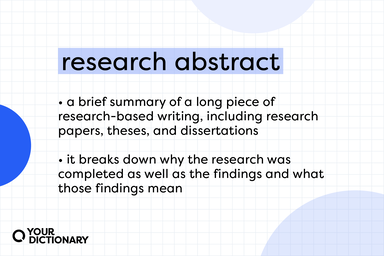
A statement summarizing the important points of a text.
American Heritage
A brief statement of the essential content of a book, article, speech, court record, etc.; summary.
Webster's New World
Something abstract.
American Heritage
An abstract thing, condition, idea, etc.
Webster's New World
An abstract of title.
American Heritage
Synonyms:
Antonyms:
verb
abstracted, abstracting, abstracts
To take away; remove.
Webster's New World
To remove without permission; steal.
A painting that was abstracted from the museum.
American Heritage
To take dishonestly; steal.
Webster's New World
To consider (an idea, for example) as separate from particular examples or objects.
Abstract a principle of arrangement from a series of items.
American Heritage
To think of (a quality) apart from any particular instance or material object that has it; also, to form (a general idea) from particular instances.
Webster's New World
idiom
in the abstract
- In a way that is conceptual or theoretical, as opposed to actual or empirical.
American Heritage
in the abstract
- in theory as apart from practice
Webster's New World
Idioms, Phrasal Verbs Related to Abstract
Origin of Abstract
-
Middle English from Latin abstractus past participle of abstrahere to draw away abs-, ab- away ab–1 trahere to draw
From American Heritage Dictionary of the English Language, 5th Edition
-
From Middle English, from Latin abstractus, perfect passive participle of abstrahō (“draw away”), formed from abs- (“away”) + trahō (“to pull, draw”).
From Wiktionary
-
First attested in 1542. Partly from English abstract (adjective form), and from Latin abstrat past participle of abstrahō (“to draw away”).
From Wiktionary


Find Similar Words
Find similar words to abstract using the buttons below.