condense

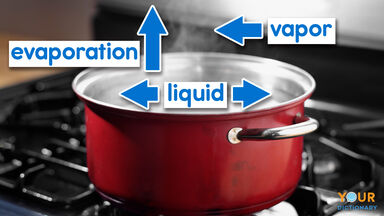
To condense is to make something shorter or more concentrated, or to cause to change from a gas or vapor to a liquid.

(verb)

  1. When you take a paper that is two pages and shorten it to one, this is an example of a time when you condense the paper.
  2. When a cool air temperature makes steam turn to water, this is an example of a time when the air condenses the steam.

YourDictionary definition and usage example. Copyright © 2013 by LoveToKnow Corp.

See condense in Webster's New World College Dictionary

transitive verb condensed, condensing

  1. to make more dense or compact; reduce the volume of; compress
  2. to express in fewer words; make concise; abridge
  3. to change (a substance) to a denser form, as from a gas to a liquid
  4. Chem. to cause molecules of (the same or different substances) to combine to form a more complex compound, often with elimination of a simple molecule, as water

Origin: Fr condenser < L condensare < condensus, very dense < com-, intens. + densus, dense

intransitive verb

to become condensed

Related Forms:

See condense in American Heritage Dictionary 4

verb con·densed, con·dens·ing, con·dens·es
verb, transitive
  1. To reduce the volume or compass of.
  2. To make more concise; abridge or shorten.
  3. Physics
    a. To cause (a gas or vapor) to change to a liquid.
    b. To remove water from (milk, for example).
verb, intransitive
  1. To become more compact.
  2. To undergo condensation.

Origin:

Origin: Middle English condensen

Origin: , from Old French condenser

Origin: , from Latin condēnsāre

Origin: : com-, intensive pref.; see com-

Origin: + dēnsāre, to thicken (from dēnsus, thick)

.

Related Forms:

  • con·densˌa·bilˈi·ty noun
  • con·densˈa·ble, con·densˈi·ble adjective

Learn more about condense

link/cite print suggestion box