part

The definition of a part is a portion or division of something.

(noun)

  1. An example of a part is a slice of pie.
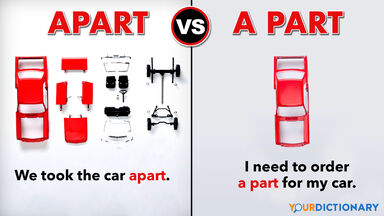
  2. An example of a part is a transmission for a car.

To part is defined as to divide something up or to separate.

(verb)

  1. An example of to part is to slice up a pumpkin pie.
  2. An example of to part is for a couple to break up.

YourDictionary definition and usage example. Copyright © 2013 by LoveToKnow Corp.

See part in Webster's New World College Dictionary

noun

  1. a portion or division of a whole; specif.,
    1. any of several equal portions, quantities, numbers, pieces, etc. of which something is composed or into which it can be divided: a cent is a 100th part of a dollar
    2. an essential element or constituent; integral portion which can be separated, replaced, etc.: automobile parts
    3. a portion detached or cut from a whole; fragment; piece
    4. a certain amount but not all: to lose part of one's fortune
    5. a certain amount or section regarded as a separate division
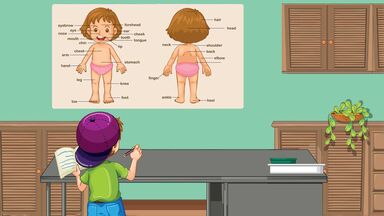
    6. a segment or organ of the body of men and animals
    7. a division of a literary work
    8. Math. an aliquot part
  2. a portion assigned or given; share; specif.,
    1. something a person must do; share of work or duty: to do one's part
    2. interest or concern: to have some part in a matter
    3. talent; ability: a man of parts
    4. a character or role in a theatrical presentation; also, the words, actions, etc. of a character in a play
    5. Music the score for a particular voice or instrument in a concerted piece; also, any of the voices or instruments in a musical ensemble
    1. a region; area
    2. a portion of a country; district
  3. one of the different sides or parties in a transaction, dispute, conflict, etc.
  4. ☆ the dividing line formed by combing the hair in different directions

Origin: ME < OE & OFr, both < L pars (gen. partis) < IE base *per-, to sell, hand over in sale, make equal > L par, equal, parare, to equate

transitive verb

  1. to break or divide into separate parts
  2. to comb (the hair) in different directions so as to leave a dividing line
  3. to break up (a connection or relationship) by separating those involved
  4. to separate (two or more persons or things); break or hold apart
  5. to separate (substances) as by a chemical process
  6. Archaic to distribute; share; apportion
  7. Naut. to break or undergo the breaking of (a hawser, chain, etc.)

Origin: ME parten < OFr partir < L partire, to divide, separate < the n.

intransitive verb

  1. to break or divide into two or more pieces
  2. to separate and go different ways, as branches of a river
  3. to separate; leave each other; cease associating
    1. to go away; leave; depart: with from
    2. to die

adjective

of or having to do with only a part; partial

adverb

partly; in part

  1. participial
  2. participle
  3. particular

See part in American Heritage Dictionary 4

noun
  1. A portion, division, piece, or segment of a whole.
  2. Any of several equal portions or fractions that can constitute a whole or into which a whole can be divided: a mixture of two parts flour to one part sugar.
  3. A division of a literary work: a novel in three parts.
  4. (used with a pl. v.)
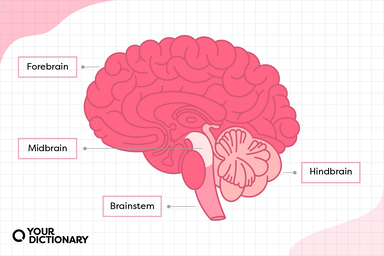
    a. An organ, member, or other division of an organism: A tail is not a part of a guinea pig.
    b. parts The external genitals.
  5. A component that can be separated from or attached to a system; a detachable piece: spare parts for cars.
  6. A role: He has the main part in the play.
  7. One's responsibility, duty, or obligation; share: We each do our part to keep the house clean.
  8. Individual endowment or ability; talent. Often used in the plural.
  9. A region, area, land, or territory. Often used in the plural: “Minding your own business is second nature in these parts” (Boston).
  10. The line where the hair on the head is parted.
  11. Music
    a. The music or score for a particular instrument, as in an orchestra.
    b. One of the melodic divisions or voices of a contrapuntal composition.
verb part·ed, part·ing, parts
verb, transitive
  1. To divide or break into separate parts.
  2. To break up (a relationship) by separating the elements involved: parted company.
  3. To put or keep apart: No one could part the two friends.
  4. To comb (hair, for example) away from a dividing line, as on the scalp.
  5. Archaic To divide into shares or portions.
verb, intransitive
  1. To become divided or separated: The curtain parted in the middle.
  2. To go apart from one another; separate: They parted as friends. They were forced to part from one another. See Synonyms at separate.
  3. To separate or divide into ways going in different directions: The road parts about halfway into the forest.
  4. To go away; depart.
  5. To disagree by factions: The committee parted over the issue of pay raises for employees.
  6. Archaic To die.
adverb
Partially; in part: part yellow, part green.
adjective
Not full or complete; partial: a part owner of the business.
Phrasal Verb: part with To give up or let go of; relinquish.

Origin:

Origin: Middle English

Origin: , from Old French

Origin: , from Latin pars, part-; see perə-2 in Indo-European roots

.

abbreviation
  1. participle
  2. particle
  3. partitive

Learn more about part

part

link/cite print suggestion box