Fraction Definition
frăkshən
fractions
noun
fractions
A breaking or dividing, specif., of the Host in the Mass.
Webster's New World
A disconnected piece; a fragment.
American Heritage Medicine
A small part broken off; fragment; scrap.
Webster's New World
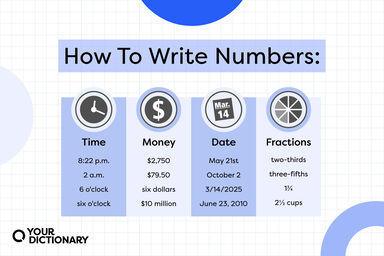
A number expressed as a quotient of two whole numbers, as134 or25: all fractions are rational numbers.
Webster's New World
A small part, amount, degree, etc.; portion.
Webster's New World
Synonyms:
Other Word Forms of Fraction
Noun
Singular:
fractionPlural:
fractionsOrigin of Fraction
-
From Middle English fraccioun (“a breaking”), from Anglo-Norman, from Old French, from Medieval Latin fractio (“a fragment, portion”), from earlier Latin fractio (“a breaking, a breaking into pieces”), from fractus (English fracture), past participle of frangere (“to break”) (whence English frangible), from Proto-Indo-European *bʰrag- (English break).
From Wiktionary
-
Middle English fraccioun a breaking from Anglo-Norman from Late Latin frāctiō frāctiōn- from Latin frāctus past participle of frangere to break bhreg- in Indo-European roots
From American Heritage Dictionary of the English Language, 5th Edition



Find Similar Words
Find similar words to fraction using the buttons below.