for

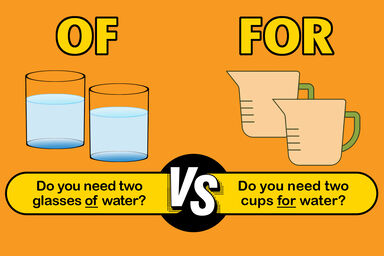
For is defined as the purpose, destination, recipient or amount of something.

(preposition)

  1. An example of for is a spatula being used to flip eggs.
  2. An example of for is someone taking their car to visit a friend.
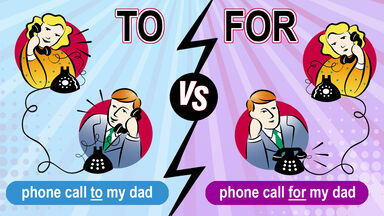
  3. An example of for is someone giving their father a gift.
  4. An example of for is spending $25 on a pair of pants.

YourDictionary definition and usage example. Copyright © 2013 by LoveToKnow Corp.

See for in Webster's New World College Dictionary

  1. in place of; instead of: to use blankets for coats
  2. as the representative of; in the interest of: acting for another
  3. in defense of; in favor of: fight for our cause; vote for the levy
  4. in honor of: to give a banquet for someone
  5. with the aim or for the purpose of: to carry a gun for protection
  6. for the purpose of going to: he left for home
  7. in order to be, become, get, have, keep, etc.: to walk for exercise, to fight for one's life
  8. in search of: to look for a lost article
  9. meant to be received by (a specified person or thing), or to be used in (a specified way): flowers for Mother, money for paying bills
  10. suitable to; appropriate to: a room for sleeping
  11. with regard to; as regards; concerning: a need for improvement, an ear for music, a desire for power
  12. as being: I know it for a fact
  13. considering the general nature of: cool for July, clever for a child
  14. because of; as a result of: to cry for pain
  15. in proportion to; corresponding to: two dollars spent for every dollar earned
  16. to the amount of; equal to [a bill for $50]: when preceded and followed by the same noun, for indicates equality between things being compared or contrasted (dollar for dollar)
    1. at the price or by the payment of: sold for $20,000
    2. in exchange with respect to: our thanks for your help
  17. to the length, duration, or extent of; throughout; through: to walk for an hour
  18. at (a specified time): an appointment for two o'clock
  19. Obsolete before

Origin: ME < OE, akin to Ger für & Du ver- < IE base *per- > L per-, pro-, prae-, Gr pro, Sans pári

conjunction

because; seeing that; since: more formal than because and used to introduce evidence or explanation for an immediately preceding statement: comfort him, for he is sad

  1. foreign
  2. forestry

  1. away, apart, off: forbid, forget, forgo
  2. very much, intensely: forlorn

Origin: ME < OE, replacing fer-, fær- (akin to Ger ver- < IE base *per-, as in for) & < OFr for- (as in forfeit) < L foris, beyond, from without

See for in American Heritage Dictionary 4

preposition
  1. a. Used to indicate the object, aim, or purpose of an action or activity: trained for the ministry; put the house up for sale; plans to run for senator.
    b. Used to indicate a destination: headed off for town.
  2. Used to indicate the object of a desire, intention, or perception: had a nose for news; eager for success.
  3. a. Used to indicate the recipient or beneficiary of an action: prepared lunch for us.
    b. On behalf of: spoke for all the members.
    c. In favor of: Were they for or against the proposal?
    d. In place of: a substitute for eggs.
  4. a. Used to indicate equivalence or equality: paid ten dollars for a ticket; repeated the conversation word for word.
    b. Used to indicate correlation or correspondence: took two steps back for every step forward.
  5. a. Used to indicate amount, extent, or duration: a bill for five dollars; walked for miles; stood in line for an hour.
    b. Used to indicate a specific time: had an appointment for two o'clock.
    c. Used to indicate a number of attempts: shot three for four from the foul line.
  6. a. As being: take for granted; mistook me for the librarian.
    b. Used to indicate an actual or implied listing or choosing: For one thing, we can't afford it.
  7. As a result of; because of: jumped for joy.
  8. Used to indicate appropriateness or suitability: It will be for the judge to decide.
  9. Notwithstanding; despite: For all the problems, it was a valuable experience.
  10. a. As regards; concerning: a stickler for neatness.
    b. Considering the nature or usual character of: was spry for his advanced age.
    c. In honor of: named for her grandmother.
conjunction
Because; since.

Origin:

Origin: Middle English

Origin: , from Old English; see per1 in Indo-European roots

.

abbreviation
free on rail

prefix
Completely; excessively, especially with destructive or detrimental effect: forworn.

Origin:

Origin: Middle English

Origin: , from Old English; see per1 in Indo-European roots

.

Learn more about for

link/cite print suggestion box