will

Will is the act of strongly desiring something to happen, trying to make something happen by hoping, or describing something you intend to happen in the future.

(verb)

  1. An example of will is when you hope very hard that your medical exam won't show anything bad.
  2. An example of will is when you try to encourage yourself to exercise.
  3. An example of will is when you say something is going to occur in the future.

Will is your ability to make decisions or restraining yourself from doing something or something that a person desires or wants.

(noun)

  1. An example of will is your ability to quit your job whenever you want or to quit of your own choosing.
  2. An example of will is when you want to eat cookies but you exercise restraint and make yourself eat carrots instead.
  3. An example of will is when a hurricane happens and people say it was God's plan.

YourDictionary definition and usage example. Copyright © 2013 by LoveToKnow Corp.

See will in Webster's New World College Dictionary

noun

  1. the power of making a reasoned choice or decision or of controlling one's own actions: a man of weak will
    1. strong and fixed purpose; determination: where there's a will there's a way
    2. energy and enthusiasm: to work with a will
  2. disposition or attitude toward others: a man of good will
    1. the particular desire, purpose, pleasure, choice, etc. of a certain person or group: what is your will?
    2. a compelling command or decree: the will of the people
  3. Law
    1. the legal statement of a person's wishes concerning the disposal of his or her property after death
    2. the document containing this

Origin: ME wille < OE willa, akin to Ger wille, willen < IE base *wel-, to wish, choose > L velle, to wish, voluptas, pleasure

transitive verb

  1. to have as the object of one's will; desire; want: to will another's happiness, to will to survive
  2. to control or influence by the power of the will: to will oneself into an action, to will others into submission
  3. Law to bequeath by a will

Origin: ME willien < OE willian < willan, to desire: see will

intransitive verb

  1. to exert one's will: to succeed by willing
  2. to wish, desire, prefer, or choose: to do as one wills

auxiliary verb would

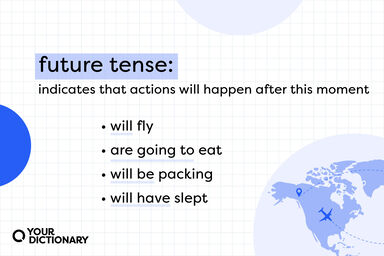
  1. used to indicate simple future time: when will she be able to travel? I will bring the dessert
  2. used to express determination, compulsion, or obligation: you will listen to me, he will have his own way, I will have you know that I was here first
  3. used to express inclination or inevitability: boys will be boys
  4. used in polite questions: will you have some wine?
  5. used to express habit or customary practice: they will talk for hours on end
  6. used to express expectation or surmise: that will be his wife with him, I suppose
  7. used to express possibility: this drawer won't open

Origin: ME willen < OE willan, to be willing, desire, akin to Ger wollen, will: for IE base see will

transitive verb

Obsolete to wish; desire: what will you, Master?

See will in American Heritage Dictionary 4

noun
  1. a. The mental faculty by which one deliberately chooses or decides upon a course of action: championed freedom of will against a doctrine of predetermination.
    b. The act of exercising the will.
  2. a. Diligent purposefulness; determination: an athlete with the will to win.
    b. Self-control; self-discipline: lacked the will to overcome the addiction.
  3. A desire, purpose, or determination, especially of one in authority: It is the sovereign's will that the prisoner be spared.
  4. Deliberate intention or wish: Let it be known that I took this course of action against my will.
  5. Free discretion; inclination or pleasure: wandered about, guided only by will.
  6. Bearing or attitude toward others; disposition: full of good will.
  7. a. A legal declaration of how a person wishes his or her possessions to be disposed of after death.
    b. A legally executed document containing this declaration.
verb willed, will·ing, wills
verb, transitive
  1. To decide on; choose.
  2. To yearn for; desire: “She makes you will your own destruction” (George Bernard Shaw).
  3. To decree, dictate, or order.
  4. To resolve with a forceful will; determine.
  5. To induce or try to induce by sheer force of will: We willed the sun to come out.
  6. To grant in a legal will; bequeath.
verb, intransitive
  1. To exercise the will.
  2. To make a choice; choose.

Origin:

Origin: Middle English

Origin: , from Old English willa; see wel-1 in Indo-European roots

.

aux.v. Past tense would would (wo͝od)
  1. Used to indicate simple futurity: They will appear later.
  2. Used to indicate likelihood or certainty: You will regret this.
  3. Used to indicate willingness: Will you help me with this package?
  4. Used to indicate requirement or command: You will report to me afterward.
  5. Used to indicate intention: I will too if I feel like it.
  6. Used to indicate customary or habitual action: People will talk.
  7. Used to indicate capacity or ability: This metal will not crack under heavy pressure.
  8. Used to indicate probability or expectation: That will be the messenger ringing.
tr. & intr.v.
To wish; desire: Do what you will. Sit here if you will. See Usage Note at shall.

Origin:

Origin: Middle English willen, to intend to

Origin: , from Old English willan; see wel-1 in Indo-European roots

.

See will in Ologies

Will

heteronomy

the condition of being under the moral control of something or someone external; inability to be self-willing. —heteronymous, adj.

velleity

a very weak or slight impulse of the will; a mere fancy that does not lead to action.

Learn more about will

link/cite print suggestion box