water

Water is a liquid found on Earth which is known as H20 that has no odor or taste.

Facts About Water

  • Seventy percent of the earth is made up of water.
  • Ninety-seven percent of the earth’s water is in oceans and seas while two percent is found on the icecaps.
  • Huge bodies of water can absorb and store large amounts of heat coming from the sun especially during daytime and the summer season.
  • Seventy-five percent of the human body is made up of water and 90 percent of human blood is water.
(noun)

An example of water is what comes out of the kitchen sink faucet.

Water is defined as to wet something with H20.

(verb)

An example of water is to provide plants with hydration.

YourDictionary definition and usage example. Copyright © 2013 by LoveToKnow Corp.

See water in Webster's New World College Dictionary

noun

  1. the colorless, transparent liquid occurring on earth as rivers, lakes, oceans, etc., and falling from the clouds as rain: chemically a compound of hydrogen and oxygen, HO, it freezes, forming ice, at 0°C (32°F) and boils, forming steam, at 100°C (212°F)
  2. water in a specified form or amount, or occurring or distributed in a specified way, or for a specified use, as drinking or washing
    1. a large body of water, as a river, lake, or sea
    2. the part of the sea contiguous with a specified country, land mass, etc. or the parts away from this: international waters
    3. any area in a body of water: the noisy waters at the rapids
    4. the liquid substance of a body of water: the pond's still waters
  3. water with reference to
    1. its depth: ten feet of water at the dam
    2. its displacement: a boat that draws six feet of water
    3. its surface: above water, under water
    4. its level in a sea, river, etc.: high water, low water
  4. the water of mineral springs: to take the waters at Saratoga
  5. any body fluid or secretion, as urine, saliva, tears, or gastric and pancreatic juices; specif.,
    1. the fluid surrounding the fetus in pregnancy; amniotic fluid
    2. a watery fluid retained abnormally: water on the knee
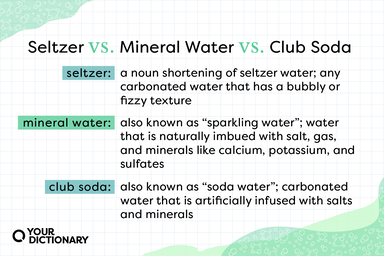
  6. a solution of any substance in water: mineral water, ammonia water
    1. the degree of transparency and luster of a precious stone as a measure of its quality: a diamond of the first water
    2. degree of quality or conformity to type: an artist of the first or purest water
  7. a wavy, lustrous finish given to linen, silk, rayon, etc., or to a metal surface
  8. a watercolor painting
  9. Finance
    1. a valuation wrongfully given to the assets of a business in excess of their real value
    2. an issue of capital stock which brings the face value of all the stock issued by a business to a figure higher than the actual value of its assets: now prohibited by SEC regulations

Origin: ME < OE wæter, akin to Ger wasser < IE *wodōr < *wed-, to wet (< base *awed-, to moisten, flow) > Gr hydōr, water, L unda, a wave, Russ voda, water, Ir uisce, water

transitive verb

  1. to supply with water; specif.,
    1. to give (animals) water to drink
    2. to give water to (soil, crops, etc.) by sprinkling, pouring, or irrigating
    3. to bring water to (land): said of a river, canal, etc.
    4. to put water on by sprinkling, hosing, etc.; soak or moisten with water: often with down
    5. to add water to so as to weaken; dilute: to water the milk
  2. to give a wavy luster to the surface of (silk, etc.)
  3. Finance to issue (stock) so as to add illegally to the total face value without increasing assets to justify this valuation

Origin: ME wateren < OE wæterian < the n.

intransitive verb

  1. to fill with tears: said of the eyes
  2. to secrete or fill with saliva: his mouth watered at the sight of the roast
  3. to take on a supply of water
  4. to drink water: said of animals

adjective

  1. of or having to do with water
  2. in or on water: water sports
  3. growing in or living on or near water: water plants, water birds
    1. operated by water: a water wheel
    2. derived from running water: water power
  4. containing water or fluid: a water blister
  5. prepared with water, as for thinning or hardening

See water in American Heritage Dictionary 4

noun
  1. A clear, colorless, odorless, and tasteless liquid, H2O, essential for most plant and animal life and the most widely used of all solvents. Freezing point 0°C (32°F); boiling point 100°C (212°F); specific gravity (4°C) 1.0000; weight per gallon (15°C) 8.338 pounds (3.782 kilograms).
  2. a. Any of various forms of water: waste water.
    b. Naturally occurring mineral water, as at a spa. Often used in the plural.
  3. a. A body of water such as a sea, lake, river, or stream.
    b. waters A particular stretch of sea or ocean, especially that of a state or country: escorted out of British waters.
  4. a. A supply of water: had to turn off the water while repairing the broken drain.
    b. A water supply system.
  5. a. Any of the fluids normally secreted from the body, such as urine, perspiration, tears, or saliva.
    b. A fluid present in a body part in abnormal quantities as a result of injury or disease: water on the knee.
    c. The fluid surrounding a fetus in the uterus; amniotic fluid.
  6. An aqueous solution of a substance, especially a gas: ammonia water.
  7. A wavy finish or sheen, as of a fabric or metal.
  8. a. The valuation of the assets of a business firm beyond their real value.
    b. Stock issued in excess of paid-in capital.
  9. a. The transparency and luster of a gem.
    b. A level of excellence.
verb wa·tered, wa·ter·ing, wa·ters
verb, transitive
  1. To pour or sprinkle water on; make wet: watered the garden.
  2. a. To give drinking water to.
    b. To lead (an animal) to drinking water.
  3. To dilute or weaken by adding water: a bar serving whiskey that had been watered.
  4. To give a sheen to the surface of (silk, linen, or metal).
  5. To increase (the number of shares of stock) without increasing the value of the assets represented.
  6. To irrigate (land).
verb, intransitive
  1. To produce or discharge fluid, as from the eyes.
  2. To salivate in anticipation of food: The wonderful aroma from the kitchen makes my mouth water.
  3. To take on a supply of water, as a ship.
  4. To drink water, as an animal.
Phrasal Verb: water down To reduce the strength or effectiveness of: “It seemed clear by late autumn that the ban would be significantly watered down or removed altogether before the trade bill became law” (George R. Packard).

Origin:

Origin: Middle English

Origin: , from Old English wǽter; see wed-1 in Indo-European roots

.

Related Forms:

  • waˈter·er noun
Word History: Water is wet, even etymologically. The Indo-European root of water is *wed-, “wet.” This root could appear in several guises—with the vowel e, as here, or as *wod-, or with no vowel between the w and d, yielding *ud-. All three forms of the root appear in English either in native or in borrowed words. From a form with a long e, *wēd-, which by Grimm's Law became *wēt- in Germanic, we have Old English wǣt, “wet,” which became modern English wet. The form *wod-, in a suffixed form *wod-ōr, became *watar in Germanic and eventually water in modern English. From the form *ud- the Greeks got their word for water, hud-ōr, the source of our prefix hydro- and related words like hydrant. The suffixes *-rā and *-ros added to the form *ud- yielded the Greek word hudrā, “water snake” (borrowed into English as hydra), and the Germanic word *otraz, the source of our word otter, the water animal.

See water in Ologies

Water

See also bathing; dampness; lakes; rain; rivers; sea; snow.

antlophobia

an abnormal fear of floods.

aquiculture

hydroponics. —aquicultural, adj.

atmology

the science dealing with the behavior of water vapor. —atmologist, n.atmologic, atmological, adj.

balneotherapy

the treatment of illness or disease by bathing.

bletonism

the skill or talent of water divining.

dehydration

1. the process of dehydrating or removing the water from a substance.

2. the state of being dehydrated.

deliquescence

the property of a substance to attract and absorb moisture, especially from the air. Cf. efflorescence. —deliquescent, adj.

dowsing

a form of divination involving a rod or wand, especially the art of finding underground supplies of water, ores, etc. Also called rhabdomancy.

efflorescence

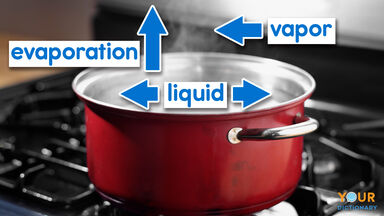
the property of a substance to yield up water through evaporation. Cf. deliquescence. See also processes. —efflorescent, adj.

fluviology

the science of watercourses, especially rivers. —fluviologist, n.

hydragogy

Obsolete. the moving of water by an artificval channel.

hydriatrics

hydropathy.

hydrodipsomania

an abnormal love of drinking water.

hydrography

1. the study, description, and mapping of oceans, lakes, and rivers, especially with reference to their use for navigational purposes.

2. those parts of the map, collectively, that represent surface waters. —hydrographer, n.hydrographic, hydrographical, adj.

hydrology

the science that studies the occurrence, circulation, distribution, and properties of the waters of the earth and its atmosphere. —hydrologist, n.hydrologie, hydrological, adj.

hydromancy

a form of divination involving observations of water or of other liquids.

hydromania

an excessive love of water.

hydropathy

the “water cure,” first developed in Germany in 1825. Also called hydriatrics. —hydropathist, n.hydropathic, adj.

hydrophily

Botany. the capacity of a plant to be pollinated through the agency of water. —hydrophilous, adj.

hydrophobia

an abnormal fear of water.

hydroscope

a device for viewing things below the surface of a body of water.

hydrotherapy

the treatment of disorders by the use of water externally, especially in the form of exercises in a pool, etc. —hydrotherapist, n.hydrotherapeutic, adj.

hydrotropism

growth or movement in response to water as a stimulus. —hydrotropic, adj.

hygrology

the branch of physics that studies atmospheric humidity.

hygrophobia

1. hydrophobia

2. an abnormal fear of water.

lecanomancy

a form of divination involving the examination of water in a basin.

lecanoscopy

a form of self-hypnotism involving staring at water in a basin.

limnology

the scientific study of bodies of fresh water, as lakes or rivers, with reference to their physical, geographical, and biological features. —limnologist, n.limnologic, limnological, adj.

orohydrography

the branch of hydrography that studies the drainage phenomena of mountains. —orohydrographic, adj.

rheotaxis

the tendency of some plants to respond to a current of water by growing with it (positive rheotaxis) or against it (negative rheotaxis).

rheotropism

the tendency of certain living things to move in response to the mechanical stimulus of a current of water.

sympesiometer, sympiezometer

an instrument for measuring the pressure exerted by currents of water. See also instruments.

turbidimeter

an instrument for measuring the turbidity of water or other fluids. —turbidimetric, adj.

turbidimetry

the measurement of the turbidity of water or other fluids, as with a turbidimeter. —turbidimetric, adj.

Learn more about water

Related Articles

water

link/cite print suggestion box