sense

A sense is defined as a way that the body perceives external stimuli, or is an awareness or feeling about something.

(noun)

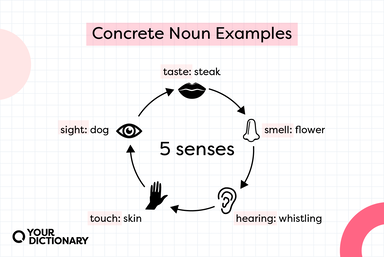
  1. Tasting, touching, seeing and hearing are all examples of a sense.
  2. If you have a feeling that danger is lurking, this is an example of a sense of danger.

The definition of sense is to perceive, or be aware of something.

(verb)

If you believe that someone is angry even if they haven't said so, this is an example of when you can sense their anger.

YourDictionary definition and usage example. Copyright © 2013 by LoveToKnow Corp.

See sense in Webster's New World College Dictionary

noun

  1. the ability of the nerves and the brain to receive and react to stimuli, as light, sound, impact, constriction, etc.; specif., any of five faculties of receiving impressions through specific bodily organs and the nerves associated with them (sight, touch, taste, smell, and hearing)
  2. the senses considered as a total function of the bodily organism, as distinguished from intellect, movement, etc.
    1. feeling, impression, or perception through the senses: a sense of warmth, pain, etc.
    2. a generalized feeling, awareness, or realization: a sense of longing
  3. an ability to judge, discriminate, or estimate external conditions, sounds, etc.: a sense of direction, pitch, etc.
  4. an ability to feel, appreciate, or understand some quality: a sense of humor, honor, etc.
    1. the ability to think or reason soundly; normal intelligence and judgment, often as reflected in behavior
    2. soundness of judgment or reasoning: some sense in what he says
    3. something wise, sound, or reasonable: to talk sense
    4. normal ability to reason soundly: to come to one's senses
    1. meaning; esp., any of several meanings conveyed by or attributed to the same word or phrase
    2. essential signification; gist: to grasp the sense of a remark
  5. the general opinion, sentiment, or attitude of a group
  6. Math. either of two contrary directions that may be specified, as clockwise or counterclockwise for the circumference of a circle, positive or negative for a line segment, etc.

Origin: Fr sens < L sensus < sentire, to feel, perceive: see send

transitive verb sensed, sensing

  1. to be or become aware of: to sense another's hostility
  2. to comprehend; understand
  3. to detect automatically, as by sensors

See sense in American Heritage Dictionary 4

noun
  1. a. Any of the faculties by which stimuli from outside or inside the body are received and felt, as the faculties of hearing, sight, smell, touch, taste, and equilibrium.
    b. A perception or feeling produced by a stimulus; sensation: a sense of fatigue and hunger.
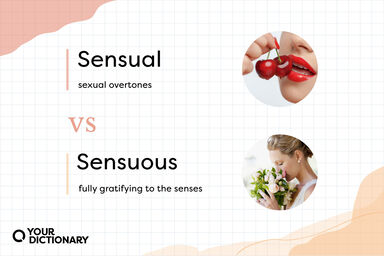
  2. senses The faculties of sensation as means of providing physical gratification and pleasure.
  3. a. An intuitive or acquired perception or ability to estimate: a sense of diplomatic timing.
    b. A capacity to appreciate or understand: a keen sense of humor.
    c. A vague feeling or presentiment: a sense of impending doom.
    d. Recognition or perception either through the senses or through the intellect; consciousness: has no sense of shame.
  4. a. Natural understanding or intelligence, especially in practical matters: The boy had sense and knew just what to do when he got lost.
    b. The normal ability to think or reason soundly. Often used in the plural: Have you taken leave of your senses?
    c. Something sound or reasonable: There's no sense in waiting three hours.
  5. a. A meaning that is conveyed, as in speech or writing; signification: The sense of the novel is the inevitability of human tragedy.
    b. One of the meanings of a word or phrase: The word set has many senses. See Synonyms at meaning.
  6. a. Judgment; consensus: sounding out the sense of the electorate on capital punishment.
    b. Intellectual interpretation, as of the significance of an event or the conclusions reached by a group: I came away from the meeting with the sense that we had resolved all outstanding issues.
transitive verb sensed sensed, sens·ing, sens·es
  1. To become aware of; perceive.
  2. To grasp; understand.
  3. To detect automatically: sense radioactivity.
adjective
Genetics Of or relating to the portion of the strand of double-stranded DNA that serves as a template for and is transcribed into RNA.

Origin:

Origin: Middle English, meaning

Origin: , from Old French sens

Origin: , from Latin sēnsus, the faculty of perceiving

Origin: , from past participle of sentīre, to feel; see sent- in Indo-European roots

.

Learn more about sense

link/cite print suggestion box