fly

Fly means to move through the air, often with wings.

(verb)

An example of fly is for a plane to soar through the sky.

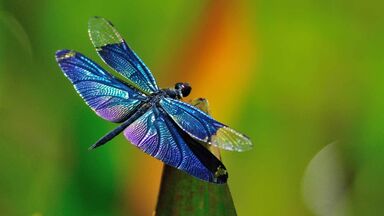
The definition of a fly is an insect that soars through the air and has transparent wings.

(noun)

An example of fly is a bug that gathers around old food.

A fly is defined as a flap of cloth in a garment that hides the closure like a zipper or buttons.

(noun)

An example of a fly is the flap in the front of jeans that covers the zipper.

YourDictionary definition and usage example. Copyright © 2013 by LoveToKnow Corp.

See fly in Webster's New World College Dictionary

intransitive verb flew, flown, flying

  1. to move through the air; specif.,
    1. to move through the air by using wings, as a bird does
    2. to travel through the air in an aircraft or through space in a spacecraft
    3. to be propelled through the air
  2. to operate an aircraft or spacecraft
  3. to wave or float in the air, as a flag or kite does
  4. to move swiftly: the door flew open
  5. to appear to pass swiftly: time flies
  6. to be used up swiftly: said of money, etc.
  7. to run away; flee
  8. Informal to be successful, acceptable, etc.: that explanation just won't fly
  9. to hunt with a hawk
  10. Baseball to hit a fly

Origin: ME flien, flegen < OE fleogan, akin to MDu vlegen, Ger fliegen < IE *pleuk- < base *pleu-: see flow

transitive verb

    1. to cause to float in the air: fly a kite
    2. to display (a flag) as from a pole
  1. to operate (an aircraft or spacecraft)
    1. to travel over in an aircraft
    2. to travel via (a particular airline, aircraft, etc.)
  2. to carry or transport in an aircraft
  3. to run away from; flee from; avoid
  4. to use (a hawk) to hunt game
  5. Theater to suspend (flats, lights, etc.) in the space above the stage

noun pl. flies

  1. Rare the act of flying; flight
    1. a garment closure concealing the zipper, buttons, etc. by a fold or flap of cloth, esp. such a closure in the front of a pair of trousers
      in full fly front
    2. such a fold or flap
    1. a flap serving as the door of a tent
    2. a piece of fabric serving as an outer or second top on a tent
    1. the length of an extended flag measured from the staff outward
    2. the outside edge of a flag
  2. a regulating device, as for a clockwork mechanism, consisting of vanes radiating from a rotating shaft
    1. flywheel
    2. flyleaf
  3. Brit. a hackney carriage
  4. Baseball a ball batted high in the air, esp. within the foul lines
  5. Football a pass pattern in which the receiver runs straight up the field at full speed
  6. Theater the space behind and above the proscenium arch, containing overhead lights, raised flats, etc.

noun pl. flies

    1. any dipterous insect; esp., the housefly
    2. any of several four-winged insects from various orders, as the mayfly or caddis fly
  1. a hook covered with feathers, colored silk, etc. to resemble an insect, used as a lure in fishing: a wet fly drifts below the surface of the water, and a dry fly floats on it
  2. Printing a device on a flatbed press for removing and stacking the printed sheets

Origin: ME flie < OE fleoge (akin to Ger fliege) < base fleogan: see fly

adjective flier, fliest

  1. Chiefly Brit., Slang alert and knowing; sharp; quick
  2. Slang fashionable, stylish, attractive, etc.

Origin: orig., thieves' slang < ? fly

river in S New Guinea, flowing through Papua New Guinea into the Coral Sea: c. 650 mi (1,046 km)

See fly in American Heritage Dictionary 4

verb flew flew (flo͞o), flown flown (flōn), fly·ing, flies flies (flīz)
verb, intransitive
  1. To engage in flight, especially:
    a. To move through the air by means of wings or winglike parts.
    b. To travel by air: We flew to Dallas.
    c. To operate an aircraft or spacecraft.
  2. a. To rise in or be carried through the air by the wind: a kite flying above the playground.
    b. To float or flap in the air: pennants flying from the masthead.
  3. To move or be sent through the air with great speed: bullets flying in every direction; a plate that flew from my hands when I stumbled.
  4. a. To move with great speed; rush or dart: The children flew down the hall. Rumors were flying during their absence.
    b. To flee; escape.
    c. To hasten; spring: flew to her students' defense.
  5. To pass by swiftly: a vacation flying by; youth that is soon flown.
  6. To be dissipated; vanish: Their small inheritance was quickly flown.
  7. past tense and past participle flied flied (flīd) Baseball To hit a fly ball.
  8. To undergo an explosive reaction; burst: The dropped plate flew into pieces. The motorist flew into a rage.
  9. Informal To gain acceptance or approval; go over: “However sophisticated the reasoning, this particular notion may not fly” (New York Times).
verb, transitive
  1. a. To cause to fly or float in the air: fly a kite; fly a flag.
    b. Nautical To operate under (a particular flag): a tanker that flies the Liberian flag.
  2. a. To pilot (an aircraft or a spacecraft).
    b. To carry or transport in an aircraft or a spacecraft: fly emergency supplies to a stricken area.
    c. To pass over or through in flight: flew the coastal route in record time.
    d. To perform in a spacecraft or an aircraft: flew six missions into space.
  3. a. To flee or run from: fly a place in panic.
    b. To avoid; shun: fly temptation.
noun pl. flies flies
  1. The act of flying; flight.
  2. a. A fold of cloth that covers a fastening of a garment, especially one on the front of trousers.
    b. The fastening or opening covered by such a fold.
  3. A flap that covers an entrance or forms a rooflike extension for a tent or the canopy of a vehicle.
  4. A flyleaf.
  5. Baseball A fly ball.
  6. a. The span of a flag from the staff to the outer edge.
    b. The outer edge of a flag.
  7. A flywheel.
  8. flies The area directly over the stage of a theater, containing overhead lights, drop curtains, and equipment for raising and lowering sets.
  9. Chiefly British A one-horse carriage, especially one for hire.
Phrasal Verb: fly at To attack fiercely; assault: The dogs flew at each other's throats.

Origin:

Origin: Middle English flien

Origin: , from Old English flēogan; see pleu- in Indo-European roots

.

Related Forms:

  • flyˈa·ble adjective

noun pl. flies flies
  1. a. Any of numerous two-winged insects of the order Diptera, especially any of the family Muscidae, which includes the housefly.
    b. Any of various other flying insects, such as the caddis fly.
  2. A fishing lure simulating a fly, made by attaching materials such as feathers, tinsel, and colored thread to a fishhook.

Origin:

Origin: Middle English flie

Origin: , from Old English flēoge; see pleu- in Indo-European roots

.

adjective
  1. Chiefly British Mentally alert; sharp.
  2. Slang Fashionable; stylish.

Origin:

Origin: Probably from fly1

.

Learn more about fly

fly

link/cite print suggestion box