pay

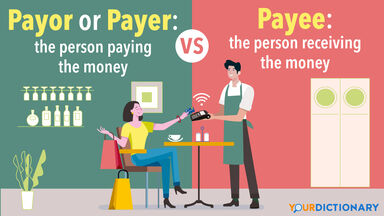
To pay is defined as to give someone what is due, usually money, for goods or services.

(verb)

An example of to pay is giving money to a server at a restaurant for a meal.

YourDictionary definition and usage example. Copyright © 2013 by LoveToKnow Corp.

See pay in Webster's New World College Dictionary

transitive verb paid or Obsoletepayed, paying

  1. to give to (a person) what is due, as for goods received, services rendered, etc.; remunerate; recompense
  2. to give (what is due or owed) in return, as for goods or services
  3. to make a deposit or transfer of (money): paid $50 into the credit union
  4. to discharge or settle (a debt, obligation, expenses, etc.) by giving something in return
    1. to give or offer (a compliment, respects, attention, etc.)
    2. to make (a visit, call, etc.)
  5. to yield as a recompense or return: a job that pays $90
  6. to be worthwhile or profitable to: it will pay him to listen

Origin: ME paien, to pay, satisfy < OFr paier < L pacare, to pacify < pax, peace

intransitive verb

  1. to give due compensation; make payment
  2. to be profitable or worthwhile
  3. to yield return or compensation as specified: a stock that pays poorly

noun

  1. a paying or being paid; payment
  2. money paid, esp. for work or services; wages or salary
  3. anything, good or bad, given or done in return
  4. Now Rare a person regarded as a credit risk

adjective

  1. rich enough in minerals, ore, etc. to make mining profitable: pay gravel
  2. operated or made available by depositing coins, submitting credit cards, etc.: a pay telephone, pay toilet
  3. designating a service, facility, etc. paid for by subscription, fees, etc.: pay TV

transitive verb payed, paying

to coat as with pitch in order to make waterproof: to pay the seams of a wooden ship

Origin: OFr peier < L picare, to cover with pitch < pix, pitch

See pay in American Heritage Dictionary 4

verb paid paid (pād), pay·ing, pays
verb, transitive
  1. To give money to in return for goods or services rendered: pay the cashier.
  2. To give (money) in exchange for goods or services: paid four dollars for a hamburger; paid an hourly wage.
  3. To discharge or settle (a debt or obligation): paying taxes; paid the bill.
  4. a. To give recompense for; requite: a kindness that cannot be paid back.
    b. To give recompense to; reward or punish: I'll pay him back for his insults.
  5. To bear (a cost or penalty, for example) in recompense: She paid the price for her unpopular opinions.
  6. To yield as a return: a savings plan that paid six percent interest.
  7. To afford an advantage to; profit: It paid us to be generous.
  8. To give or bestow: paying compliments; paying attention.
  9. To make (a visit or call).
  10. Past tense and past participle paid paid or payed (pād) To let out (a line or cable) by slackening.
verb, intransitive
  1. To give money in exchange for goods or services.
  2. To discharge a debt or obligation.
  3. To bear a cost or penalty in recompense: You'll pay for this mischief!
  4. To be profitable or worthwhile: It doesn't pay to get angry.
adjective
  1. Of, relating to, giving, or receiving payments.
  2. Requiring payment to use or operate: a pay toilet.
  3. Yielding valuable metal in mining: a pay streak.
noun
  1. The act of paying or state of being paid.
  2. Money given in return for work done; salary; wages.
  3. a. Recompense or reward: Your thanks are pay enough.
    b. Retribution or punishment.
  4. Paid employment: the workers in our pay.
  5. A person considered with regard to his or her credit or reliability in discharging debts.
Phrasal Verbs: pay off To pay the full amount on (a debt). To effect profit: a bet that paid off poorly. To get revenge for or on; requite. To pay the wages due to (an employee) upon discharge. Informal To bribe. Nautical To turn or cause to turn (a vessel) to leeward. pay out To give (money) out; spend. To let out (a line or rope) by slackening. pay up To give over the full monetary amount demanded.

Origin:

Origin: Middle English paien

Origin: , from Old French paiier

Origin: , from Late Latin pācāre, to appease

Origin: , from Latin, to pacify, subdue

Origin: , from pāx, pāc-, peace; see pag- in Indo-European roots

.

Word History: Given the unpeaceful feelings one often has in paying bills or income taxes, it is difficult to believe that the word pay ultimately derives from the Latin word pāx, “peace.” However, it is not the peace of the one who pays that is involved in this development of meaning. From pāx, meaning “peace” and also “a settlement of hostilities,” was derived the word pācāre, “to impose a settlement on peoples or territories.” In Late Latin pācāre was extended in sense to mean “to appease.” The Old French word paiier that developed from Latin pācāre came to have the specific application “to pacify or satisfy a creditor,” a sense that came into Middle English along with the word paien (first recorded around the beginning of the 13th century), the ancestor of our word pay.

transitive verb payed payed or paid (pād), pay·ing, pays
To coat or cover (seams of a ship, for example) with waterproof material such as tar or asphalt.

Origin:

Origin: Obsolete French peier

Origin: , from Old French

Origin: , from Latin picāre

Origin: , from pix, pic-, pitch

.

Learn more about pay

Related Articles

pay

link/cite print suggestion box