present

The definition of present is someone or something that is at a specified place.

(adjective)

An example of present is a group of people that is already in a conference room for a meeting.

Present is current time or is happening right now.

(noun)

An example of present is Barack Obama being the president in 2011.

The definition of a present is a gift.

(noun)

An example of present is a piece of jewelry to celebrate an anniversary.

Present is defined as to formally introduce or honor someone.

(verb)

An example of present is announcing a newly married couple at their wedding reception.

YourDictionary definition and usage example. Copyright © 2013 by LoveToKnow Corp.

See present in Webster's New World College Dictionary

adjective

    1. being at the specified or understood place; at hand; in attendance
    2. existing (in a particular thing): nitrogen is present in the air
  1. of or at this time; existing or happening now; in progress
  2. now being discussed, considered, written, read, etc.: the present writer
  3. Archaic readily available, effective, etc.
  4. Obsolete
    1. self-possessed; collected
    2. paying attention
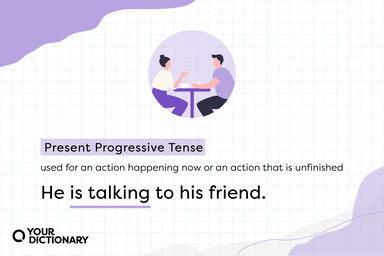
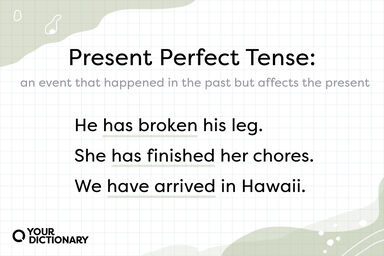
  5. Gram. indicating action as now taking place (Ex.: she goes) or state as now existing (Ex.: the plums are ripe), action that is habitual (Ex.: he speaks with an accent), or action that is always the same (Ex.: the clock strikes twelve at noon)

Origin: OFr < L praesens, prp. of praeesse, to be present < prae-, before (see pre-) + esse, to be (see essence)

noun

  1. the present time
  2. Obsolete the present occasion
    1. the present words or writings
    2. Law this very document: know by these presents
  3. Gram.
    1. the present tense
    2. a verb form in this tense
  4. Origin: OFr, in phr. mettre en present à, to put before (someone), present, offer, hence a gift

    something presented, or given; gift

transitive verb present

  1. to bring (a person) into the presence of, and introduce formally to, another or others
    1. to honor (someone), esp. formally, with a gift, award, etc.: the mayor presented him with the keys to the city
    2. to provide or confront (someone) with something: this presents us with a difficult problem
    1. to offer for viewing or notice; exhibit; display; show
    2. to offer (a show, exhibit, etc.) to the public
  2. to offer for consideration: to present a plan, opportunity, etc.
  3. to give (a gift, donation, award, etc.) to a person, organization, etc.
  4. to hand over, give, or send (a bill, credentials, etc.) to someone
  5. to represent, depict, or interpret in the manner indicated
  6. to point or aim (a weapon, etc.)
  7. to nominate to an ecclesiastical benefice
  8. Law
    1. to put before a legislature, court, etc. for consideration
    2. to bring a charge or indictment against

Origin: ME presenten < OFr presenter < L praesentare, to place before, lit., to make present < praesens: see presentthe

intransitive verb present

to come before a physician (with a particular symptom, medical history, etc.)

See present in American Heritage Dictionary 4

noun
  1. A moment or period in time perceptible as intermediate between past and future; now.
  2. Grammar
    a. The present tense.
    b. A verb form in the present tense.
  3. presents Law The document or instrument in question: Be it known by these presents.
adjective
  1. Existing or happening now; current: the present leader; present trends.
  2. a. Being at hand or in attendance: Thirty guests were present at the ceremony.
    b. Existing in something specified: Oxygen is present in the bloodstream.
  3. Now being considered; actually here or involved: the present subject; present company excepted.
  4. Grammar Designating a verb tense or form that expresses current time.
  5. Archaic Readily available; immediate.
  6. Obsolete Alert to circumstances; attentive.

Origin:

Origin: Middle English

Origin: , from Old French

Origin: , from Latin praesēns, praesent-

Origin: , present participle of praeesse, to be present

Origin: : prae-, pre-

Origin: + esse, to be; see es- in Indo-European roots

.

Related Forms:

  • presˈent·ness noun

verb pre·sent·ed, pre·sent·ing, pre·sents
verb, transitive
  1. a. To introduce, especially with formal ceremony.
    b. To introduce (a young woman) to society with conventional ceremony.
  2. To bring before the public: present a play.
  3. a. To make a gift or award of.
    b. To make a gift to.
  4. a. To offer for observation, examination, or consideration; show or display. See Synonyms at offer.
    b. To afford or furnish: The situation presented us with a chance to improve our knowledge.
    c. To turn or position in the direction of another: presented his face to the camera.
    d. To attach (an antigen, for example) on the surface of a molecule for detection by other molecules.
  5. To hold, carry, or point (a weapon) in a particular manner as a salutation or sign of honor, usually along the center axis of the body.
  6. Ecclesiastical To recommend (a cleric) for a benefice.
  7. Law
    a. To offer to a legislature or court for consideration.
    b. To bring a charge or indictment against.
verb, intransitive
  1. To manifest as a part of a disease or medical condition.
  2. To make a presentation.
noun
  1. pres·ent (prĕzˈənt) Something presented; a gift.
  2. pre·sent The position of a rifle or other weapon when presented.

Origin:

Origin: Middle English presenten

Origin: , from Old French presenter

Origin: , from Latin presentāre, to show

Origin: , from praesēns, praesent-

Origin: , present participle of praeesse, to be in front of; see present 1

.

Related Forms:

  • pre·sentˈer noun

Learn more about present

link/cite print suggestion box