past

The definition of past is former or is something that has already happened.

(adjective)

An example of past is someone's ex-boyfriend.

The past is what has already happened.

(noun)

An example of the past is yesterday.

YourDictionary definition and usage example. Copyright © 2013 by LoveToKnow Corp.

See past in Webster's New World College Dictionary

intransitive verb, transitive verb

Rare pass

adjective

  1. gone by; ended; over: our past troubles
  2. of a former time; bygone
  3. immediately preceding; just gone by: the past week
  4. having served formerly: a past chairman
  5. Gram. indicating an action completed or in progress at a former time, or a state or condition in existence at a former time

noun

  1. the time that has gone by; days, months, or years gone by
  2. what has happened; the history, former life, or experiences of a person, group, or institution: often used to indicate a hidden or questionable past: a woman with a past
  3. Gram.
    1. the past tense
    2. a verb form in this tense

  1. beyond in time; later than: five past four
  2. beyond in space; farther on than
  3. Obsolete beyond in amount or degree; more than
  4. beyond the extent, power, limits, scope, etc. of: past belief

adverb

to and beyond a point in time or space; by; so as to pass

See past in American Heritage Dictionary 4

adjective
  1. No longer current; gone by; over: His youth is past.
  2. Having existed or occurred in an earlier time; bygone: past events; in years past.
  3. a. Earlier than the present time; ago: 40 years past.
    b. Just gone by or elapsed: in the past few days.
  4. Having served formerly in a given capacity, especially an official one: a past president; a past inmate of a cell.
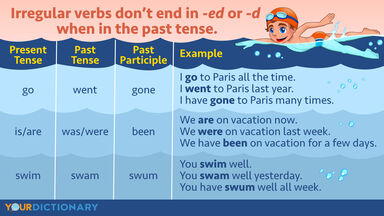
  5. Grammar Of, relating to, or being a verb tense or form used to express an action or condition prior to the time it is expressed.
noun
  1. The time before the present.
  2. a. Previous background, career, experiences, and activities: an elderly person with a distinguished past.
    b. A former period of someone's life kept secret or thought to be shameful: a family with a checkered past.
  3. Grammar
    a. The past tense.
    b. A verb form in the past tense.
adverb
So as to pass by or go beyond: He waved as he walked past.
preposition
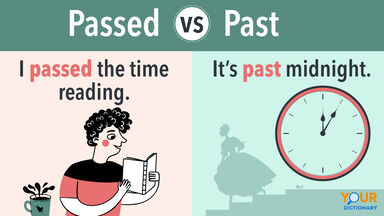
  1. Beyond in time; later than or after: past midnight; a quarter past two.
  2. Beyond in position; farther than: The house is a mile past the first stoplight. They walked past the memorial in silence.
  3. a. Beyond the power, scope, extent, or influence of: The problem is past the point of resolution.
    b. Beyond in development or appropriateness: The child is past drinking from a bottle. You're past sucking your thumb, so don't do it.
  4. Beyond the number or amount of: The child couldn't count past 20. See Usage Note at pass.

Origin:

Origin: Middle English

Origin: , from past participle of passen, to pass; see pass

.

See past in Ologies

Past

See also antiquity; future; history; memory; origins.

aboriginality

the condition of being first in a place and of having a relatively simple nature. —aboriginal, n., adj.

antediluvianism

adherence to or fondness for ancient things or customs. —antediluvian, n., adj.

antiquarianism

interest in the culture of antiquity, especially that of classical Greece and Rome. —antiquary, antiquarian, n.antiquarian, adj.

archaeolatry

devotion to archaism. —archaeolater, n.archaeolatrous, adj.

archaism

an inclination toward old-fashioned things, speech, etc. Also archaicism.archaist, n.archaic, adj.

chronographer

a person who records time or the events that have occurred in time.

chronography

Obsolete, the recording or study of past events.

medievalism

strong fondness or admiration for the culture, mores, etc, of the Middle Ages. —medievalist, n.medievalistic, adj.

palaetiology

paletiology.

paleology, palaeology

the study of antiquities. —paleologist, palaeologist, n.paleologic, palaeologic, paleological, palaeological, adj.

paleopathology

Medicine. the study of diseases from former times as found in fossils and mummified remains.

paletiology, palaetiology

an explanation of events of the past through the laws of causation. —paletiologist, palaetiologist, n.paletiological, palaetiological, adj.

papyrology

the study of papyrus manuscripts. —papyrologist, n.papyrological, adj.

philarchaist

Obsolete, one devoted to the archaic. —philarchaic, adj.

Learn more about past

Related Articles

link/cite print suggestion box