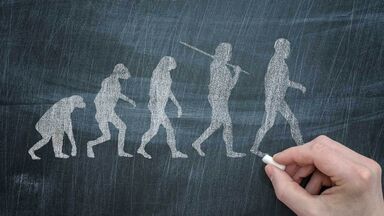
change

Change means to replace one thing for another or to become different.

(verb)

  1. An example of change is someone getting five one dollar bills for a five dollar bill.
  2. An example of change is someone getting a new hair cut.
  3. An example of change is a girl becoming a woman.

The definition of a change is the act becoming different.

(noun)

An example of change is how a flower looks the morning after it blooms.

YourDictionary definition and usage example. Copyright © 2013 by LoveToKnow Corp.

See change in Webster's New World College Dictionary

transitive verb changed, changing

  1. to put or take (a thing) in place of something else; substitute for, replace with, or transfer to another of a similar kind: to change one's clothes, to change jobs
  2. to give and receive reciprocally; exchange; switch: let's change seats
    1. to cause to become different; alter; transform; convert: success changed him
    2. to undergo a variation of: leaves change color
  3. to give or receive the equivalent of (a coin or bank note) in currency of lower denominations or in foreign money
  4. to put a fresh, replacement covering, as a diaper or bedclothes, on

Origin: ME changen < OFr changier < LL cambiare < L cambire, to exchange, barter < Celt (as in OIr camb) < IE base *kamb-, to bend, crook (> Welsh cam, Bret kamm, crooked)

intransitive verb

    1. to become different; alter; vary: the scene changes
    2. to undergo alteration or replacement
  1. to pass from one phase to another, as the moon
  2. to become lower in range: said specif. of the male voice at puberty
  3. to leave one train, bus, etc. and board another
  4. to put on other clothes
  5. to make an exchange

noun

  1. the act or process of substitution, alteration, or variation
  2. absence of monotony; variety
  3. something that is or may be substituted; something of the same kind but new or fresh
  4. another set of clothes, esp. a fresh set to put on
    1. money returned as the difference between the price of something bought and the bill or coin of larger denomination given in payment
    2. a number of coins or bills whose total value equals a single larger coin or bill
    3. small coins
  5. a place where merchants meet to do business; exchange
    also written 'change
  6. Bell Ringing any pattern or order in which the bells may be rung

See change in American Heritage Dictionary 4

verb changed changed, chang·ing, chang·es
verb, transitive
  1. a. To cause to be different: change the spelling of a word.
    b. To give a completely different form or appearance to; transform: changed the yard into a garden.
  2. To give and receive reciprocally; interchange: change places.
  3. To exchange for or replace with another, usually of the same kind or category: change one's name; a light that changes colors.
  4. a. To lay aside, abandon, or leave for another; switch: change methods; change sides.
    b. To transfer from (one conveyance) to another: change planes.
  5. To give or receive the equivalent of (money) in lower denominations or in foreign currency.
  6. To put a fresh covering on: change a bed; change the baby.
verb, intransitive
  1. To become different or undergo alteration: He changed as he matured.
  2. To undergo transformation or transition: The music changed to a slow waltz.
  3. To go from one phase to another, as the moon or the seasons.
  4. To make an exchange: If you prefer this seat, I'll change with you.
  5. To transfer from one conveyance to another: She changed in Chicago on her way to the coast.
  6. To put on other clothing: We changed for dinner.
  7. To become deeper in tone: His voice began to change at age 13.
noun
  1. The act, process, or result of altering or modifying: a change in facial expression.
  2. The replacing of one thing for another; substitution: a change of atmosphere; a change of ownership.
  3. A transformation or transition from one state, condition, or phase to another: the change of seasons.
  4. Something different; variety: ate early for a change.
  5. A different or fresh set of clothing.
  6. a. Money of smaller denomination given or received in exchange for money of higher denomination.
    b. The balance of money returned when an amount given is more than what is due.
    c. Coins: had change jingling in his pocket.
  7. Music
    a. A pattern or order in which bells are rung.
    b. In jazz, a change of harmony; a modulation.
  8. A market or exchange where business is transacted.
Phrasal Verb: change off To alternate with another person in performing a task. To perform two tasks at once by alternating or a single task by alternate means.

Origin:

Origin: Middle English changen

Origin: , from Norman French chaunger

Origin: , from Latin cambiāre, cambīre, to exchange

Origin: , probably of Celtic origin

.

See change in Ologies

Change

anabolism

constructive metabolism.

cainotophobia

misoneism.

catabolism

1. the metabolic process in which energy is liberated for use in work.

2. destructive metabolism.

catalysis

the process of an agent that affects a chemical or other reaction without being itself changed or affected. See also decaying. —catalyst, n.

metabolism

the chemical and physical processes in an organism by which protoplasm is produced, sustained, and then decomposed to make energy available. Also, Rare. metaboly. —metabolize, v.

metamorphism

change in form, structure, shape, appearance, etc. See also geology. — metamorphic, adj.

metamorphosis

1. change in form, structure, appearance, etc.

2. magical transformation. —metamorphic, metamorphous, adj.

metaphysis

a change of form or type.

misoneism

an abnormal dislike of novelty or innovation. Also called neophobia, cainotophobia, cainophobia.

neophobia

misoneism.

physis

1. the principle or concept of growth and change in nature.

2. nature considered as the source of growth and change.

3. something that grows or develops.

transmogrification

the process of complete and usually extreme or grotesque change from one state or form to another.

transmutation

the process or act of change, especially from one thing to another, as the change from base metal to gold, pursued by the alchemists. —transmutationist, n. —transmutative, adj.

Learn more about change

change

link/cite print suggestion box