switch Hear it!

switch Definition

switch (swic̸h)

noun

  1. a thin, flexible twig, rod, stick, etc., esp. one used for whipping
  2. the bushy part of the tail in some animals, as the cow
  3. a separate tress or plait of natural or synthetic hair bound at one end and used by women as part of a coiffure
  4. an abrupt, sharp, lashing movement, as with a switch
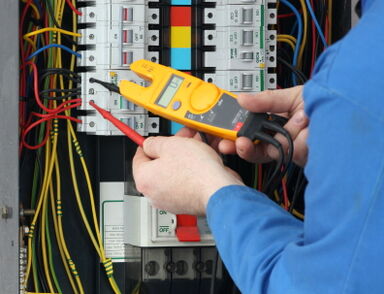
  5. a device that controls the flow of current in an electric circuit, esp. by turning the current on or off or diverting it to a particular part of the circuit
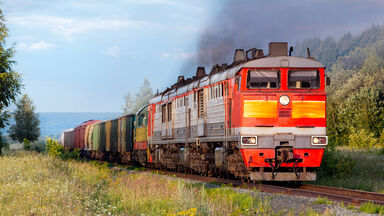
    1. a movable section of railroad track used in transferring a train from one set of tracks to another
    2. siding (sense )
  6. a shift or transference, esp. if sudden or unexpected

Etymology: Early ModE swits, prob. < MDu or LowG, as in MDu swick, a whip, akin to ON sveigr, flexible stalk: for IE base see swoop

transitive verb

  1. to whip or beat with or as with a switch
  2. to jerk or swing sharply; lash a cow switching its tail
  3. to shift; transfer; change; turn aside; divert
    1. to operate the switch of (an electric circuit) so as to connect, disconnect, or divert
    2. to turn (an electric light or appliance) on or off in this way
  4. ☆ to transfer (a railroad train or car) from one set of tracks to another by use of a switch; shunt
  5. to change or exchange to switch places

intransitive verb

  1. ☆ to move from or as from one set of tracks to another
  2. to shift; transfer; change
  3. to swing sharply; lash

switch Related Forms

switcher noun

switch Synonyms

switch

v.

Switch Hacker Definition

A network device joining many systems together at a low-level layer of the network protocol. The most widely used Ethernet switches operate at the second layer (Data Link Layer) of the OSI model and look like hubs. Switches have more “intelligence” than hubs, however, and are therefore more costly. Unlike hubs, switches can inspect data packets as they are received, they can determine both the source and the destination device of the packet, and they can then forward the packet correctly. By delivering messages to only the connected device for which it was intended, network switches save network bandwidth and offer typically better performance than hubs can.

Network switches offer varying port configurations, beginning with 4-port or 5-port models and going up to stackable core infrastructure switches with several hundred ports. They support 10 Mbps Ethernet, 100 Mbps Ethernet, and 1GBit/s Ethernet, or all three.

See Also: Ethernet; Open Systems Interconnect (OSI) Model; Protocol.

About, Inc. Switch. [Online, 2004.] About, Inc. Website. http://compnet working.about.com/library/glossary/bldef-switch.htm.

switch Telecom Definition

  1. A mechanical, electromechanical, or electronic device that opens, closes, or changes the connections in an electrical circuit.
  2. A device that establishes, maintains, and changes logical connections over physical circuits. Switches flexibly connect transmitters and receivers across networks of interconnected links, thereby allowing network resources to be shared by large numbers of end users. Without switches, each transmitter/receiver pair would require a dedicated circuit in order to transfer data. There are a number of types of switches. In terms of switching technology, there are circuit switches and packet switches. a. Circuit switches establish connections between circuits, on demand and as available. Those connections are temporary, continuous, and exclusive in nature. Circuit switches were developed for voice communications, but will support any type of information transfer. Common examples of circuit switches include private branch exchanges (PBXs) and central office exchanges (COs or COEs). b. Packet switches switch data organized into packets, discrete sets of data that may take the specific form of packets, frames, or cells depending on the network technology specifics. For example, packet switches switch packets in networks based on the Internet Protocol (IP), frames in networks based on the frame relay or Ethernet protocols, and cells in those based on the asynchronous transfer mode (ATM) protocol. Packet switches were initially developed for data networking, but can support other forms of data, as well, although with varying degrees of success. With respect to physical placement, there are edge switches and core switches. c. Edge switches are positioned at the physical edge of a public network.The user organization gains access to an edge switch via an access link, or local loop. A central office (CO) is an example of an edge switch in the context of the circuit-switched public switched telephone network (PSTN). In a Local Area Network (LAN), a workgroup switch is the equivalent of an edge switch in a public network. d. Core switches, also known as tandem switches and backbone switches, are high-capacity switches positioned in the physical core, or backbone, of a network and serving to interconnect edge switches. Although switches can be very intelligent in many respects, they operate only at the Layer 2, the Data Link Layer of the OSI Reference Model.That is to say that they operate link-by-link, or hop-by-hop, generally under the control of a centralized set of logic that can coordinate their activities in order to establish end-to-end connectivity across a multi-link circuit.A switch has no concept of the network as a whole, from end-to-end. See also ATM, backbone switch, cell, CO, core switch, Data Link Layer, edge switch, Ethernet, frame, frame relay, IP, LAN switch, OSI Reference Model, PSTN, router, and tandem switch.

switch Usage Examples

Object

  • allegiance: Follow dramatic, political power struggles, German scientists switching allegiance and what happened to early rockets transporting fruit flies into space.
  • supplier: As part of its Energy Smart campaign energywatch advises that consumers who have never switched supplier could save up to £ 100 a year.

Converse of object

  • flick: This isn't just a case of flicking a switch at 10 minutes to midnight on 14 November.
  • flip: Put figures in the crane truck to drive it and then flip the switch to pick up a load with the crane arm.
  • activate: You do feel sorry for the ones that activate switches tho as they are electrocuted to keep the switches on!

Adjective modifier

  • dim: BEDROOM 2: 11 ' 8 x 6 ' 5 ( rear ) with dimmer switch.
  • isolating: After that, dropper wires needed to be connected and the isolating switches and controller fitted.
  • -w: Also note that at least some of these can be caught with the use warnings pragma or the -w switch.
  • 3com: A knowledge of Cisco equipment is required to CCNA level or above. with a knowledge of 3com switches being advantageous.

Modifies a noun

on/off: Please bear in mind, just do it once for each switch on/off!

Followed by an intransitive particle

  • off: They are switched off for a whole variety of reasons.
  • on: Also: your PC does not need to be switched on!
  • over: There's even talk of me switching over to American Football.

Followed by a transitive particle

off: I couldn't watch a crap game, I'd just switch the TV off.

Noun used with modifier

  • on/off: The universe might be simply the effect of a large number of on/off switches, like Conway's game of life.
  • toggle: The CRC has controls for the VCR, Camera zoom, backlight, horizontal/vertical stabilizers and toggle switches for the VASCAR itself.
  • selector: There are three single - coil pick-ups installed in neck, middle and bridge positions, with a selector switch yielding five different settings.
  • ignition: Electrical System An ignition switch, plus full electric starter is fitted.
  • rocker: Controllable power output by rocker switches on the rear of the head assembly.
  • reed: Internal to the rod is a series of reed switches designed to open and close as the float changes with the liquid level.