wild

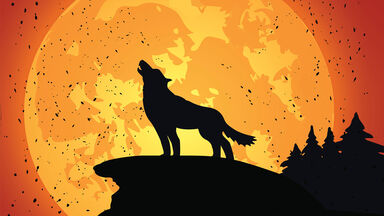
The definition of wild is someone or something out of control, in its natural habitat or undomesticated.

(adjective)

  1. An example of wild is a naked child running down the street screaming and apparently unsupervised.
  2. An example of wild is a horse living on the range.
  3. An example of wild is a feral cat.

YourDictionary definition and usage example. Copyright © 2013 by LoveToKnow Corp.

See wild in Webster's New World College Dictionary

adjective

  1. living or growing in its original, natural state and not normally domesticated or cultivated: wild flowers, wild animals
  2. not lived in or cultivated; overgrown, waste, etc.: wild land
  3. not civilized; savage: a wild tribe
  4. not easily restrained or regulated; not controlled or controllable; unruly, rough, lawless, etc.: wild children
  5. characterized by a lack of social or moral restraint; unbridled in pursuing pleasure; dissolute, orgiastic, etc.: a wild rake, a wild party
  6. violently disturbed; turbulent; stormy: a wild seacoast
  7. in a state of intense excitement; specif.,
    1. eager or enthusiastic, as with desire or anticipation: wild with delight
    2. angered, frenzied, frantic, crazed, etc.: wild with desperation
  8. in a state of disorder, disarrangement, confusion, etc.: wild hair
  9. fantastically impractical; visionary: a wild scheme
  10. showing a lack of sound judgment; reckless; imprudent: a wild wager
  11. going wide of the mark aimed at; missing the target: a wild swing in boxing
  12. Slang extraordinary; remarkable: a wild success
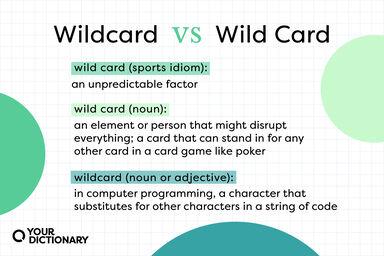
  13. Card Games having any value specified by the holder: said of a card: deuces, when wild in poker, may be counted as aces, kings, etc.

Origin: ME wilde < OE, akin to Ger wild, prob. < IE base *wel-, shaggy hair, unkempt > wool, vole

adverb

in a wild manner; wildly; without aim or control: to shoot wild

noun

a wilderness or wasteland

Related Forms:

See wild in American Heritage Dictionary 4

adjective wild·er, wild·est
  1. Occurring, growing, or living in a natural state; not domesticated, cultivated, or tamed: wild geese; edible wild plants.
  2. Not inhabited or farmed: remote, wild country.
  3. Uncivilized or barbarous; savage.
  4. a. Lacking supervision or restraint: wild children living in the street.
    b. Disorderly; unruly: a wild scene in the school cafeteria.
    c. Characterized by a lack of moral restraint; dissolute or licentious: recalled his wild youth with remorse.
  5. Lacking regular order or arrangment; disarranged: wild locks of long hair.
  6. Full of, marked by, or suggestive of strong, uncontrolled emotion: wild with jealousy; a wild look in his eye; a wild rage.
  7. Extravagant; fantastic: a wild idea.
  8. Furiously disturbed or turbulent; stormy: wild weather.
  9. Risky; imprudent: wild financial schemes.
  10. a. Impatiently eager: wild to get away for the weekend.
    b. Informal Highly enthusiastic: just wild about the new music.
  11. Based on little or no evidence or probability; unfounded: wild accusations; a wild guess.
  12. Deviating greatly from an intended course; erratic: a wild bullet.
  13. Games Having an equivalence or value determined by the cardholder's choice: playing poker with deuces wild.
adverb
In a wild manner: growing wild; roaming wild.
noun
  1. A natural or undomesticated state: returned the zoo animals to the wild; plants that grow abundantly in the wild.
  2. An uninhabited or uncultivated region. Often used in the plural: the wilds of the northern steppes.
intransitive verb wild·ed, wild·ing, wilds
Slang
To go about in a group threatening, robbing, or attacking others: “Police said that the youngsters … were part of a larger group of teenagers who were ‘wilding,’—their slang for terrorizing and bullying” (Maclean's).

Origin:

Origin: Middle English wilde

Origin: , from Old English

.

Related Forms:

  • wildˈly adverb
  • wildˈness noun

Learn more about wild

link/cite print suggestion box