bond

The definition of a bond is something that holds people or objects together, or money borrowed from a company that specializes in paying the bail for people's release from jail.

(noun)

  1. An example of bond is the relationship between two best friends.
  2. An example of bond is a rope.
  3. An example of bond is a loan secured by money or collateral (such as cars, boats, houses, land or financial instruments such as stocks and bonds) to give to a court clerk for bail to guarantee that the defendant will return to court on the trial date.

Bond means to bind or connect.

(verb)

An example of bond is to say marriage vows and enter into the sacrament of Holy Matrimony.

YourDictionary definition and usage example. Copyright © 2013 by LoveToKnow Corp.

See bond in Webster's New World College Dictionary

noun

  1. anything that binds, fastens, or restrains
    1. fetters; shackles
    2. Archaic imprisonment; captivity
    1. a binding or uniting force; tie; link: the bonds of friendship
    2. a fastening or adhesion, as by glue, solder, etc.
  2. a binding agreement; covenant
  3. a duty or obligation imposed by a contract, promise, etc.
  4. a substance or device, as glue, solder, or a chain, which holds things together or unites them
  5. bond paper
  6. Chem.
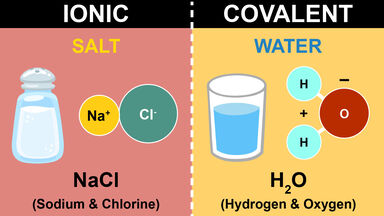
    1. a unit of combining capacity equivalent to one atom of hydrogen: represented in structural formulas by a dash or dot
    2. an electrostatic attraction between atoms or groups of atoms that forms a stable aggregate unit, such as a molecule or metal
  7. Commerce
    1. an agreement by an agency holding taxable or dutiable goods that taxes or duties on them will be paid before they are sold
    2. the condition of goods kept in a warehouse until taxes or duties are paid
    3. an insurance contract by which a bonding agency guarantees payment of a specified sum to the payee in the event of a financial loss caused as by the act of a specified employee or by some contingency over which the payee has no control
  8. Finance an interest-bearing certificate issued by a government or business, promising to pay the holder a specified sum on a specified date: it is a common means of raising capital funds
  9. Law
    1. a written obligation to pay specified sums, or to do or not do specified things
    2. an amount paid as surety or bail
    3. Archaic a bondsman, or surety
  10. Masonry the way in which bricks, stones, etc. are lapped upon one another in building

Origin: ME bond, band: see band

transitive verb

  1. to connect or fasten with or as with a bond; bind
  2. to furnish a bond, or bail, and thus become a surety for (someone)
  3. to place or hold (goods) in or under bond
  4. to issue interest-bearing certificates on
  5. to put under bonded debt
  6. to arrange (timbers, bricks, etc.) in a pattern that gives strength

intransitive verb

to connect, hold together, or solidify by or as by a bond

Related Forms:

noun

Obsolete a serf or slave

Origin: ME bonde < OE bonda: see bondage

adjective

Obsolete in serfdom or slavery

See bond in American Heritage Dictionary 4

noun
  1. Something, such as a fetter, cord, or band, that binds, ties, or fastens things together.
  2. Confinement in prison; captivity. Often used in the plural.
  3. A uniting force or tie; a link: the familial bond.
  4. A binding agreement; a covenant.
  5. A duty, promise, or other obligation by which one is bound.
  6. a. A substance or agent that causes two or more objects or parts to cohere.
    b. The union or cohesion brought about by such a substance or agent.
  7. A chemical bond.
  8. A systematically overlapping or alternating arrangement of bricks or stones in a wall, designed to increase strength and stability.
  9. Law
    a. A written and sealed obligation, especially one requiring payment of a stipulated amount of money on or before a given day.
    b. A sum of money paid as bail or surety.
    c. A bail bondsman.
  10. A certificate of debt issued by a government or corporation guaranteeing payment of the original investment plus interest by a specified future date.
  11. The condition of taxable goods being stored in a warehouse until the taxes or duties owed on them are paid.
  12. An insurance contract in which an agency guarantees payment to an employer in the event of unforeseen financial loss through the actions of an employee.
  13. Bond paper.
verb bond·ed, bond·ing, bonds
verb, transitive
  1. To mortgage or place a guaranteed bond on.
  2. To furnish bond or surety for.
  3. To place (an employee, for example) under bond or guarantee.
  4. To join securely, as with glue or cement.
  5. To join (two or more individuals) in or as if in a nurturing relationship: “What bonded [the two men]—who spoke rarely and have little personal rapport—was patience and a conviction that uncontrolled inflation endangers . . . society” (Robert J. Samuelson).
  6. To lay (bricks or stones) in an overlapping or alternating pattern.
verb, intransitive
  1. To cohere with or as if with a bond.
  2. To form a close personal relationship.

Origin:

Origin: Middle English

Origin: , variant of band

Origin: , from Old Norse; see bhendh- in Indo-European roots

.

Related Forms:

  • bondˈa·bilˈi·ty noun
  • bondˈa·ble adjective
  • bondˈer noun

American politician and civil rights leader who was elected to the Georgia legislature (1966) but temporarily barred from taking office because of his opposition to the Vietnam War.

Learn more about bond

Related Articles

bond

link/cite print suggestion box