stage

The definition of a stage is a platform or an area of raised floor.

(noun)

An example of a stage is what dancers dance on during a professional performance.

To stage is defined as to arrange, present or exhibit something.

(verb)

An example of to stage is decorating the inside of a house that's for sale for an open house.

YourDictionary definition and usage example. Copyright © 2013 by LoveToKnow Corp.

See stage in Webster's New World College Dictionary

noun

  1. a platform or dock
  2. a scaffold for workmen
  3. a level, floor, or story
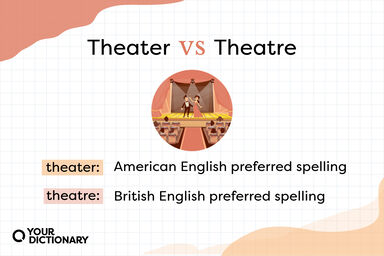
    1. a platform on which plays, speeches, etc. are presented
    2. any area, as in an arena theater, in which actors perform
    3. the whole working section of a theater, including the acting area, the backstage area, etc.
    4. the theater, drama, or acting as a profession: with the
    1. the scene of an event or series of events
    2. the center of attention
  4. a place where a stop is made on a journey, esp., formerly, a regular stopping point for a stagecoach
  5. the distance or a part of a route between two stopping places; leg of a journey
  6. stagecoach
  7. a shelf attached to a microscope for holding the object to be viewed
  8. a period, level, or degree in a process of development, growth, or change: the larval stage of an insect
  9. any of two or more propulsion units used, in sequence, as the launch vehicle of a missile, spacecraft, etc.: when no longer operational or useful, the lower stages usually separate and fall back to earth
  10. Electronics a component, circuit, etc. that does one specific job, as amplification, while being a part of a larger, more complex system
  11. Geol. a subdivision of a series of stratified rocks consisting of the rocks laid down during a geologic age

Origin: ME < OFr estage < VL *staticum < L status, pp. of stare, to stand

transitive verb staged, staging

  1. to present, represent, or exhibit on or as on a stage
  2. ☆ to plan, arrange, and carry out: to stage a counteroffensive

intransitive verb

to be suitable for presentation on the stage: a play that stages well

See stage in American Heritage Dictionary 4

noun
  1. A raised and level floor or platform.
  2. a. A raised platform on which theatrical performances are presented.
    b. An area in which actors perform.
    c. The acting profession, or the world of theater. Used with the: The stage is her life.
  3. The scene of an event or of a series of events.
  4. A platform on a microscope that supports a slide for viewing.
  5. A scaffold for workers.
  6. A resting place on a journey, especially one providing overnight accommodations.
  7. The distance between stopping places on a journey; a leg: proceeded in easy stages.
  8. A stagecoach.
  9. A level or story of a building.
  10. The height of the surface of a river or other fluctuating body of water above a set point: at flood stage.
  11. a. A level, degree, or period of time in the course of a process: the toddler stage of child development; the early stages of a disease.
    b. A point in the course of an action or series of events: too early to predict a winner at this stage.
  12. One of two or more successive propulsion units of a rocket vehicle that fires after the preceding one has been jettisoned.
  13. Geology A subdivision in the classification of stratified rocks, ranking just below a series and representing rock formed during a chronological age.
  14. Electronics An element or a group of elements in a complex arrangement of parts, especially a single tube or transistor and its accessory components in an amplifier.
verb staged staged, stag·ing, stag·es
verb, transitive
  1. To exhibit or present on or as if on a stage: stage a boxing match.
  2. To produce or direct (a theatrical performance).
  3. To arrange and carry out: stage an invasion.
  4. Medicine To determine the extent or progression of (a cancer, for example).
verb, intransitive
  1. To be adaptable to or suitable for theatrical presentation.
  2. To stop at a designated place in the course of a journey: “tourists from London who had staged through Warsaw” (Frederick Forsyth).

Origin:

Origin: Middle English

Origin: , from Old French estage

Origin: , from Vulgar Latin *staticum

Origin: , from Latin status

Origin: , past participle of stāre, to stand; see stā- in Indo-European roots

.

Related Forms:

  • stageˈfulˌ noun

Learn more about stage

link/cite print suggestion box