period

The definition of a period is a space of time between two events or a portion of time.

(noun)

  1. An example of period is the Renaissance era.
  2. An example of period is the first class of the day.
  3. An example of period is a female's menstrual cycle.

YourDictionary definition and usage example. Copyright © 2013 by LoveToKnow Corp.

See period in Webster's New World College Dictionary

noun

  1. the interval between recurrent astronomical events, as between two full moons
  2. the interval between certain happenings: a ten-year period of peace
  3. a portion of time, often indefinite, characterized by certain events, processes, conditions, etc.; stage: a period of change, the present period
  4. any of the portions of time into which an event of fixed duration, as a game or a school day, is divided
  5. the full course, or one of the stages, of a disease
  6. an occurrence of menstruation; menses
  7. an end, completion, or conclusion, or a point of time marking this: death put a period to his plans
  8. Geol. a subdivision of an era in geologic time corresponding to the rock strata of a system (sense )
  9. Gram., Rhetoric
    1. a sentence, esp. a balanced, well-constructed, complex sentence
    2. the natural pause in speaking used to indicate the end of a declarative sentence
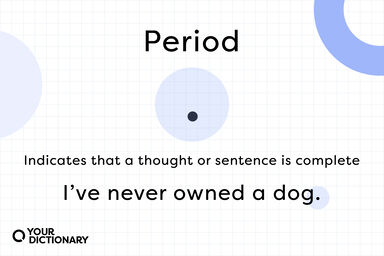
    3. the mark of punctuation (.) used to indicate the end of a declarative sentence
    4. the dot (.) following many abbreviations
  10. Math. the interval from one repetition to the next of a recurrent or self-duplicating function
  11. Music a group of two or more related phrases ending with a cadence
  12. Physics the interval of time necessary for a regularly recurring motion to make a complete cycle
  13. Prosody a rhythm group of two or more cola in the Greek system

Origin: ME paryode < MFr periode < L periodus < Gr periodos, a going around, cycle < peri-, around + hodos, way < IE base *sed-, to go > Sans ā-sad-, go toward

adjective

of or like that of an earlier period or age: period furniture

interjection

Informal used to indicate that the preceding statement is the speaker's last, conclusive, word on the subject: be home by midnight or you're grounded, period!

See period in American Heritage Dictionary 4

noun
  1. An interval of time characterized by the occurrence of a certain condition, event, or phenomenon: a period of economic prosperity.
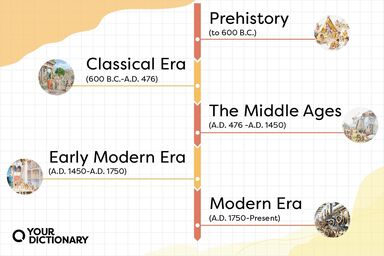
  2. An interval of time characterized by the prevalence of a specified culture, ideology, or technology: artifacts of the pre-Columbian period.
  3. An interval regarded as a distinct evolutionary or developmental phase: Picasso's early career is divided into his blue period and rose period.
  4. Geology A unit of time, longer than an epoch and shorter than an era.
  5. Any of various arbitrary units of time, especially:
    a. Any of the divisions of the academic day.
    b. Sports & Games A division of the playing time of a game.
  6. Physics & Astronomy The time interval between two successive occurrences of a recurrent event or phases of an event; a cycle: the period of a satellite's orbit.
  7. An instance or occurrence of menstruation.
  8. A point or portion of time at which something is ended; a completion or conclusion.
  9. The full pause at the end of a spoken sentence.
  10. A punctuation mark ( . ) indicating a full stop, placed at the end of declarative sentences and other statements thought to be complete, and after many abbreviations.
  11. A sentence of several carefully balanced clauses in formal writing.
  12. a. A metrical unit of quantitative verse consisting of two or more cola.
    b. An analogous unit or division of classical Greek or Latin prose.
  13. Music A group of two or more phrases within a composition, often made up of 8 or 16 measures and terminating with a cadence.
  14. Mathematics
    a. The least interval in the range of the independent variable of a periodic function of a real variable in which all possible values of the dependent variable are assumed.
    b. A group of digits separated by commas in a written number.
    c. The number of digits that repeat in a repeating decimal. For example, 1/7 = 0.142857142857 . . . has a six-digit period.
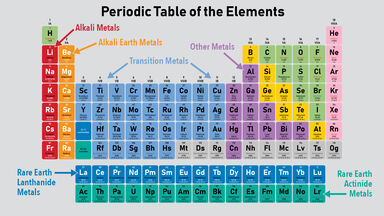
  15. Chemistry A sequence of elements arranged in order of increasing atomic number and forming one of the horizontal rows in the periodic table.
adjective
Of, belonging to, or representing a certain historical age or time: a period piece; period furniture.
interjection
Used to emphasize finality, as when expressing a decision or an opinion: You're not going to the movies tonight, period!

Origin:

Origin: Middle English periode

Origin: , from Old French

Origin: , from Medieval Latin periodus

Origin: , from Latin perihodos, rhetorical period

Origin: , from Greek periodos, circuit

Origin: : peri-, peri-

Origin: + hodos, way

.

Word History: Many may have wondered why the word period has the sense “punctuation mark ( . )” as well as several senses having to do with time. The answer to this question lies in one of the senses of the Greek word periodos from which our word is descended. Periodos, made up of peri-, “around,” and hodos, “way,” in addition to meaning such things as “going around, way around, going around in a circle, circuit,” and with regard to time, “cycle or period of time,” referred in rhetoric to “a group of words organically related in grammar and sense.” The Greek word was adopted into Latin as perihodos, which in the Medieval Latin period acquired a new sense related to its use in rhetoric, “a punctuation mark used at the end of a rhetorical period.” This sense is not recorded in English until 1609, but the word had already entered English as a borrowing from Old French in the sense “a cycle of recurrence of a disease,” first being recorded in a work written around 1425.

Learn more about period

link/cite print suggestion box