relative Hear it!

relative Definition

rela·tive (relə tiv)

adjective

  1. related each to the other; dependent upon or referring to each other to stay in the same relative positions
  2. having to do with; pertinent; relevant documents relative to a legal case
  3. regarded in relation to something else; comparative living in relative comfort
  4. meaningful only in relationship; not absolute “cold” is a relative term
  5. Gram.
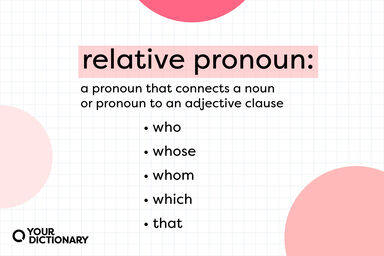
    1. designating a word that introduces a dependent clause and refers to an antecedent “which” is a relative pronoun in “the hat which you bought”
    2. introduced by such a word a relative clause

Etymology: < MFr or L: MFr relatif < L relativus < L relatus: see relate

noun

  1. a relative word, term, or thing
  2. a person connected with another by blood, marriage, etc.; kinsman or kinswoman
  3. a plant or animal in the same taxonomic division as another

relative Related Forms

rela·tive·ness noun

relative Idioms

relative to

  1. relevant to; concerning; about
  2. corresponding to; in proportion to

relative Synonyms

relative

modif.

  1. Related

    dependent, contingent, pertinent, applicable; see related 2, relevant.

  2. Comparative

    comparable, corresponding, relativistic, near; see comparative.

relative Synonyms

relative

n.

relation, family member, kin, family connection, member of the family, blood relation, next of kin, sibling, sib, kinsman, kinswoman, in-law; see also family 1.

Relatives include: mother, father, parent, grandmother, grandfather, great-grandmother, great-grandfather, grandson, grand-daughter, ancestor, aunt, uncle, great-aunt, great-uncle, cousin, first cousin, second cousin, third cousin, fourth cousin, cousin once removed, distant cousin, wife, husband, spouse, daughter, son, child, nephew, niece, brother, sister, sibling, kinsman, kinswoman, clansman, step-father, step-mother, step-brother, step-sister, step-daughter, step-son, half-brother, half-sister, son-in-law, daughter-in-law, kissin' cousin, mother-in-law, father-in-law, brother-in-law, sister-in-law, aunt by marriage, cousin by marriage, in-law*.

relative Law Definition

n

A person who is akin to another by virtue of blood; that is a blood relation, such as sister, brother, aunt, uncle, parent, child, and so on.

relative Usage Examples

Converse of object

  • bereave: At the same time, one can sympathize with the lay public and bereaved relatives, in confusing these activities with freak shows.
  • grieve: A council spokesman said: " We would never wish to upset grieving relatives and we will look into this case.
  • survive: Ultimately, the responsibility for restoration of unsafe memorials lies with surviving relatives.
  • trace: Contains documents concerning the history of immigration through Ellis Island and genealogy information for those wishing to trace relatives and ancestors.

Adjective modifier

  • distant: I recently received a letter from a distant relative in Kansas.
  • elderly: Talk to elderly relatives who may have memories of the person you are trying to find.
  • close: Visiting We allow close relatives of patients to visit 24 hours a day.
  • deceased: If you are wondering how to incorporate a deceased relative within your speech, check out our Gone But Not Forgotten article.
  • near: At the same time, tho, the Act states the nearest relative does not have to give consent for informal admission to hospital.
  • wild: Do animals that have been bred in captivity for many generations have more transparent skin than their wild relatives?

Modifies a noun

  • humidity: Only at a relative air humidity of 100 % are both temperature values identical.
  • merit: A more complete description of the relative merits of each option is beyond the scope of this module.
  • newcomer: Some old and new, some well-known songs plus relative newcomers are mixed together to make a uniquely useful set.
  • ease: Helping your child cope with exam stress Some children take exams in their stride with relative ease, whilst others can really suffer.
  • importance: The sequence of topic letters shows the relative importance of the topic.
  • obscurity: Animation attracts quiet, low-key people who are happy to work away in relative obscurity with little contact with the outside world.

Used with adjective complement

  • bet: A bit of their style of much players bet relative to.
  • align: This specifies how the component would like to be aligned relative to other components.

Noun used with modifier

first-degree: Estimates are presented for women with and without first-degree relatives with breast cancer and the sensitivity of the results to various assumptions investigated.

Preposition: of

victim: The reaction of the relatives of victims is generally simpler.