miss

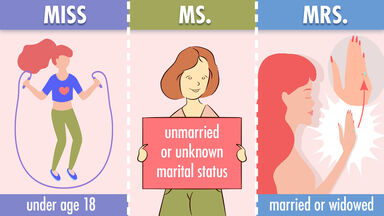
Miss is a title used for unmarried women and is also a polite way of speaking to or getting the attention of young women.

(noun)

  1. An example of miss is the title you use when you address a letter to an unmarried female.
  2. An example of miss is what you call out when you want to get the attention of a young girl.

YourDictionary definition and usage example. Copyright © 2013 by LoveToKnow Corp.

See miss in Webster's New World College Dictionary

transitive verb

  1. to fail to hit or land on (something aimed at)
  2. to fail to meet, reach, attain, catch, accomplish, see, hear, perceive, understand, etc.
  3. to overlook; let (an opportunity, etc.) go by
  4. to escape; avoid: he just missed being struck
  5. to fail or forget to do, keep, have, be present at, etc.: to miss an appointment
  6. to notice the absence or loss of: to suddenly miss one's wallet
  7. to feel or regret the absence or loss of; want: to miss one's friends
  8. to be without; lack: now used only in present participle: this book is missing a page

Origin: ME missen < OE missan, akin to Ger missen < IE base *meit(h)-, to change, exchange > L mutare, to change

intransitive verb

  1. to fail to hit something aimed at; go wide of the mark
  2. to fail to be successful
  3. to misfire, as an engine
  4. Archaic to fail to obtain, receive, etc.: with of or in

noun

a failure to hit, meet, obtain, see, etc.

noun pl. misses

    1. a title used in speaking to or of an unmarried woman or girl and placed before the name: Miss Smith, the Misses Smith
    2. a title used in speaking to an unmarried woman or girl but used without the name
    3. ☆ a title given to a young woman winning a particular beauty contest or promoting a particular product: Miss Ohio, Miss Cotton
  1. a young, unmarried woman or girl
  2. a series of sizes in clothing for women and girls of average proportions: coats in misses' sizes

Origin: contr. of mistress

Mississippi

See miss in American Heritage Dictionary 4

verb missed, miss·ing, miss·es
verb, transitive
  1. To fail to hit, reach, catch, meet, or otherwise make contact with.
  2. To fail to perceive, understand, or experience: completely missed the point of the film.
  3. To fail to accomplish, achieve, or attain (a goal).
  4. To fail to attend or perform: never missed a day of work.
  5. a. To leave out; omit.
    b. To let go by; let slip: miss a chance.
  6. To escape or avoid: narrowly missed crashing into the tree.
  7. To discover the absence or loss of: I missed my book after getting off the bus.
  8. To feel the lack or loss of: Do you miss your family?
verb, intransitive
  1. To fail to hit or otherwise make contact with something: fired the final shot and missed again.
  2. a. To be unsuccessful; fail.
    b. To misfire, as an internal-combustion engine.
noun
  1. A failure to hit, succeed, or find.
  2. The misfiring of an engine.

Origin:

Origin: Middle English missen

Origin: , from Old English missan; see mei-1 in Indo-European roots

.

noun
  1. Miss Used as a courtesy title before the surname or full name of a girl or single woman. See Usage Note at Ms.
  2. Used as a form of polite address for a girl or young woman: I beg your pardon, miss.
  3. A young unmarried woman.
  4. Miss Used in informal titles for a young woman to indicate the epitomizing of an attribute or activity: Miss Organization; Miss Opera.
  5. mis·ses A series of clothing sizes for women and girls of average height and proportions.

Origin:

Origin: Short for mistress

.

abbreviation
Mississippi

Learn more about miss

link/cite print suggestion box