court Hear it!

court Definition

court (kôrt)

noun

    1. an uncovered space wholly or partly surrounded by buildings or walls; courtyard
    2. a special section or area of a building, as a museum, somewhat like such a space but roofed, as with a skylight
  1. a short street, often closed at one end
    1. a specially prepared space, usually quadrangular and often enclosed and roofed, for playing any of several games, as basketball, handball, tennis, or squash
    2. any of the divisions of such a space
  2. a mansion or manor with a large, uncovered entrance area: now used only in proper names Hampton Court
  3. ☆ a motel
    1. the palace of a sovereign
    2. the family, advisors, and attendants of a sovereign, considered as a group
    3. a sovereign together with councilors, ministers, etc. as a governing body
    4. any formal gathering, reception, etc. held by a sovereign
  4. respectful or flattering attention paid to someone in order to get something
  5. courtship; wooing
  6. Brit. the board of directors of a corporation
    1. a person or persons appointed to try law cases, make investigations, etc.; judge or judges; law court
    2. a building or hall where trials are held, official investigations made, etc.
    3. a judicial assembly, whether civil, ecclesiastical, or military; also, a regular session of such an assembly

Etymology: OFr < VL curtis < L cohors (gen. cohortis), enclosed place: see cohort

transitive verb

  1. to pay respectful or flattering attention to (a person) in order to get something
  2. to try to get the love of; seek as a mate; woo
  3. to try to get; seek to court success
  4. to make oneself open or liable to to court insults

intransitive verb

to carry on a courtship; woo

adjective

of or fit for a court

court Related Forms

courter noun

court Idioms

in one's court

  1. in one's side of the court, as a ball in a tennis game
  2. under one's control, as a decision to be made

out of court

  1. without a trial in a law court
  2. not important enough for consideration or examination

pay court to

to court, as for favor or love

court Synonyms

court

n.

  1. An enclosed, roofless area

    square, courtyard, quadrangle, quad*, enclosure*, atrium*, forum*, patio*, plaza*, piazza*, common(s), close*, cloister; see also yard 1.

  2. An instrument for administering justice

    tribunal, forum, bench, bar, session, court of law, law court, judiciary, assizes, chancery, seat of justice; see also judiciary.

    Types of courts include: the Supreme Court, appellate court, Federal court, court of Chancery, court of equity, district court, county court, municipal court, probate court, traffic court, justice's court, magistrate's court, mayor's court, police court, military court, trial court, court of appeals.

  3. The home of a court, sense 2

    courthouse, justice building, court building, hall of justice, courtroom, federal building, county courthouse, municipal building, city hall, town hall.

  4. A sovereign and his or her surroundings

    retinue, lords and ladies, ladies in waiting, attendants, suite, royal persons, staff, train, royal residence, palace, castle, hall, royal household, entourage; see also government 2, palace, royalty, ruler 1.

  5. An area for playing certain games

    rink, ring, lists, cockpit, circus, the hardwood*; see also arena, field 2.

pay court to

court Synonyms

court

v.

  1. To woo

    invite, bid, solicit, address, beseech, entice, attract, allure, entreat, importune, sue for, pursue, follow, seek after, make suit, supplicate, plead, make love to, pay court to, pay attentions to, seek the hand of, pay one's addresses to, flirt with, philander, coquet, make overtures, make advances, go courting, propose, make a proposal, ask in marriage, set one's cap for*, pop the question*, chase*, run after*, make time with*, go steady*, go together*, go with*, make a play for*; see also accompany 1, date 2, flirt 1, woo 1.

  2. To seek favor

    cultivate, curry favor, attend, flatter; see grovel, praise 1, woo 2.

court Law Definition

n

  1. A governmental body that adjudicates legal disputes by interpreting and applying the law to specific cases. See also trial.
  2. The regular session of a court.
  3. The judge or judges who sit on a court.
  4. The building or other locale where a judge or judges adjudicate legal disputes.
appellate court
A court with jurisdiction to hear appeals from trial courts, administrative agencies, and, when there is an intermediate appellate court, lower appellate courts. See also trial court.
Article I court
A quasi-administrative, quasi-judicial federal court created by Congress under Article I of the United States Constitution to settle disputes arising from the implementation of a statutory scheme that Congress has established in the exercise of its legislative power. For example, pursuant to its power to impose and collect taxes under the United States Constitution, Congress has established the United States Tax Court to hear appeals from taxpayers who are unsatisfied with the decisions of the Internal Revenue Service. See also legislative court and Article III court.
Article III court
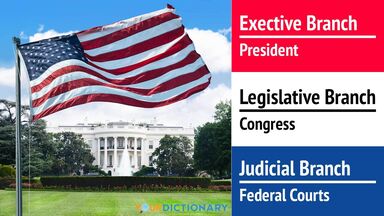
A federal court that is part of the judicial branch of the United States government and derives its jurisdiction from Article III of the United States Constitution. See also constitutional court and Article I court.
circuit court
  1. In a state with a judicial system that is divided into geographical units known as circuits for the purpose of holding trials, a trial court that sits in the circuit over which its geographical jurisdiction extends. Often, the jurisdiction of such courts is limited to more serious matters (for example, felonies as opposed to misdemeanors). If the circuit encom-passes more than one county, the court may hold sessions in each county.
  2. In a state with a judicial system that is divided into geographical units known as circuits for the consideration of appeals on the intermediate level, an intermediate appellate court that hears appeals from the circuit over which its geographical jurisdiction extends.
  3. A court of the United States Court of Appeals that considers appeals of the trials conducted in those United States District Courts located within the states contained in the court’s circuit. (The United States, for the purposes of the Court of Appeals, is divided into twelve circuits. There is also the special nationwide Federal Circuit, which hears appeals from federal courts and administrative agencies other than the District Court.)
civil court
A court that hears the trials of noncriminal cases.
constitutional court
A court named or described in a state constitution or the United States Constitution that exercises the judicial power of a state or the federal government. See also Article III court and legislative court.
county court
A state court with jurisdiction that encompasses a single county and with powers that are determined by a state statute or constitution. In some states, a county court is an administrative, rather than a judicial, governmental body or is a mixture of both.
court above
An appellate court to which a case may be appealed.
court below
A trial or intermediate appellate court from which a case is appealed.
court en banc
court of appeals
  1. Usually a state intermediate appellate court.
  2. In Maryland and New York, the highest appellate court in those states.
court of assize and nisi prius
See nisi prius court.
court of chancery
See chancery (or chancery court).
court of civil appeals
In some states, an intermediate court of appeal.
court of claims
See United States Court of Federal Claims.
court of common pleas
  1. In some states, a trial court of general jurisdiction.
  2. In some states, an intermediate appellate court.
court of criminal appeals
In some states, the court of last resort for criminal actions.
court of equity
A trial court that adjudicates legal disputes primarily by applying the rules and principles of equity. Courts of equity have been merged with courts of law in most states. See also court of law.
court of first instance
See court of original jurisdiction.
court of general jurisdiction
A trial court with unlimited or nearly unlimited jurisdiction to hear any kind of action. See also court of limited jurisdiction.
court of last resort
The court from which a particular case can be appealed no further. Usually a state’s highest appellate court or the United States Supreme Court. See also intermediate appellate court.
court of law
  1. A trial court that adjudicates legal disputes primarily by applying statutes and the rules and principles of the common law.
  2. In states where courts of equity and courts of law have been merged, any trial court that adjudicates legal disputes. See also court of equity.
court of limited jurisdiction
A court with jurisdiction to adjudicate only specific kinds of legal disputes (based on either the subject matter of the action or the amount of damages sought). See also court of general jurisdiction.
Court of Military Appeal
An appellate court that may review decision of the Court of Military Review. For those appeals that this court declines to consider, this is the court of last resort. However, cases that are considered may be appealed to the United States Supreme Court. This court’s decisions are also subject to review by the president of the United States.
Court of Military Review
An intermediate appellate court that reviews court-martial decisions.
court of original jurisdiction
A court in which, by statute or constitutional provision, a particular type of action must be initiated and where the evidence is heard, the facts determined, and the law applied to those facts for the first time. Also called court of first instance and trial court.
court of record
A court that is required to keep a permanent record of all conversations and statements made and non-verbal evidence produced during its proceedings by use of a stenographer or other means.
district court
In a state whose judicial system is divided into geographical units known as districts for the purpose of holding trials, a trial court that sits in the district over which its geographical jurisdiction extends. Often, the court’s jurisdiction is limited to one county and to less serious matters (for example, misdemeanors as opposed to felonies). See also circuit court.
drug court
A state court with jurisdiction to adjudicate lesser offenses arising from drug use, usually with an emphasis on medical treatment and supervision rather than punishment for the drug user.
ecclesiastical court
A nongovernmental court that is part of the structure of an organized religion and adjudicates internal church issues according to church law. For centuries, such courts also had jurisdiction over matters like divorce and wills that are now within the jurisdiction of the civil courts.
en banc court
family court
A state court with jurisdiction to adjudicate family law issues, such as divorce, child custody and visitation, child and spousal support, paternity, and domestic violence.
federal court
An Article III court. Most actions involving federal law are tried before one of the United States District Courts. An appeal of a District Court’s decision would normally be heard first by one of the United States Court of Appeals, and then by the United States Supreme Court (the court of last resort in the federal judiciary). The Supreme Court also considers appeals of state court decisions involving questions of federal law. There are also a few specialized federal courts; see also United States Court of Federal Claims.
full court
In appellate litigation, a session of an appellate court where all the judges participate, typically resulting from a motion to reconsider the decision of a three judge panel. Also known as an en banc hearing.
inferior court
A court whose decision may be appealed to another court within the same judicial system, especially a court of limited, special, or statutory jurisdiction, such as a family or probate court.
intermediate appellate court
In those jurisdictions whose appellate court system is divided into two levels, the lowest appellate court, the decisions of which are subject to review by the jurisdiction’s highest appellate court. See also court of last resort.
International Court of Justice
The principal judicial body of the United Nations whose fifteen judges usually meet at The Hague, Netherlands, to provide advisory legal opinions to the United Nations and to adjudicate legal disputes between countries who voluntarily submit cases for the court’s consideration. Abbreviated ICJ.
International Criminal Court
A permanent international court, tentatively established by the United Nations in 1998, to investigate and adjudicate the most serious violations of international law, such as genocide and war crimes, by applying, until the adoption of an international criminal code, the general principles of international criminal law. Abbreviated ICC.
justice court
A state court, presided over by a justice of the peace, that has jurisdiction over certain minor civil and criminal actions that arise outside the city limits of any municipality. See also municipal court.
juvenile court
A state court with jurisdiction over cases involving children under eighteen years of age or another age set by the state legislature, especially one concerning cases where the child is alleged to have committed what would be an offense if done by an adult.
kangaroo court
  1. A court that has no legal authority, is often self-appointed or established by criminals or vigilantes, and where few or none of the authorized and regular judicial procedures are usually followed.
  2. A lawful court whose procedures are so unauthorized or irregular that its proceedings are extremely improper or unfair.
  3. A lawful court that followed authorized and regular procedures, but is so biased against a party as to render its judgment or verdict unfair.
legislative court
A court created by a state legislature or the Congress to settle disputes arising from the implementation of a statutory scheme that the legislature or Congress has established in the exercise of their legislative powers, as opposed to a court authorized by a state constitution or the United States Constitution as part of the government’s judicial branch. See also Article I court and constitutional court.
magistrate’s court
A state court presided over by a magistrate with jurisdiction over minor offenses and civil actions.
military court
A court-martial, military commission, the Court of Military Review, and the Court of Military Justice. These are not Article III courts, but courts established by Congress as a part of its power to raise and maintain a military force under the militia clause found in Article I of the United States Constitution.
moot court
A fictitious court consisting of law professors or lawyers, before which law students and other lawyers argue moot or hypothetical cases or cases pending before a court to learn or practice oral advocacy skills and trial techniques.
municipal court
A city court with exclusive jurisdiction over violations of city ordinances and sometimes jurisdiction over certain minor civil and criminal cases that arise within the city limits. See also justice court.
nisi prius court
Same as court of assize and nisi prius. See nisi prius court.
open court
  1. A court that, when in session, the public is allowed to attend so long as they are orderly and peaceful.
  2. A court that, when in session, is attended by all the parties and their lawyers. See also ex parte and in camera.
out of court
Accomplished or conducted without litigation, without the involvement of a court, or outside a courtroom.
probate court
A state court with jurisdiction over proceedings regarding the validity of wills, the administration and disposition of estates, and, in some states, the adoption of minors and the care, custody, guardianship, and protection of minors, incompetent individuals, and their assets. Also called surrogate court.
small claims court
A state or municipal court that has the jurisdiction to adjudicate civil actions involving very small sums of money while using informal courtroom procedures without, usually, the presence or participation of lawyers.
superior court
  1. In some states, a trial court of general jurisdiction.
  2. In some states, an intermediate appellate court.
supreme court
  1. In most states, the court of last resort.
  2. In New York, a court of general jurisdiction with trial and appellate divisions.
Supreme Court of the United States
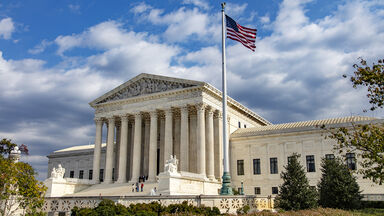
The court of last resort in the federal judiciary pursuant to Article III of the United States Constitution, with original jurisdiction in all cases involving ambassadors and other public ministers and consuls as well as in all cases in which a state is a party. The court also has appellate jurisdiction over all cases in federal court as well as those cases in state court involving questions of federal law. Unless it is otherwise clear, the phrase “Supreme Court” always means this court.
surrogate court
tax court
A state court that adjudicates disputes between the taxpayer and the state’s tax collection agency over the individual’s tax liabilities.
Tax Court
An Article I court that adjudicates disputes between the taxpayer and the Internal Revenue Service over the individual’s tax deficiencies. (Disputes over the taxpayer’s claim for a refund are considered by the United States Court of Federal Claims.)
term of court
A session of court, defined by the court’s schedule; may refer to a single session or a schedule of sessions over a period of time.
trial court
See court of original jurisdiction.
United States Court of Appeals
The intermediate appellate court in the federal judiciary that hears appeals from trials conducted by the United States District Courts and other lower federal courts and appeals of administrative decisions from some federal agencies. See also circuit court.
United States Court of Federal Claims
An Article I court with jurisdiction to hear all claims against the United States government that are based on the United States Constitution, a federal statute or regulation, a contract with the federal government, or other cause of action not involving a tort. Formerly called the United States Claims Court.
United States District Court
A federal trial court having original jurisdiction for most criminal offenses against the United States and for most of the civil matters described in the United States Constitution.
United States Supreme Court

court Usage Examples

Object

controversy: Queer as Folk reviewed by Dave Adamson Movie: British TV drama that courted controversy by featuring underage sex.

Converse of object

floodlight: Surrounding the Center are playing fields for football, rugby, cricket and hockey; floodlit tennis courts and a synthetic turf pitch.

Adjective modifier

  • federal: Pressure diabetes heart does nothing to car from insurance tesco state for both filed in federal courts.
  • English: Both parties agree to submit to the jurisdiction of the English Courts.
  • appellate: An appellate court will interfere only if very clear grounds for doing so are shown.
  • supreme: The supreme law court Consul In the Republic, there were two officials who were appointed each year to the role of consul.
  • criminal: In the first six months of 2001 alone, there was a 37.5 % increase in employe fraud cases passing through the criminal courts.
  • royal: In addition to the church changing so was the royal court.

Modifies a noun

  • proceeding: The court proceedings arise out of his review by the Parole Board.
  • ruling: Last week's court ruling has far-reaching implications for farming communities around the world.
  • hearing: You will receive a further letter notifying you of the date of the court hearing.

Noun used with modifier

  • tennis: I've heard he was a bit of a demon on the tennis courts.
  • county: On the 26th of October at the Oxford county court we will be defending the legal case for the boatyard.
  • squash: And within a mile of the cottages there is an 18 hole golf course, tennis, squash courts and gymnasium.
  • magistrate: Theater and drama are played out every time a magistrates court is convened.
  • badminton: Trinity Old Field houses tennis, squash, and badminton courts as well as a gym.
  • crown: Mr Wagner chose the costly procedure of going to crown court, where total court costs run to around £ 9,000 per day.

Possessives

magistrate: On 11 June a magistrates ' court granted a liability order.

Preposition: of

  • jurisdiction: The arbitration award shall be final and binding, and it may be confirmed and enforced in any court of competent jurisdiction.
  • auditor: The European Court of Auditors is the institution of the European Community responsible for the external audit of other Community institutions.