equivocal Hear it!

equivocal Definition

equivo·cal (ē kwivə kəl, i-)

adjective

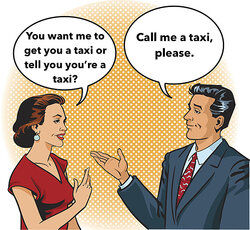
  1. that can have more than one interpretation; having two or more meanings; purposely vague, misleading, or ambiguous an equivocal reply
  2. uncertain; undecided; doubtful an equivocal outcome
  3. suspicious; questionable equivocal conduct

Etymology: < LL aequivocus (see equivocate) & -al

equivocal Related Forms
equiv′o·cali·ty (-kalə tē) noun or equivo·cal·ness equivo·cally adverb
equivocal Synonyms

equivocal

modif.

ambiguous, dubious, puzzling, misleading; see obscure 1. See syn. study at obscure.

equivocal Usage Examples

Preposition: about

  • policy: Leffler, on the other hand, is rather more equivocal about American foreign policy.

Modifying Another Word

  • very: I desire now to direct attention to the very equivocal proceedings of the Crown with regard to this society.
  • still: On the phase diagram we have favored the former rather than the latter explanation, although this conclusion is still equivocal at the moment.
  • rather: The answer was a rather equivocal " No " .
  • often: Intradermal testing is a useful primary screening test but results are often equivocal.
  • too: This seemed to him to be ' too equivocal ` .
  • also: The data from repetitive transcranial magnetic stimulation ( rTMS ) studies in healthy volunteers is also equivocal with respect to HERA.

Preposition: with

  • respect: The evidence from these evaluations is equivocal with respect to the effect of ICT on literacy.

Modifies a noun

  • result: Equivocal weakly positive results were obtained in the mouse lymphoma assay.
  • attitude: The many changes affecting women's property rights during the eighteenth century suggest at best an equivocal attitude to the female subject.
  • response: A failure to respond, an evasive or equivocal response or a late response could allow the civil court to draw an adverse inference.
  • evidence: There was equivocal evidence for a carcinogenic effect in male mice.
  • position: As for the euro, it is not an equivocal position; the tests are quite clear.
  • expression: Obscurity may arise from the use of equivocal expressions, of metaphorical phrases, or of eccentric words.

Used with adjective complement

  • remain: The Court adopted the following: 1. The cause of an injury or an episode that cannot be explained scientifically remain equivocal.
  • seem: His objections were so cautious as to seem equivocal; and so much the more destructive was the attack of the Committee's representatives.
  • consider: However, this evidence should not be considered equivocal.