The definition of Christmas is a holiday celebrated on December 25 both as a religious tradition commemorating the birth of Jesus and as a secular holiday.
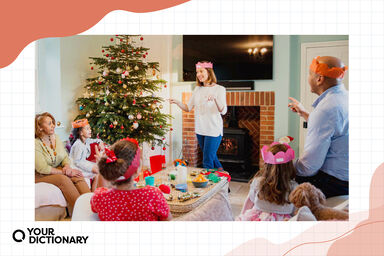
Many people around the world decorate with evergreen trees and branches. Germans started bringing these trees into their homes in the 16th century. Evergreens represent strength, because they can stand up to a harsh, cold winter. In some cultures, they are believed to ward off evil spirits. Besides that, they also smell great. Trees and evergreen wreaths can be decorated with just about anything: popcorn, candles, lights, apples, berries, small toys, cookies, ornaments, tinsel, garland, and nuts.
The first printed Christmas cards started in England in 1843 as a way to remind people to help the poor. The very first printed card said, “A Merry Christmas and a Happy New Year to You" and was sent by Sir Henry Cole. At first, the cards had signs of spring, like birds, animals, children, and fairies. This tradition caught on quickly and is practiced by many around the world.
The tradition of hanging stockings by the fire started with the story of St. Nicholas. He wanted to help a poor man and his three daughters, but wanted to be anonymous. As the story goes, he rode by their house on a white horse and tossed three bags of coins down the chimney. The bags were miraculously caught in the girls’ stockings that had been hung there to dry.
(noun)See Christmas in Webster's New World College Dictionary
noun
Origin: ME Cristemas < OE Cristesmæsse: see Christ & Mass
Related Forms:
See Christmas in American Heritage Dictionary 4
noun
Origin:
Origin: Middle English Cristemas
Origin: , from Old English Crīstes mǽsse, Christ's festival
Origin: : Crīst, Christ; see Christ
Origin: + mǽsse, festival; see mass
.Related Forms:
Learn more about Christmas
Related Articles