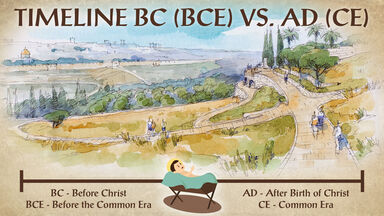
The definition of Christ is Jesus, the Messiah whose coming was predicted in the Old Testament.
(noun)An example of Christ is the man who rose from the dead after being put to death by Pontius Pilate.
See Christ in Webster's New World College Dictionary
noun
Origin: ME & OE Crist < LL(Ec) Christus < Gr christos, the anointed (in N.T., Messiah) < chriein, to anoint < IE base *ghrēi-, to spread over, smear > grime
See Christ in American Heritage Dictionary 4
noun
Origin:
Origin: Middle English Crist
Origin: , from Old English Crīst
Origin: , from Latin Chrīstus
Origin: , from Greek Khrīstos
Origin: , from khrīstos, anointed
Origin: , verbal adj. of khrīein, to anoint; see ghrēi- in Indo-European roots
.Related Forms:
See Christ in Ologies
Christ
See also christianity; heresy; religion; theology.
adoptionism
the 8th-century heretical doctrine that Christ in His human nature was the son of God only by adoption; that in His spiritual nature, however, He was truly God’s son. Also adoptianism. —adoptionist, n., adj.
a 4th-century doctrine, considered heretical by orthodox Christian-ity, that Christ was merely the noblest of men and, being of a different sub-stance, was not the son of God. Cf. heteroousianism, psilanthropism. —Arian, n., adj. —Arianistic, Arianistical, adj.
Athanasianism
the teachings of Athanasius, 4th-century bishop of Alexandria, asserting that Christ is of the same substance as God; adopted by the Council of Nicea as orthodox doctrine. Also called homoousianism, homoiousianism. —Athanasian, n., adj.
autotheism
the Calvinist doctrine of the separate existence of God the Son, derived from Calvin’s assertion that Christ took His person from God, but not His substance. —autotheist, n. —autotheistic, adj.
the doctrine that Christ will return to the world in a visible form and set up a kingdom to last 1000 years, after which the world will come to an end. —chiliast, n. —chiliastic, adj.
the branch of theology that studies the personality, attitudes, and life of Christ. —Christological, adj.
Christophany
one or all of Christ’s appearances to men after the resurrection, as recorded in the Gospels.
the teaching of an early heretical sect asserting that Christ’s body was not human or material, but celestial in substance. —Docetic, adj.
Dyophysitism
a 5th-century doctrine that Christ had a dual nature, the divine and the human, united perfectly in Him, but not inextricably blended. Cf. Monophysitism. —Dyophysite, n. —Dyophysitic, adj.
Dyothelitism, Dyotheletism
the doctrine that Christ had two wills, the human and the divine. Cf. Monothelitism. Also Dyothetism. —Dyothelite, Dyothelete, n.
Eutychianism
Monophysitism. —Eutychian, n.
heteroousianism
a position in the 4th-century controversy over Christ’s nature, asserting that He and God were of different natures; Arianism. Also spelled heterousianism. —heteroousian, n., adj.
homoiousianism
a position in the 4th-century controversy over Christ’s nature, asserting that He and God were of similar, but not the same, natures; semi-Arianism. Also homoeanism. —homoiousian, n., adj.
homoousianism
a position in the 4th-century controversy over Christ’s nature, asserting that He and God are of the same nature; Athanasianism. —homoousian, n., adj.
the theological doctrine that the body and blood of Christ are present in the bread and wine after they are consecrated.
Julianism
the heretical theory of Julian, 6th-century bishop of Halicarnassus, who took the extreme Monophysite position that Christ’s human nature had been subsumed in and altered by the divine. —Julianist, n.
kenoticism
the theological concept that, through His incarnation, Christ humbled or emptied Himself and became a servant for man’s sake. —kenosis, kenoticist, n. —kenotic, adj.
sayings or maxims attributed to Christ but of which there is no written record or mention in the Gospels. See also wisdom.
1. the doctrine of Christ’s 1000-year kingdom.
2. a belief in the millennium; chiliasm. —millenarian, n., adj. —millenarist, n.
a doctrine that Christ will make a second Advent and that the prophecy in the book of Revelation will be fulfilled with an earthly millennium of peace and righteousness. Also called millenarianism, chiliasm. —millennialist, n.
a 5th-century heresy concerning the nature of Christ, asserting that He had only a divine nature or that the human and divine made one composite nature. Cf. Dyophysitism. —Monophysite, n., adj. —Monophysitic, Monophysitical, adj.
Monothelitism, Monotheletism
a heretical position of the 7th century that Christ’s human will had been superseded by the divine. Also Monothelism. —Monothelite, Monothelete, n. —Monothelitic, Monotheletic, adj.
a 5th-century heresy concerning Christ’s nature, asserting that the human and divine were in harmony but separate and that Mary should be considered the Mother of Christ, not of God. — Nestorian, n., adj.
Patripassianism
a heretical, monophysitic concept of the 2nd and 3rd centuries that held that, in the Crucifixion, the Father suffered equally with the Son. —Patripassian, Patripassianist, n.
Paulianism
a 3rd-century heresy concerning the nature of Christ, denying the divine by asserting that Christ was inspired by God and was not a person in the Trinity. —Paulian, Paulianist, n.
Phantasiast
a member of an early Christian sect that denied the reality of Christ’s body.
psilanthropism
the doctrine that Christ was merely a human being. Cf. Arianism. —psilanthropist, n. —psilanthropic, adj.
sindonology
the study of fabric artifacts, especially the supposed burial shroud of Christ. —sindonologist, n.
the doctrine of salvation through Jesus Christ. —soteriologic, soteriological, adj.
the condition of being, simultaneously, both god and man. Also theanthropology. —theanthropist, n. —theanthropic, adj.
the orthodox Christian belief that God exists as the Trinity of the Father, the Son, and the Holy Spirit. Cf. unitarianism. —trinitarian, n., adj.
the doctrines of those, including the Unitarian denomination, who hold that God exists only in one person. Cf. trinitarianism. —unitarian, n.,adj.
Learn more about Christ