island

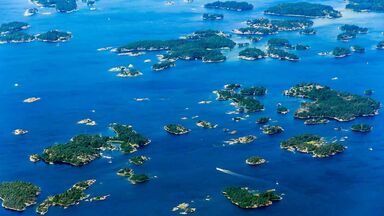
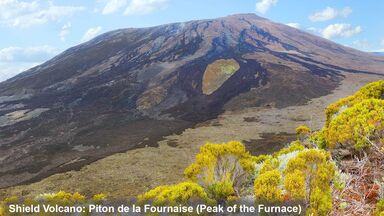
An island is defined as a body of land surrounded by water.

(noun)

An example of an island is Ellis Island in New York City.

The definition of an island is an area that is isolated or stands alone.

(noun)

  1. An example of an island is a central counter in a kitchen.
  2. An example of an island is a raised area in the center of a road.

YourDictionary definition and usage example. Copyright © 2013 by LoveToKnow Corp.

See island in Webster's New World College Dictionary

noun

  1. a land mass not as large as a continent, surrounded by water
  2. anything like an island in position or isolation; specif.,
    1. a structure above the flight deck of an aircraft carrier containing the bridge, radar, etc.
    2. a counter which stands alone as in the central area of a kitchen
    3. any of the elevated areas of a service station, having a bank of gasoline pumps: a self-service island
    1. traffic island
    2. safety island
  3. Anat. a tissue or cluster of cells differing from surrounding tissue in formation, etc.

Origin: < ME iland (respelled by assoc. with unrelated isle) < OE igland, iegland, lit., island land & ealand, lit., water land < ig, ieg, isle (akin to Ger aue, ON ey < PGmc *aujo, akin to *ahwo) & ea, water < PGmc *ahwo, water < IE *akwa > L aqua: see land

transitive verb

  1. to make into or like an island; isolate
  2. to intersperse with or as with islands: a prairie islanded with wooded tracts

See island in American Heritage Dictionary 4

noun
  1. Abbr. Isl. or Is. or I. A land mass, especially one smaller than a continent, entirely surrounded by water.
  2. Something resembling an island, especially in being isolated or surrounded, as:
    a. An unattached kitchen counter providing easy access from all sides.
    b. A raised curbed area, often used to delineate rows of parking spaces or lanes of traffic.
    c. The superstructure of a ship, especially an aircraft carrier.
  3. Anatomy A cluster of cells differing in structure or function from the cells constituting the surrounding tissue.
transitive verb is·land·ed, is·land·ing, is·lands
To make into or as if into an island; insulate: a secluded mansion, islanded by shrubbery and fences.

Origin:

Origin: Alteration (influenced by isle)

Origin: of Middle English ilond

Origin: , from Old English īegland

Origin: : īg, īeg; see akw-ā- in Indo-European roots

Origin: + land, land; see lendh- in Indo-European roots

.

Word History: It may seem hard to believe, but Latin aqua, “water,” is related to island, which originally meant “watery land.” Aqua comes almost unchanged from Indo-European *akwā-, “water.” *Akwā- became *ahwō- in Germanic by Grimm's Law and other sound changes. To this was built the adjective *ahwjō-, “watery.” This then evolved to *awwjō- or *auwi-, which in pre-English became *ēaj-, and finally ēg or īeg in Old English. Island, spelled iland, first appears in Old English in King Alfred's translation of Boethius about A.D. 888; the spellings igland and ealond appear in contemporary documents. The s in island is due to a mistaken etymology, confusing the etymologically correct English iland with French isle. Isle comes ultimately from Latin īnsula “island,” a component of paenīnsula, “almost-island,” whence our peninsula.

Learn more about island

island

link/cite print suggestion box