dialect Hear it!

dialect Definition

dia·lect (ə lekt′)

noun

  1. the sum total of local characteristics of speech
  2. Rare the sum total of an individual's characteristics of speech; idiolect
  3. popularly any form of speech considered as deviating from a real or imaginary standard speech
  4. Linguis.
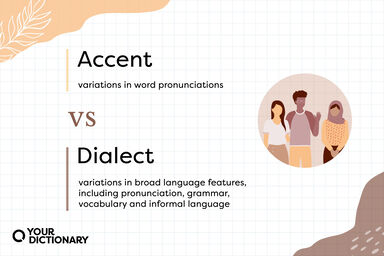
    1. a form or variety of a spoken language, including the standard form, peculiar to a region, community, social group, occupational group, etc.: in this sense, dialects are regarded as being, to some degree, mutually intelligible while languages are not mutually intelligible
    2. any language as a member of a group or family of languages English is a West Germanic dialect

Etymology: L dialectus < Gr dialektos, discourse, discussion, dialect < dialegesthai, to discourse, talk < dia, between (see dia-) + legein, to choose, talk (see logic)

adjective

of or in a dialect dialect ballads

dialect Related Forms
di′a·lec·tal adjective di′a·lec·tally adverb
dialect Synonyms

dialect

n.

  1. idiom, accent, vernacular, patois, slang, jargon, argot, cant, lingo*, pidgin*, creole; see also accent 3, language 1.

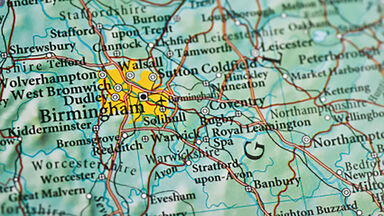
    Accents and dialects of English include --- United States: Standard American, stage, Northern, Midland, North Midland, South Midland, Black, Southern, General American, Eastern New England, Inland North, Boston, Down East, Upstate New York, New York City, Bronx, Brooklyn, Chelsea, Virginia Piedmont, Highland Southern, Southern Highlands, Southern Tidewater, Coastal Southern, Gulla, Southern Appalachian, Southern Louisiana, Gulf States, Deep South, Texas, Cajun, Chicago, Western, Southwest, Northwest; British Isles: British Standard, Received Standard, BBC, public-school, Northern, Midland, Birmingham, Southern, cockney, Southeastern, Kentish, Gloucestershire, Devonshire, Cornish, Shropshire, Oxford, Lincolnshire, Norfolk, Yorkshire, Lancashire, Liverpool, Northumbrian, Lowland Scots, Glasgow, Highland Scots, Edinburgh, Inverness, Welsh, Irish, Dublin, Ulster, Belfast, Aran Islands, Western Irish; others: Australian, New Zealand, South African, Canadian, Maritime, Ontario, Western Canadian.

  2. Accents and dialects of languages other than English include --- French: langue d'oc, langue d'oïl (both French), Parisian, Norman, Anglo-Norman, Breton, Gascon, Provençal, Occitan, French Canadian, Algerian; Spanish: Castilian, Catalan, Andalusian, South American, Central American, Mexican, Puerto Rican, Cuban, Philippine; German: High German, Bavarian, Franconian, Swabian, Swiss German, Austrian, Rhenish, Yiddish; Low German, Plattdeutsch, Prussian, Berlin, Hamburg, Saxon, Pennsylvania Dutch, Pennsylvania German; Italian: Tuscan, Piedmontese, Roman, Venetian, Neopolitan, Sicilian; Russian: Muscovite, Little Russian, Belorussian, White Russian, Georgian, Siberian; Chinese: Mandarin, Fukien, Peking, Beijing, Cantonese, Manchurian, Shansi.

dialect, in this comparison, refers to a form of a language used within a particular locality or group and differing from the standard language in matters of pronunciation, syntax, etc.; vernacular today commonly refers to the informal or colloquial spoken variety of a language as distinguished from the formal or literary variety; cant refers to the distinctive stock words, phrases, and clichés used by a particular sect, class, etc. clergymen's cant; jargon is used of the special vocabulary and idioms of a particular class, occupational group, etc., esp. by one who is unfamiliar with these; argot refers esp. to the secret jargon of thieves and tramps; lingo is a humorous or mildly contemptuous term applied to any language, dialect, or jargon by one to whom it is unintelligible; slang refers to highly informal speech and particularly to new words, phrases, and extended senses, esp. when restricted in use to an identifiable group college slang

dialect Usage Examples

Preposition: of

  • Scot: Dialects of Scots Scots has a wide range of dialects.
  • language: Q: You speak several dialects of the Kurdish language.

Converse of object

  • speak: The dialect spoken by everyone looked toward Oslo rather than London.
  • relate: The language of the majority of Macedonians is in fact a dialect closely related to Bulgarian.
  • understand: Whoever listens to our program on a daily basis will understand both dialects, whether intended or not.
  • know: Do we first ask do they know the dialect, or do we say, here are people learning the language of Jesus.
  • learn: She learned the local dialects, and was able to accompany her husband on his tours of inspection and watch him dispense justice.
  • use: I love, too, the way he uses dialect.

Adjective modifier

  • Kurdish: The number of Kurds with access to Internet who can read in Kurdish dialects is another parameter.
  • Northumbrian: These can be poems, prose, essays or plays, written in standard English or Northumbrian dialect.
  • Doric: I am the first academic to gain a PhD by public output featuring video capture and speaking the Doric dialect of NE Scotland.
  • Scots: The book has many fascinating bits of lore, as well as extensive oral poetry, all in Scots dialect.
  • nonstandard: Nonstandard Dialects: Language varieties that deviate from a commonly accepted language norm.

Modifies a noun

  • poet: The 19th century Dorset dialect poet William Barnes wrote on Bridport Harbor.
  • variation: Some of your entries will be used to map dialect variation across the UK.
  • coach: Sometimes actors learn a foreign language or train with a dialect coach to develop an accent to make their characters more realistic.
  • word: I try and use as many dialect words as I can in my everyday speech.
  • geography: In general, that is doubtless right, but I consider that dialect geography is not the whole explanation for antlingen in Tatian.
  • poetry: Pete Castle ( Facts & Fiction / August 2005 ) No, this isn't an obscure album of medieval Lancashire dialect poetry!
dialect Quotes

Most of their discourse was about hunting, in a dialect I understand very little.

—Pepys, Samuel

Since our concern was speech, and speech impelled us To purify the dialect of the tribe And urge the mind to aftersight and foresight.

—Eliot,T(homas) S(tearns)

Her occasional pretty and picturesque use of dialect wordsöthose terrible marks of the beast to the truly genteel.

—Hardy,Thomas