title

The definition of a title is the name of a person's job, the name of a creative work or a word used before someone's name to indicate his or her status.

(noun)

  1. "Vice President of Marketing" is an example of a title.
  2. The Wizard of Oz is an example of a movie title.
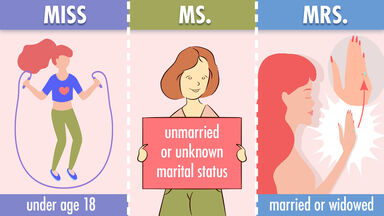
  3. "Mr." and "Mrs." and "Dr." are all examples of titles.

YourDictionary definition and usage example. Copyright © 2013 by LoveToKnow Corp.

See title in Webster's New World College Dictionary

noun

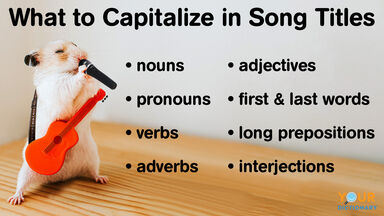
  1. the name of a book, chapter, poem, essay, picture, statue, piece of music, play, film, etc.
    1. title page
    2. a literary work of a particular title: 150 new titles in the publisher's fall catalog
  2. a descriptive name or appellation; epithet
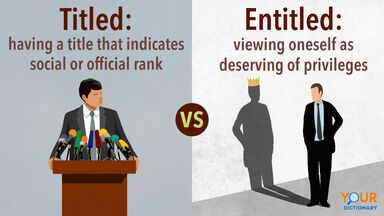
  3. an appellation given to a person or family as a sign of privilege, distinction, rank, or profession
  4. a claim or right
  5. in sports and other competition, a championship
  6. Ch. of England a source of income or field of work required of a candidate for ordination
  7. Film, TV words shown on the screen that give credit to someone for work done, translate a segment of foreign dialogue, etc.: usually used in pl.
  8. Law
    1. the name of a statute or act; also, the heading designating a legal proceeding
    2. a division of a law book, statute, etc., usually larger than a section or article
    3. a right to ownership, esp. of real estate
    4. evidence of such right of ownership
    5. a document stating such a right; deed

Origin: OFr < L titulus, inscription, label, title, sign

transitive verb titled, titling

to give a title to; designate by a specified name, or title; entitle

See title in American Heritage Dictionary 4

noun
  1. An identifying name given to a book, play, film, musical composition, or other work.
  2. A general or descriptive heading, as of a book chapter.
  3. a. Written material to be read by viewers that is included in a film or television show, typically presenting credits, narration, or dialogue. Often used in the plural.
    b. A written piece of translated dialogue superimposed at the bottom of the frame during a film; a subtitle.
  4. Law A heading that names a document, statute, or proceeding.
  5. A division of a law book, declaration, or bill, generally larger than a section or article.
  6. A written work that is published or about to be published: the titles in a press's fall catalog.
  7. Law
    a. The coincidence of all the elements that constitute the fullest legal right to control and dispose of property or a claim.
    b. The aggregate evidence that gives rise to a legal right of possession or control.
    c. The instrument, such as a deed, that constitutes this evidence.
  8. a. Something that provides a basis for or justifies a claim.
    b. A legitimate or alleged right. See Synonyms at claim.
  9. A formal appellation attached to the name of a person or family by virtue of office, rank, hereditary privilege, noble birth, or attainment or used as a mark of respect.
  10. A descriptive name; an epithet.
  11. Sports A championship.
  12. Ecclesiastical
    a. A source of income or area of work required of a candidate for ordination in the Church of England.
    b. A Roman Catholic church in or near Rome having a cardinal for its nominal head.
transitive verb ti·tled, ti·tling, ti·tles
  1. To give a title to; entitle.
  2. To call by a name; style.

Origin:

Origin: Middle English

Origin: , from Old English titul, superscription,

Origin: and from Old French title, title

Origin: , both from Latin titulus

.

Learn more about title

link/cite print suggestion box