modern

The definition of modern is having to do with the current time.

(adjective)

An example of modern used as an adjective is a modern oven that has current features and technology.

Modern is defined as a style of art, design, or fashion that is very different from past styles.

(adjective)

An example of modern used as an adjective is the modern home design of a concrete home.

YourDictionary definition and usage example. Copyright © 2013 by LoveToKnow Corp.

See modern in Webster's New World College Dictionary

adjective

  1. of the present or recent times; specif.,
    1. of or having to do with the latest styles, methods, or ideas; up-to-date
    2. designating or of certain contemporary trends and schools of art, music, literature, dance, etc.
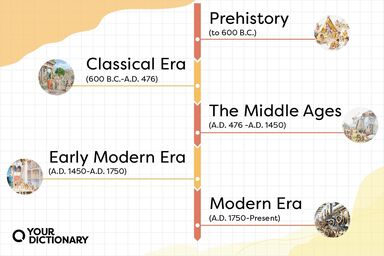
  2. of or relating to the period of history after the Middle Ages, from c. 1450 to the present day
  3. designating the form of a language in its most recent stage of development

Origin: Fr moderne < LL modernus < L modo, just now, orig. abl. of modus: see mode

noun

  1. a person living in modern times
  2. a person having modern ideas, beliefs, standards, etc.
  3. Printing a style of typeface characterized by heavy down strokes contrasting with narrow cross strokes

Related Forms:

See modern in American Heritage Dictionary 4

adjective
  1. a. Of or relating to recent times or the present: modern history.
    b. Characteristic or expressive of recent times or the present; contemporary or up-to-date: a modern lifestyle; a modern way of thinking.
  2. a. Of or relating to a recently developed or advanced style, technique, or technology: modern art; modern medicine.
    b. Avant-garde; experimental.
  3. often Modern Linguistics Of, relating to, or being a living language or group of languages: Modern Italian; Modern Romance languages.
noun
  1. One who lives in modern times.
  2. One who has modern ideas, standards, or beliefs.
  3. Printing Any of a variety of typefaces characterized by strongly contrasted heavy and thin parts.

Origin:

Origin: French moderne

Origin: , from Old French

Origin: , from Late Latin modernus

Origin: , from Latin modo, in a certain manner, just now

Origin: , from modō

Origin: , ablative of modus, manner; see med- in Indo-European roots

.

Related Forms:

  • modˈern·ly adverb
  • modˈern·ness noun
Word History: The word modern, first recorded in 1585 in the sense “of present or recent times,” has traveled through the centuries designating things that inevitably must become old-fashioned as the word itself goes on to the next modern thing. We have now invented the word postmodern, as if we could finally fix modern in time, but even postmodern (first recorded in 1949) will seem fusty in the end, perhaps sooner than modern will. Going back to Late Latin modernus, “modern,” which is derived from Latin modo in the sense “just now,” the English word modern (first recorded at the beginning of the 16th century) was not originally concerned with anything that could later be considered old-fashioned. It simply meant “being at this time, now existing,” an obsolete sense today. In the later 16th century, however, we begin to see the word contrasted with the word ancient and also used of technology in a way that is clearly related to our own modern way of using the word. Modern was being applied specifically to what pertained to present times and also to what was new and not old-fashioned. Thus in the 19th and 20th centuries the word could be used to designate a movement in art, modernism, which is now being followed by postmodernism.

Learn more about modern

modern

link/cite print suggestion box