elder

Elder means being older than others.

(adjective)

An example of elder used as an adjective is in the phrase "the elder member of the family," which means the oldest member of the family.

The definition of an elder is an older person or an ancestor.

(noun)

An example of an elder is a 95 year old man.

YourDictionary definition and usage example. Copyright © 2013 by LoveToKnow Corp.

See elder in Webster's New World College Dictionary

adjective

  1. born or brought forth earlier than another or others; exceeding another in age; senior; older
  2. Obsolete of longer standing or superior rank, position, validity, etc.
  3. Now Rare earlier; former; ancient

Origin: ME < OE (Mercian) eldra, ældra, compar. < base of ald, eald, old

noun

  1. an older person
  2. an aged person
  3. a forefather; ancestor; predecessor
  4. an older person with some authority or dignity in a tribe or community
    1. an officer in an early Christian church
    2. in some Protestant churches, a minister; also, a member appointed to the ruling body who may also assist at Communion
    3. Mormon Ch. a member of the Melchizedek priesthood

noun

  1. any of a genus (Sambucus) of shrubs and small trees of the honeysuckle family, with compound leaves and flat-topped clusters of small white flowers followed by red or purple berries
  2. any of various unrelated plants, as the box elder or the marsh elder

Origin: ME ellerne & (with intrusive -d- as in alder) eldore < OE ellern, ellen, akin to MLowG ellern, eldern < IE base *el- > elm, alder, L alnus, elder

See elder in American Heritage Dictionary 4

adjective
  1. Greater than another in age or seniority.
  2. Superior to another or others, as in rank.
noun
  1. An older person.
  2. An older, influential member of a family, tribe, or community.
  3. One of the governing officers of a church, often having pastoral or teaching functions.
  4. Mormon Church A member of the higher order of priesthood.

Origin:

Origin: Middle English eldre

Origin: , from Old English eldra; see al-2 in Indo-European roots

.

Related Forms:

  • elˈder·shipˌ noun
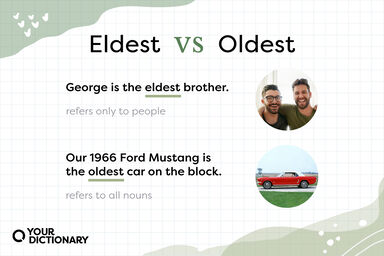
Usage Note: The adjective elder is not a synonym for elderly. In comparisons between two persons, elder means “older” but not necessarily “old”: My elder sister is sixteen; my younger, twelve. (Eldest is used when three or more persons are compared: He is the eldest of four brothers.) In other contexts elder does denote relatively advanced age but with the added component of respect for a person's achievement, as in an elder statesman. If age alone is to be expressed, one should use older or elderly rather than elder: A survey of older Americans; an elderly waiter. • Unlike elder and its related forms, the adjectives old, older, and oldest are applied to things as well as to persons.

noun
Any of various shrubs or small trees of the genus Sambucus, having clusters of small white flowers and red or purplish-black berrylike fruit.

Origin:

Origin: Middle English eldre

Origin: , from Old English ellǽrn

.

Learn more about elder

elder

link/cite print suggestion box