disease Hear it!

disease Definition

dis·ease (di zēz)

noun

  1. any departure from health; illness in general
  2. a particular destructive process in an organ or organism, with a specific cause and characteristic symptoms; specif., an illness; ailment
  3. any harmful or destructive condition, as of society

Etymology: ME disese, inconvenience, trouble, sickness < OFr desaise, discomfort < des-, dis- + aise, ease

transitive verb -·eased, -·eas·ing

to cause disease in; infect or derange: usually in pp.

Etymology: ME disesen < OFr desaaisier < the n.

disease Related Forms

dis·eased adjective

disease Synonyms

disease

n.

sickness, malady, ailment, illness, indisposition, unhealthiness, disorder, condition, complaint, spell, distemper, unsoundness, infirmity, affection, visitation, morbidity, pathological case, psychosomatic illness, epidemic, plague, pestilence, infection, virus, contagion, affliction, complication, syndrome, fever, nervous disorder, functional disorder, pathological condition, attack, seizure, collapse, breakdown, pathology, symptomatology, bug*, temperature*; see also illness 1. see also complex 1, insanity 1.

Antonyms health*, strength*, vigor. *

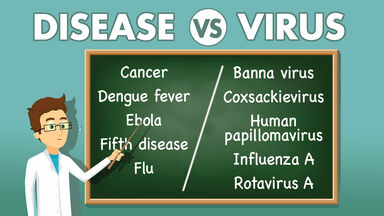
Specific diseases include --- diseases affecting various organs or the body generally: cancer, ulcer, shock, paresis, paralysis, focal infection, atrophy, psittacosis, chicken pox, cholera, diphtheria, malaria, measles, German measles, mumps, Rocky Mountain spotted fever, Lyme disease, Legionnaires' disease, rabies, scarlet fever, scarlatina, smallpox, toxic-shock syndrome, tularemia, typhoid fever, typhus, leprosy, hepatitis, yellow fever; venereal or social diseases: gonorrhea, clap*, dose*; herpes, AIDS, chlamydia, genital warts, syphilis, French disease*, maladie anglaise* (French), English disease*, pox*; diseases affecting the brain and nervous system: encephalitis, sleeping sickness, meningitis, aphasia, stroke, Alzheimer's disease, hemiplegia, Reye's syndrome, brain tumor, poliomyelitis, polio, infantile paralysis, sclerosis, amyotrophic lateral sclerosis, Lou Gehrig's disease, multiple sclerosis, MS, delirium tremens, D.T.'s*; diseases affecting the respiratory tract: bronchitis, rhinitis, common cold, sniffles*, cough, influenza, flu, Asian flu, Hong Kong flu, laryngitis, pleurisy, viral pneumonia, pulmonary pneumonia, phthisis, tonsillitis, emphysema, strep throat*, sinusitis, croup, tuberculosis, TB, whooping cough; diseases affecting the digestive system: acidosis, ulcer, appendicitis, Bright's disease, colitis, diabetes, diarrhea, constipation, diverticulitis, dysentery, anasarca, dropsy, gravel, jaundice; diseases affecting the circulatory system: angina pectoris, high blood pressure, hypertension, cystic fibrosis, hemorrhage, hardening of the arteries, hypertension, heart murmur, palpitations, arteriosclerosis, atherosclerosis, coronary thrombosis; skin diseases: athlete's foot, boils, warts, eczema, psoriasis, erysipelas, dermatitis, scabies, ringworm, trench foot, acne; diseases of the joints and muscles: arthritis, osteoporosis, bends, cramp, charley horse*, crick*; rheumatism, lumbago; diseases of the eye: cataracts, glaucoma, conjunctivitis, pink eye, trachoma; allergies: hay fever, rose fever, asthma, hives; diseases of the endocrine glands: hyperthyroidism, hypothyroidism, progeria, hyperpituitarism, hypopituitarism; diseases common to animals and birds: anthrax, black leg, blind staggers, bloat, cholera, colic, distemper, encephalitis, hydrophobia, rabies, heaves, hoof and mouth disease, glanders, milk sickness, pneumonitis, roup, spavin, trichomoniasis; diseases common to plants: blight, rot, rust, scale, smut, wilt;

disease may apply generally to any deviation of the body from its normal or healthy state, or it may refer to a particular disorder with a specific cause and characteristic symptoms; condition and affection refer to a disorder of a specific organ or part a heart condition, an affection of the spleen; malady usually refers to a deep-seated chronic disease, frequently one that is ultimately fatal; ailment refers to a chronic, annoying disorder of whatever degree of seriousness the minor ailments of the aged

disease Usage Examples

Converse of object

  • transmit: Even tho condoms are not 100 per cent safe, they do protect you against sexually transmitted diseases.
  • inherit: Preimplantation genetic diagnosis ( PGD ) has great potential for preventing inherited genetic diseases.
  • treat: Targets for drugs designed to treat many human diseases will often be such human proteins.
  • prevent: This product is not intended to diagnose, treat, cure or prevent any disease.
  • cure: This spell will also cure any diseases the subject might have at the time.

Adjective modifier

  • coronary: Being at high risk is a latent stage of coronary heart disease.
  • infectious: By contrast, there were no unfilled posts in renal medicine or infectious diseases.
  • cardiovascular: The study brings together a multi-disciplinary team who have worked together over the last decade studying the risk factors for cardiovascular disease.
  • chronic: Up to 6,000 deaths a year from chronic obstructive lung diseases may be related to work.
  • respiratory: Acid rain has also been linked to respiratory diseases in children.
  • inflammatory: Identification of genetic risk factors for inflammatory bowel disease in the Scottish population.

Modifies a noun

  • outbreak: Table 1 illustrates how significant disease outbreaks might affect an industry.
  • prevention: June 2005 To use the data to investigate the economics of cardiovascular disease prevention in primary care.
  • progression: Treatment must be initiated rapidly as disease progression can be swift.

Noun used with modifier

  • heart: Being at high risk is a latent stage of coronary heart disease.
  • liver: Obesity seems to increase the risk of advanced liver disease in heavy drinkers.
  • kidney: Treatment for kidney disease focuses on blood pressure control using ACE inhibitors.
  • lung: Do you suffer from liver, kidney or lung disease?
  • mouth: These areas are invasive species, foot and mouth disease and Severe Acute Respiratory Syndrome.
  • bowel: Identification of genetic risk factors for inflammatory bowel disease in the Scottish population.