any of several orders (esp. Rajiformes) of cartilaginous fishes with a horizontally flat body, both eyes on the upper surface, widely expanded fins at each side, and a slender or whiplike tail, as the eagle rays, electric rays, and skates
noun
a masculine name
Ray,
Man 1890-1976; U.S. painter & photographer
Ray,
Satyajit 1921-92; Indian film writer & director
See ray in American Heritage Dictionary 4
(rā)
noun
a. A thin line or narrow beam of light or other radiant energy.
b. A graphic or other representation of such a line.
Radiance; light.
A small amount; a trace: not a ray of hope left.
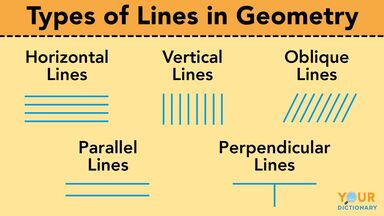
Mathematics A straight line extending from a point. Also called half-line.
A structure or part having the form of a straight line extending from a point.
Any of the bright streaks that are seen radiating from some craters on the moon.
Botany
a. A ray flower or the corolla of a ray flower.
b. A branch of an umbel.
Zoology
a. One of the bony spines supporting the membrane of a fish's fin.
b. One of the arms of a starfish or other radiate animal.
raysSlang Sunshine: Let's go to the beach and catch some rays.
transitive verbrayed, ray·ing, rays
To send out as rays; emit.
To supply with rays or radiating lines.
To cast rays on; irradiate.
(rā)
noun
Any of various marine fishes of the order Rajiformes or Batoidei, having cartilaginous skeletons, horizontally flattened bodies, and narrow tails.
(rā), Cape
A promontory of extreme southwest Newfoundland, Canada, on Cabot Strait.
, John 1627-1705.
English naturalist who was the first to use anatomy to distinguish between specific plants and animals and established “species” as the basic classification of living things.
, Man 1890-1976.
American artist. A founder of Dada in New York, he is known for his photographs, paintings, sculpture, films, and later experiments with surrealism.
(rī), Satyajit 1921-1992.
Indian filmmaker whose works, especially the trilogy including The World of Apu (1958), offer a contemplative depiction of Bengali life.