Except Definition
ĭk-sĕpt
excepted, excepting, excepts
preposition
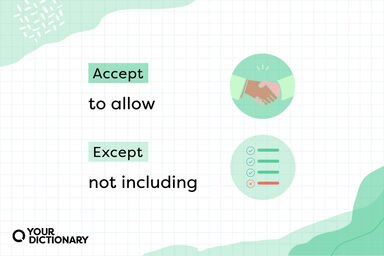
With the exclusion of; other than; but.
Everyone except me.
American Heritage
Leaving out; omitting; other than; but.
To everyone except me.
Webster's New World
With the exception of; but.
There was nothing in the cupboard except a tin of beans.
Wiktionary
Synonyms:
- short-of
- minus
- exempting
- lacking
- besides
- aside-from
- outside-of
- without
- if not for
- other-than
- with the exclusion of
- but
- save
- not counting
- leaving-out
conjuntion
If it were not for the fact that; only. Often used with that:
I would buy the suit, except that it costs too much.
American Heritage
Unless.
Webster's New World
Were it not true; only.
I'd quit except that I need the money.
Webster's New World
Otherwise than.
She doesn't leave home except to attend church.
Webster's New World
With the exception (that); used to introduce a clause, phrase or adverb forming an exception or qualification to something previously stated.
You look a bit like my sister, except she has longer hair.
I never made fun of her except teasingly.
Wiktionary
verb
excepted, excepting, excepts
To leave out or take out; make an exception of; exclude; omit.
Webster's New World
To object; take exception.
To except to a remark.
Webster's New World
Synonyms:
idiom
except for
- Were it not for:
I would join you except for my cold.
American Heritage
except for
- if it were not for
Webster's New World
Idioms, Phrasal Verbs Related to Except


Find Similar Words
Find similar words to except using the buttons below.