may

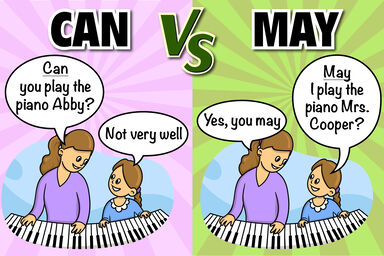
May is defined as possible or permissible.

(verb)

  1. An example of may is when you admit that it is possible you are wrong.
  2. An example of may is when you are given permission to go somewhere.

YourDictionary definition and usage example. Copyright © 2013 by LoveToKnow Corp.

See may in Webster's New World College Dictionary

auxiliary verb might

  1. used to express ability or power: now generally replaced by can
  2. used to express possibility or likelihood: it may rain
  3. used to express permission: you may go
  4. used to express contingency, as in clauses of purpose, result, concession, or condition: they died that we may be free
  5. used in exclamations and apostrophes to express a wish, hope, or prayer: may he rest in peace
  6. Law shall; must

Origin: ME < OE mæg, akin to Ger mag, OHG & Goth magan, lit., to be physically capable of doing < IE base *māgh-, to be able > might

intransitive verb

  1. used to express possibility or likelihood
  2. used to express permission: yes, you may

noun

Archaic a maiden

Origin: ME < OE mæg, kinswoman, woman (? merged with ON mær, maiden)

noun

  1. the fifth month of the year, having 31 days: abbrev. M or My
    1. springtime
    2. the springtime of life; youth; prime
    1. the English hawthorn (Crataegus oxyacantha) with small, lobed leaves and white, pink, or red flowers
    2. its branches or flowers
  2. the festivities of May Day

Origin: OFr mai < L (mensis) Maius, (month) of Maius: see Maia

noun

a feminine name

Origin: contr. of Mary, Margaret, often assoc. with the name of the month

peninsula at the southernmost point of N.J.: c. 20 mi (32 km) long

Origin: after C. J. Mey, 17th-c. Du explorer

See may in American Heritage Dictionary 4

aux.v. Past tense might might (mīt)
  1. To be allowed or permitted to: May I take a swim? Yes, you may.
  2. Used to indicate a certain measure of likelihood or possibility: It may rain this afternoon.
  3. Used to express a desire or fervent wish: Long may he live!
  4. Used to express contingency, purpose, or result in clauses introduced by that or so that: expressing ideas so that the average person may understand.
  5. To be obliged; must. Used in statutes, deeds, and other legal documents. See Usage Note at can1.

Origin:

Origin: Middle English, to be able

Origin: , from Old English mǽg

Origin: , first and third person sing. of magan, to be strong, be able; see magh- in Indo-European roots

.

noun
Chiefly British
The blossoms of the hawthorn.

Origin:

Origin: French mai, hawthorn

Origin: , from Mai, May (so called because it blooms in May); see may 

.

noun
  1. The fifth month of the year in the Gregorian calendar. See Table at calendar.
  2. The springtime of life; youth.
  3. The celebration of May Day.

Origin:

Origin: Middle English

Origin: , from Old French Mai

Origin: , from Latin Māius (mēnsis), (the month) of Maia

Origin: , from Māia, an Italic goddess; see meg- in Indo-European roots

.

, Cape

A peninsula of southern New Jersey between the Atlantic Ocean and Delaware Bay. The southern tip forms Cape May Point.

Learn more about may

link/cite print suggestion box