can

Can means someone or something knows how to, is able to, is likely to or has the right to do something.

(verb)

  1. An example of can is someone knowing how to play the piano.
  2. An example of can is a cat being able to paint.
  3. An example of can is a car that usually starts.
  4. An example of can is someone having the key to a neighbor's house and being able to enter if they'd like.

The definition of a can is a container normally made of metal with a lid.

(noun)

An example of can is what tuna comes in.

YourDictionary definition and usage example. Copyright © 2013 by LoveToKnow Corp.

See can in Webster's New World College Dictionary

auxiliary verb could

  1. know(s) how to
  2. am, are, or is able to
  3. am, are, or is likely or at all likely to: can that be true?
  4. have or has the moral or legal right to
  5. Informal am, are, or is permitted to; may

Origin: ME < OE, 1st & 3d pers. sing., pres. indic., of cunnan, know, have power to, be able; common Gmc < IE base *gen-, *gno- > L gnoscere, know; orig. meaning “to be able mentally or spiritually,” as distinguished from may, “to be able physically”

intransitive verb

  1. know(s) how
  2. am, are, or is able: yes I can
  3. am, are, or is likely or at all likely
  4. have or has the moral or legal right
  5. Informal am, are, or is permitted; may

transitive verb

Obsolete know(s)

noun

  1. a container of various kinds, usually made of metal with a separate cover: a milk can, a garbage can, a can of shoe polish
  2. ☆ a container made of tinned iron or other metal, in which foods or other perishable products are sealed for preservation
  3. ☆ the amount that a can holds
  4. Slang
    1. a prison
    2. the buttocks
    3. a toilet
    4. tin can (sense )

Origin: ME & OE canne, a cup, container < Gmc *kanna (> LL canna, a vessel); prob. < IE base *gan(dh), container > MIr gann, ON kani

transitive verb canned, canning

  1. to put up in airtight cans or jars for preservation
  2. Slang
    1. to dismiss; discharge
    2. to put an end to; stop

  1. Canada
  2. Canadian
  3. Canon

See can in American Heritage Dictionary 4

aux.v. Past tense could could (ko͝od)
  1. a. Used to indicate physical or mental ability: I can carry both suitcases. Can you remember the war?
    b. Used to indicate possession of a specified power, right, or privilege: The President can veto congressional bills.
    c. Used to indicate possession of a specified capability or skill: I can tune the harpsichord as well as play it.
  2. a. Used to indicate possibility or probability: I wonder if my long lost neighbor can still be alive. Such things can and do happen.
    b. Used to indicate that which is permitted, as by conscience or feelings: One can hardly blame you for being upset.
    c. Used to indicate probability or possibility under the specified circumstances: They can hardly have intended to do that.
  3. Usage Problem Used to request or grant permission: Can I be excused?

Origin:

Origin: Middle English

Origin: , first and third person sing. present tense of connen, to know how

Origin: , from Old English cunnan; see gnō- in Indo-European roots

.

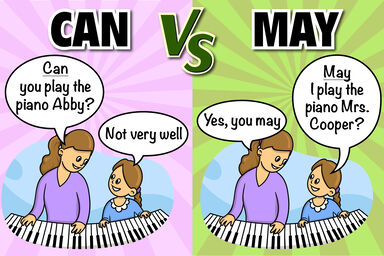
Usage Note: Generations of grammarians and teachers have insisted that can should be used only to express the capacity to do something, and that may must be used to express permission. But children do not use can to ask permission out of a desire to be stubbornly perverse. They have learned it as an idiomatic expression from adults: After you clean your room, you can go outside and play. As part of the spoken language, this use of can is perfectly acceptable. This is especially true for negative questions, such as Can't I have the car tonight? probably because using mayn't instead of can't sounds unnatural. Nevertheless, in more formal usage the distinction between can and may still has many adherents. Only 21 percent of the Usage Panel accepts can instead of may in the sentence Can I take another week to submit the application? The heightened formality of may sometimes highlights the speaker's role in giving permission. You may leave the room when you are finished implies that permission is given by the speaker. You can leave the room when you are finished implies that permission is part of a rule or policy rather than a decision on the speaker's part. For this reason, may sees considerable use in official announcements: Students may pick up the application forms tomorrow.

noun
  1. A usually cylindrical metal container.
  2. a. An airtight container, usually made of tin-coated iron, in which foods or beverages are preserved.
    b. The contents of such a container.
  3. Slang A jail or prison.
  4. Slang A toilet or restroom.
  5. Slang The buttocks.
  6. Slang A naval destroyer.
transitive verb canned canned, can·ning, cans
  1. To seal in an airtight container for future use; preserve: canning peaches.
  2. Slang To make a recording of: can the audience's applause for a TV comedy show.
  3. Slang To dismiss from employment or school. See Synonyms at dismiss.
  4. Slang To put a stop to; quit: Let's can the chatter.

Origin:

Origin: Middle English canne, a water container

Origin: , from Old English

.

Related Forms:

  • canˈner noun

abbreviation
  1. a. canceled
    b. cancellation
  2. canon
  3. canto

abbreviation
  1. Canada
  2. Canadian

Learn more about can

can

link/cite print suggestion box