shall

Shall is another way of saying should.

(verb)

  1. An example of shall is someone saying they're are expected to do something; "You shall go to school."
  2. An example of shall is someone saying they will go to the beach if it's sunny outside; "I shall go to the beach if it's sunny outside."

YourDictionary definition and usage example. Copyright © 2013 by LoveToKnow Corp.

See shall in Webster's New World College Dictionary

auxiliary verb should

  1. used in the first person to indicate simple future time: I shall probably go tomorrow
  2. used in the second or third person, esp. in formal speech or writing, to express determination, compulsion, obligation, or necessity: you shall listen
  3. used in the statement of laws or regulations: the fine shall not exceed $200
  4. used in questions about what to do: shall I invite them?
  5. used in formal conditional subordinate clauses: if any man shall hear, let him remember

Origin: ME schal, pl. schullen < OE sceal, inf. sceolan, akin to Ger sollen < IE base *(s)kel-, to be indebted > Lith skeliù, to owe

See shall in American Heritage Dictionary 4

aux.v. past tense should should (sho͝od)
  1. Used before a verb in the infinitive to show:
    a. Something that will take place or exist in the future: We shall arrive tomorrow.
    b. Something, such as an order, promise, requirement, or obligation: You shall leave now. He shall answer for his misdeeds. The penalty shall not exceed two years in prison.
    c. The will to do something or have something take place: I shall go out if I feel like it.
    d. Something that is inevitable: That day shall come.
  2. Archaic
    a. To be able to.
    b. To have to; must.

Origin:

Origin: Middle English schal

Origin: , from Old English sceal; see skel-2 in Indo-European roots

.

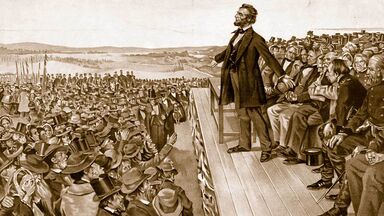
Usage Note: The traditional rules for using shall and will prescribe a highly complicated pattern of use in which the meanings of the forms change according to the person of the subject. In the first person, shall is used to indicate simple futurity: I shall (not will) have to buy another ticket. In the second and third persons, the same sense of futurity is expressed by will: The comet will (not shall) return in 87 years. You will (not shall) probably encounter some heavy seas when you round the point. The use of will in the first person and of shall in the second and third may express determination, promise, obligation, or permission, depending on the context. Thus I will leave tomorrow indicates that the speaker is determined to leave; You and she shall leave tomorrow is likely to be interpreted as a command. The sentence You shall have your money expresses a promise (“I will see that you get your money”), whereas You will have your money makes a simple prediction. • Such, at least, are the traditional rules. The English and some traditionalists about usage are probably the only people who follow these rules, and then not with perfect consistency. In America, people who try to adhere to them run the risk of sounding pretentious or haughty. Americans normally use will to express most of the senses reserved for shall in English usage. Americans use shall chiefly in first person invitations and questions that request an opinion or agreement, such as Shall we go? and in certain fixed expressions, such as We shall overcome. In formal style, Americans use shall to express an explicit obligation, as in Applicants shall provide a proof of residence, though this sense is also expressed by must or should. In speech the distinction that the English signal by the choice of shall or will may be rendered by stressing the auxiliary, as in I will leave tomorrow (“I intend to leave”); by choosing another auxiliary, such as must or have to; or by using an adverb such as certainly. • In addition to its sense of obligation, shall also can convey high moral seriousness that derives in part from its extensive use in the King James Bible, as in “Righteousness shall go before him and shall set us in the way of his steps” (Ps 85:13) and “He that shall humble himself shall be exalted” (Mt 23:12). The prophetic overtones that shall bears with it have no doubt led to its use in some of the loftiest rhetoric in English. This may be why Lincoln chose to use it instead of will in the Gettysburg Address:“government of the people, by the people, for the people shall not perish from the earth.” See Usage Note at should.

Learn more about shall

link/cite print suggestion box