Kingdom Definition
kĭngdəm
kingdoms
noun
kingdoms
A political or territorial unit ruled by a sovereign.
American Heritage
The position, rank, or power of a king.
Webster's New World
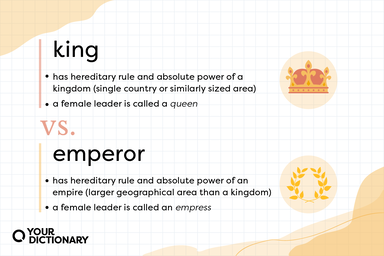
A government or country headed by a king or queen; monarchy.
Webster's New World
A realm; domain; sphere.
The kingdom of poetry.
Webster's New World
The spiritual realm of God.
Webster's New World
Other Word Forms of Kingdom
Noun
Singular:
kingdomPlural:
kingdomsOrigin of Kingdom
-
From Middle English kingdom, kyngdom, from Old English cyningdōm, equivalent to king + -dom. Cognate with Scots kingdom, West Frisian keuningdom, Dutch koningdom, German Königtum, Danish kongedømme, Swedish kungadöme, Icelandic konungdómur.
From Wiktionary
-
Middle English from Old English cyningdōm cyning king king -dōm -dom
From American Heritage Dictionary of the English Language, 5th Edition


Kingdom Is Also Mentioned In
Find Similar Words
Find similar words to kingdom using the buttons below.