industry

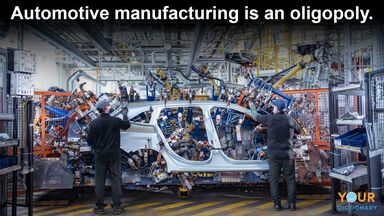
The definition of an industry is any large-scale business activity or a type of productive manufacture or trade.

(noun)

An example of industry is the coal mining business.

YourDictionary definition and usage example. Copyright © 2013 by LoveToKnow Corp.

See industry in Webster's New World College Dictionary

noun pl. industries

  1. Obsolete
    1. skill or cleverness
    2. the application of this
  2. earnest, steady effort; constant diligence in or application to work
  3. systematic work; habitual employment
    1. any particular branch of productive, esp. manufacturing, enterprise: the paper industry
    2. any large-scale business activity: the tourist industry
    1. manufacturing productive enterprises collectively, esp. as distinguished from agriculture
    2. the owners and managers of industry

Origin: LME < MFr industrie < L industria < industrius, active, industrious < *indo-struus < OL endo (> L in) + struere, to pile up, arrange: see strew

See industry in American Heritage Dictionary 4

noun pl. in·dus·tries
  1. Commercial production and sale of goods.
  2. A specific branch of manufacture and trade: the textile industry. See Synonyms at business.
  3. The sector of an economy made up of manufacturing enterprises: government regulation of industry.
  4. Industrial management.
  5. Energetic devotion to a task or an endeavor; diligence: demonstrated great intelligence and industry as a prosecutor.
  6. Ongoing work or study associated with a specified subject or figure: the Civil War industry; the Hemingway industry.
  7. Archaeology
    a. A collection of artifacts or tools made from a specified material: a Mesolithic bone industry.
    b. A standardized tradition of toolmaking associated with a specified tool or culture: a stone hand-ax industry; the Acheulian industry.

Origin:

Origin: Middle English industrie, skill

Origin: , from Old French

Origin: , from Latin industria, diligence

Origin: , from

Origin: feminine of industrius, diligent; see ster-2 in Indo-European roots

.

Word History: A clear indication of the way in which human effort has been harnessed as a force for the commercial production of goods and services is the change in meaning of the word industry. Coming from the Latin word industria, meaning “diligent activity directed to some purpose,” and its descendant, Old French industrie, with the senses “activity,” “ability,” and “a trade or occupation,” our word (first recorded in 1475) originally meant “skill,” “a device,” and “diligence” as well as “a trade.” Over the course of the Industrial Revolution, as more and more human effort became involved in producing goods and services for sale, the last sense of industry as well as the slightly newer sense “systematic work or habitual employment” grew in importance, to a large extent taking over the word. We can even speak now of the Shakespeare industry, rather like the garment industry.

See industry in Ologies

Industry

chemurgy

the branch of chemistry that deals with the industrial use and application of organic substances. —chemurgic, chemurgical, adj.

chreotechnics

Rare. useful arts, as agriculture, commerce, and manufacturing.

radiotechnology

the science and technology of applying radiation and x rays to industrial use. See also radio.

robotics

the application of automated machinery to tasks traditionally done by hand, as in the manufacturing industry.

Zionite

a believer in the doctrines of John Alexander Dowie who founded Zion City, Illinois, in 1901, as an industrial community for his followers.

Learn more about industry

link/cite print suggestion box