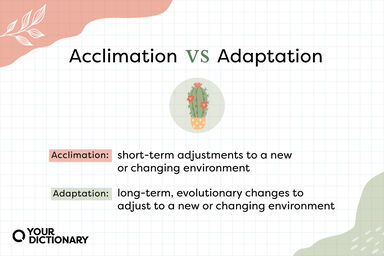
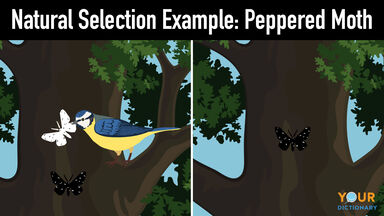
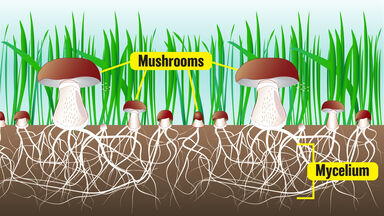
environment

Environment is defined as the conditions and circumstances that surround someone.

Reasons to Learn About the Environment

  • So we can see these interrelationships between ecosystems and maybe stop the damage or repair it.
  • To see how humans, animals, ocean currents, water cycles, food chains, etc are all interrelated. For example:
  • When a large amount of the rainforest is destroyed, animals and people are affected, erosion occurs and the exchange of oxygen and carbon dioxide is altered.
  • This causes the global temperature to rise, which causes polar ice to melt, which in turn, changes salinity.
  • These changes in salinity will slow or stop the Gulf Stream from bringing warm water to the North Atlantic, which can alter the climate there and globally.
(noun)

An example of an environment is a rain forest or a school.

YourDictionary definition and usage example. Copyright © 2013 by LoveToKnow Corp.

See environment in Webster's New World College Dictionary

noun

  1. Rare a surrounding or being surrounded
  2. something that surrounds; surroundings
    1. all the conditions, circumstances, and influences surrounding, and affecting the development of, an organism or group of organisms
    2. all of the conditions, circumstances, etc. that surround and influence life on earth, including atmospheric conditions, food chains, and the water cycle: usually with the

Origin: environ + -ment

Related Forms:

See environment in American Heritage Dictionary 4

noun
  1. The circumstances or conditions that surround one; surroundings.
  2. The totality of circumstances surrounding an organism or group of organisms, especially:
    a. The combination of external physical conditions that affect and influence the growth, development, and survival of organisms: “We shall never understand the natural environment until we see it as a living organism” (Paul Brooks).
    b. The complex of social and cultural conditions affecting the nature of an individual or community.
  3. Computer Science
    a. The entire set of conditions under which one operates a computer, as it relates to the hardware, operating platform, or operating system.
    b. An area of a computer's memory used by the operating system and some programs to store certain variables to which they need frequent access.

See environment in Ologies

Environment

See also atmosphere; biology; climate; earth.

anthoecology

the study of the relationship of flowers to their environment. —anthoecologic, anthoecological, adj.

anthroposociology

the study of the effects upon each other of environment and race. —anthroposociologic, anthroposociological, adj.

autecology

the study of an individual organism, or the species regarded collectively, in relation to environment. —autecologic, autecological, adj.

bioecology

the study of the interrelation of plants and animals in their common environment. —bioecologist, n.

bionomics

ecology, Also bionomy. —bionomist, n. —bionomic, bionomical, adj.

biotechnology

ergonomics.

ecesis

the transplanting of a plant to a new environment.

ecocide

destruction of the environment.

ecology

1. the branch of biology that studies the relationship of organisms and environments. Also called bionomics, bionomy.

2. the branch of sociology that studies the environmental spacing and interdependence of people and their institutions, as in rural or urban settings. —ecologist, oecologist, n. —ecologie, oecologic, ecological, oecological, adj.

ecosystem

any area or region regarded as a unit for ecological observation and study of the interrelationships between organisms and their environment.

ecotone

a transitional area or zone between two different forms of vegetation, as between forest and plain. —ecotonal, adj.

ecotype

a type or subspecies of life that is especially well adapted to a certain environment. —ecotypic, adj.

environmentalism

concern for and action on behalf of the environment and its preservation. —environmentalist, n.

ergonomics

the study of the relation of man to the environment in which he works and the application of anatomical, physiological, psychological, and engineering knowledge to the problems involved. Also called biotechnology. —ergonomic, adj.

euthenics

a science concerned with improving the well-being of mankind through improvement of the environment. —euthenist, n.

genecology

a combination of genetics and ecology that studies animal species and their environment. —genecologist, n. —genecologic, genecological, adj.

konimeter

an instrument for measuring impurities in the air. —konimetric, adj.

konimetry

the measurement of impurities in the air by means of a konimeter. —konimetric, adj.

koniology, coniology

the study of atmospheric dust and other impurities in the air, as germs, pollen, etc., especially regarding their effect on plant and animal life.

miasmology

the study of fogs and smogs, especially those affecting air pollution levels.

oligotrophy

(of lakes) the quality of containing a low accumulation of dissolved nutrient salts, thus supporting little plant or animal life and having a high oxygen content owing to the low organic content. —oligotrophic, adj.

paleoecology

the branch of ecology that studies the relationship of ancient plants and animals to their environments. —paleoecologic, palaeoecologic, paleoecological, palaeoecological, adj.

preservationist

a person who is concerned with or active in the preservation of wildlife, historical sites, natural habitats, and other features of the environment.

synecology

the branch of ecology that studies the relationship between plant and animal communities and their environments. —synecologic, synecological, adj.

Learn more about environment

Related Articles

environment

link/cite print suggestion box