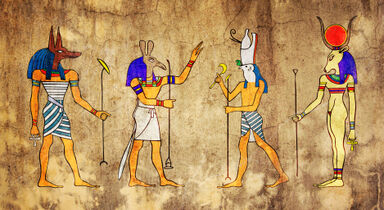
Temple is defined as a place where people worship.
(noun)An example of a temple is a synagogue.
The definition of a temple is the flat area on the side of the head, in front of each ear.
(noun)An example of the temple is the area to rub when someone has a tension headache.
See temple in Webster's New World College Dictionary
noun
Origin: ME < OE tempel & OFr temple, both < L templum, temple, sanctuary, orig., space marked out: for IE base see temper
Related Forms:
noun
Origin: OFr < VL tempula, altered < L tempora, the temples, pl. of tempus, akin to tempus, time (in reference to pulse): see temper
noun
Origin: LME < MFr: see template
See temple in American Heritage Dictionary 4
noun
Origin:
Origin: Middle English
Origin: , from Old English tempel
Origin: , from Latin templum; see tem- in Indo-European roots
.noun
Origin:
Origin: Middle English
Origin: , from Old French
Origin: , from Vulgar Latin *tempula
Origin: , from Latin tempora
Origin: , pl. of tempus, temple of the head
. Word History: Words that are identical in form do not always derive from the same source, and when they have different sources they are usually considered different words. The temple that refers to a place of worship, for example, does not have the same origin as the temple that refers to a side of the forehead. The temple where one worships comes from Latin templum, itself derived from the Indo-European root *tem-, “to cut, divide.” Latin templum probably referred originally to the fact that temples were on sacred ground that was “divided” or separated from ordinary ground. The temple of the head comes from the Latin word tempus, “temple of the head.” Its origin is not certain; some have thought it to be a special use of the homonymous word tempus “time” as a translation of Greek kairios, “(proper) time, opportunity, vital spot,” but there is no hard evidence for this. What is known, and not uninteresting in itself, is how tempus eventually became temple in English. In Latin, the plural, tempora, was more frequently used than the singular tempus (it being more common to talk about paired body parts together rather than singly). There was a large class of Latin nouns ending in -a in the singular, and this led to a reinterpretation of tempora as a singular in later Latin, where it was also altered to *tempula. This became temple in Old French, whence English temple (of the head) was borrowed, first appearing in 1310. The classical Latin form survives in the English adjective temporal (as in temporal bone or temporal muscle).noun
Origin:
Origin: Middle English tempille
Origin: , from Old French temple
Origin: , possibly from Latin templum, small piece of timber; see tem- in Indo-European roots
., Shirley
Learn more about temple