pole

Apole is defined as a long piece of wood, metal or other material.

(noun)

An example of a pole is what a United States flag hangs from in front of a fire department.

Pole means a person from or living in Poland.

(noun)

An example of Pole is someone born in Warsaw.

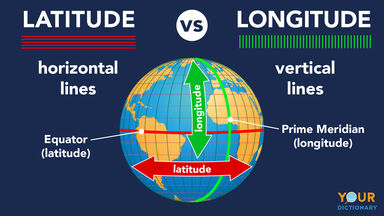
The definition of a pole is either end of a dividing line through a sphere, or the opposing ends of two forces.

(noun)

  1. An example of a pole is Antarctica.
  2. An example of a pole is the negative terminal on a car battery.

YourDictionary definition and usage example. Copyright © 2013 by LoveToKnow Corp.

See pole in Webster's New World College Dictionary

noun

  1. a long, slender piece of wood, metal, etc. usually rounded: a tent pole, flagpole, fishing pole
  2. a tapering wooden shaft extending from the front axle of a wagon or carriage and attached by chains or straps to the collars of a span of horses
  3. a unit of measure, equal to one rod in linear measure (5.029 m) or one square rod in square measure (25.29 sq m)
  4. an assigned starting position at a racetrack, in the front row if there is more than one row and in the innermost lane

Origin: ME < OE pal < L palus, pale

transitive verb, intransitive verb poled, poling

  1. ☆ to push along (a boat or raft) with a pole
  2. to manipulate, impel, support, etc. with or as with a pole

noun

  1. either end of any axis, as of the earth, of the celestial sphere, of a mitotic spindle during cell division, etc.
  2. the region around the North Pole or that around the South Pole
  3. either of two opposed or differentiated forces, parts, or principles, such as the ends of a magnet, the terminals of a battery, motor, or dynamo, or two extremes of opinion, etc.
  4. Embryology either of the two differentiated regions in the early embryo of many animals; specif., the containing little yolk and the containing most of the yolk
  5. Math. a point or points with characteristic properties, as the point of origin of polar coordinates

Origin: ME < L polus, pole of the heavens, heavens < Gr polos, axis of the sphere, firmament < pelein, to be in motion < IE base *kwel-, to turn > wheel

noun

a person born or living in Poland

Pole, Reginald 1500-58; Eng. cardinal: last Rom. Catholic archbishop of Canterbury (1556-58)

See pole in American Heritage Dictionary 4

noun
  1. Either extremity of an axis through a sphere.
  2. Either of the regions contiguous to the extremities of the earth's rotational axis, the North Pole or the South Pole.
  3. Physics A magnetic pole.
  4. Electricity Either of two oppositely charged terminals, as in an electric cell or battery.
  5. Astronomy A celestial pole.
  6. Biology
    a. Either extremity of the main axis of a nucleus, cell, or organism.
    b. Either end of the spindle formed in a cell during mitosis.
    c. The point on a nerve cell where a process originates.
  7. Either of two antithetical ideas, propensities, forces, or positions: “the moral poles of modern medicine: on the one hand, a tinkering with procreation with at best ambiguous, at worst monstrous moral possibilities. On the other hand, scientific skill and cunning unambiguously in the service of hope” (Charles Krauthammer).
  8. A fixed point of reference.
  9. Mathematics The origin in a polar coordinate system; the vertex of a polar angle.

Origin:

Origin: Middle English

Origin: , from Old French

Origin: , from Latin polus

Origin: , from Greek polos, axis, sky; see kwel-1 in Indo-European roots

.

noun
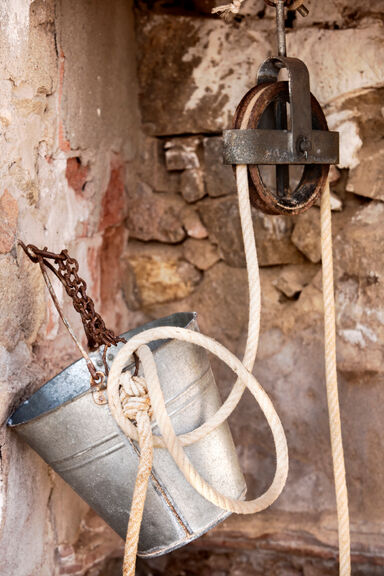
  1. A long, relatively slender, generally rounded piece of wood or other material.
  2. The long tapering wooden shaft extending up from the front axle of a vehicle to the collars of the animals drawing it; a tongue.
  3. a. See rod.
    b. A unit of area equal to a square rod.
  4. Sports The inside position on the starting line of a racetrack: qualified in the time trials to start on the pole.
verb poled poled, pol·ing, poles
verb, transitive
  1. a. To propel with a pole: boatmen poling barges up a placid river.
    b. To propel (oneself) or make (one's way) by the use of ski poles: “We ski through the glades on corn snow, then pole our way over a long one-hour runout to a road” (Frederick Selby).
  2. To support (plants) with a pole.
  3. To strike, poke, or stir with a pole.
verb, intransitive
  1. To propel a boat or raft with a pole.
  2. To use ski poles to maintain or gain speed.

Origin:

Origin: Middle English

Origin: , from Old English pāl

Origin: , from Latin pālus, stake; see pag- in Indo-European roots

.

noun
  1. A native or inhabitant of Poland.
  2. A person of Polish descent.

, Reginald 1500-1558.

English prelate. The last Roman Catholic archbishop of Canterbury (1556), he was a leading figure in the Counter Reformation.

Learn more about pole

link/cite print suggestion box