medium

The definition of a medium is something that helps an effect to happen, or is a singular form of media.

(noun)

  1. An example of a medium is a metal spoon sitting in a cup of hot tea that is too hot to touch.
  2. An example of a medium is a newspaper from the combined media form of newspapers, television, magazines, radio and the Internet.

Medium is defined as something in the middle or in-between.

(adjective)

An example of medium is a shirt that's bigger than small and smaller than large.

YourDictionary definition and usage example. Copyright © 2013 by LoveToKnow Corp.

See medium in Webster's New World College Dictionary

noun pl. mediums or media

    1. something intermediate
    2. a middle state or degree; mean
  1. an intervening thing through which a force acts or an effect is produced: copper is a good medium for conducting heat
  2. pl. media any means, agency, or instrumentality; specif., a means of communication that reaches the general public and carries advertising: in this specif. sense, a singular form (pl.) is now often used
  3. any surrounding or pervading substance in which bodies exist or move
  4. environment
  5. a sterilized nutritive mixture, as enriched agar, for cultivating bacteria, viruses, etc.
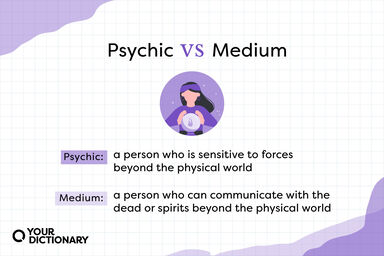
  6. pl. mediums☆ a person through whom communications are thought to be sent to the living from spirits of the dead
  7. any material or technique as used for expression or delineation in art
  8. a liquid mixed with pigments to give smoothness

Origin: L, the middle, neut. of medius: see mid

adjective

  1. in a middle position; intermediate in quality, amount, degree, size, etc.
  2. neither rare nor well-done: said of cooked meat

See medium in American Heritage Dictionary 4

noun pl. me·di·a (-dē-ə) or me·di·ums
  1. Something, such as an intermediate course of action, that occupies a position or represents a condition midway between extremes.
  2. An intervening substance through which something else is transmitted or carried on.
  3. An agency by which something is accomplished, conveyed, or transferred: The train was the usual medium of transportation in those days.
  4. pl. media media Usage Problem
    a. A means of mass communication, such as newpapers, magazines, radio, or television.
    b. media (used with a sing. or pl. verb) The group of journalists and others who constitute the communications industry and profession.
  5. pl. media media Computer Science An object or device, such as a disk, on which data is stored.
  6. pl. mediums mediums A person thought to have the power to communicate with the spirits of the dead or with agents of another world or dimension. Also called psychic.
  7. pl. media media
    a. A surrounding environment in which something functions and thrives.
    b. The substance in which a specific organism lives and thrives.
    c. A culture medium.
  8. a. A specific kind of artistic technique or means of expression as determined by the materials used or the creative methods involved: the medium of lithography.
    b. The materials used in a specific artistic technique: oils as a medium.
  9. A solvent with which paint is thinned to the proper consistency.
  10. Chemistry A filtering substance, such as filter paper.
  11. A size of paper, usually 18 × 23 inches or 17 1/2 × 22 inches.
adjective
Occurring or being between two degrees, amounts, or quantities; intermediate: broil a medium steak. See Synonyms at average.

Origin:

Origin: Latin

Origin: , from

Origin: neuter of medius, middle; see medhyo- in Indo-European roots

.

Usage Note: The etymologically plural form media is often used as a singular to refer to a particular means of communication, as in The Internet is the most exciting new media since television. Many people regard this usage as incorrect, preferring medium in such contexts. • People also use media with the definite article as a collective term to refer not to the forms of communication themselves so much as the communities and institutions behind them. In this sense, the media means something like “the press.” Like other collective nouns, it may take a singular or plural verb depending on the intended meaning. If the point is to emphasize the multifaceted nature of the press, a plural verb may be more appropriate: The media have covered the trial in a variety of formats. Frequently, however, media stands as a singular noun for the aggregate of journalists and broadcasters: The media has not shown much interest in covering the trial. This development of a singular media parallels that of more established words such as data and agenda, which are also Latin plurals that have acquired a singular meaning. • The singular medium cannot be used as a collective noun for the press. The sentence No medium has shown much interest in covering the issue, would suggest that the lack of interest is in the means of communication itself rather than in its practitioners.

Learn more about medium

link/cite print suggestion box