participle Hear it!

participle Definition

par·ti·ci·ple (pärti sip′əl)

noun

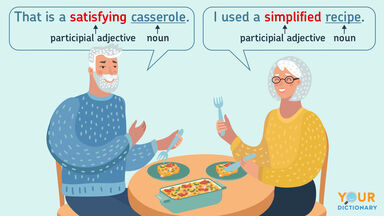
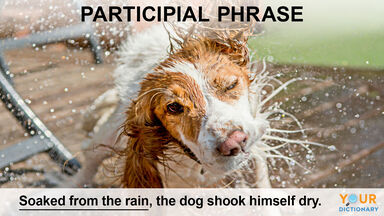
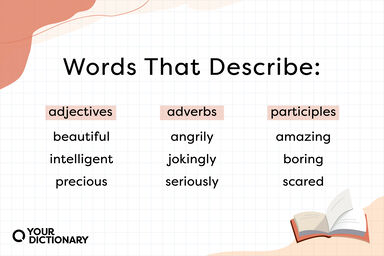
Gram. a verbal form having some characteristics and functions of both verb and adjective: in English, the present participle ends in -ing (asking) and the past participle most commonly ends in -ed or -en (asked, spoken): participles are used: a) in verb phrases (are asking, was carried) b) as verbs (seeing the results, he stopped) c) as adjectives (a laughing boy, the beaten path) d) as nouns, i.e., gerunds (seeing is believing) e) as adverbs (raving mad) f) as connectives (saving those present)

Etymology: OFr < L participium < particeps, participating, partaking < participare, participate: from participating in the nature of both v. & adj.

participle Usage Examples

Converse of object

  • use: They were asked to use the present participle of the verb.
  • have: It also has three participles which help to explain the main verb.
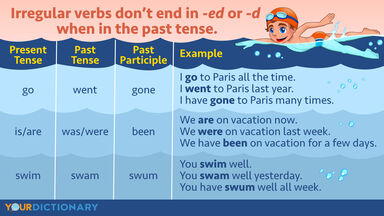
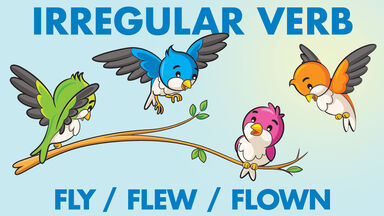
  • call: The main part is the ' third part ' of a verb, which is properly called the past participle.
  • write: The teacher writes each past participle and each past simple onto separate pieces of paper as they elicit the correct form from the students.
  • hang: Is it better to dangle or hang a participle, and in either case what is the best way to do it?

Adjective modifier

  • dangling: For example, how do you know that the entry ' dangling participle ' will have the answer to your question?
  • passive: The Qal passive participle does occur c. 72 times with the meaning " be praised " or " be blessed.
  • imperfect: In the past and present " tenses " the perfect and imperfect participles are used.
  • past: All passive forms are made up of the verb be + past participle: active Somebody saw you.
  • present: They were asked to use the present participle of the verb.
  • English: The MorphoFinder function helps you find words using English past participles, gerunds, and plural and adjective forms.

Modifies a noun

  • construction: Prepositions are shown in italics, and the sentence concludes with a typical past participle construction; ' was determined ' .
  • agreement: Be particularly careful with past participle agreements when using the perfect subjunctive.
  • form: For example, words ending in -ed are likely to be past tense or past participle verb forms.
  • verb: For example, words ending in -ed are likely to be past tense or past participle verb forms.

Noun used with modifier

  • present: Kay Harrington from Battersea Why have we lost the use of the Present Participle with the verbs ' to sit/stand ' ?
  • verb: The suffix -n is given to isolated nominal uses of adjectives, or to nominal uses of verb participles.
  • past: Where there is no special Scots form, sometimes the English form has been included, eg be... past participle been.

Preposition: of

  • verb: They were asked to use the present participle of the verb.

Preposition: with

  • verb: Proof read your essay carefully and check the endings of the past participle with verbs which take " essere " are correct.