music Hear it!

music Definition

mu·sic (myo̵̅o̅zik)

noun

  1. the art and science of combining vocal or instrumental sounds or tones in varying melody, harmony, rhythm, and timbre, esp. so as to form structurally complete and emotionally expressive compositions
  2. the sounds or tones so arranged, or the arrangement of these
  3. any rhythmic sequence of pleasing sounds, as of birds, water, etc.
    1. a particular form, style, etc. of musical composition or a particular class of musical works or pieces folk music
    2. the body of musical works of a particular style, place, period, or composer
  4. the written or printed score of a musical composition
  5. ability to respond to or take pleasure in music no music in his soul
  6. Rare a group of musical performers

Etymology: ME musike < OFr musique < L musica < Gr mousikē (technē), musical (art), orig. an art of the Muses < mousa, Muse

music Idioms

face the music

Informal to accept the consequences of one's actions, however unpleasant

set to music

to compose music for (a poem, etc.)

music Synonyms

music

n.

  1. A combination of tone and rhythm

    harmony, melody, tune, air, strain, harmonics, song, minstrelsy, euphony, measure, refrain, phrasing, modulation cadence, the Nine*.

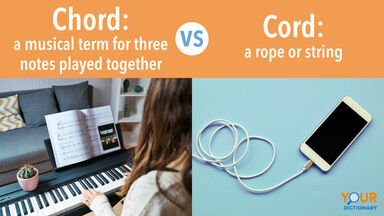
    Terms used in music include: scale, chromatic scale, tempered scale, clef, note, tone, pitch, sharp, flat, accidental, major, minor, key, mode, orchestral coloring, orchestration, instrumentation, transposition, variation, improvisation, rhythm, melody, harmony, tempo, accent, beat, down-beat, up-beat, off-beat, syncopation, chord, dominant chord, subdominant chord, tonic chord, counterpoint, interval, timbre, volume, resonance.

  2. Musical forms for the voice include: opera, oratorio, hymn, art song, folk song, aria;

    Musical forms for instruments include: symphony (the conventional four movements of a symphony are sonata, andante, scherzo, finale), concerto, concerto grosso, suite, partita; trio, quartet, quintet, overture, prelude, sonata, sonatina, Mass, scherzo, rondo, nocturne, caprice, invention, concertino, toccata, chaconne, passacaglia, fugue, étude, exercise, tone poem, symphonic poem, symphonic fantasy, fantasia, variations, rhapsody, ballet music, serenade, ballad, march, canzonetta, rondino, pastorale, dance.

  3. Musical dance forms include: ballet, waltz, tango, polka;

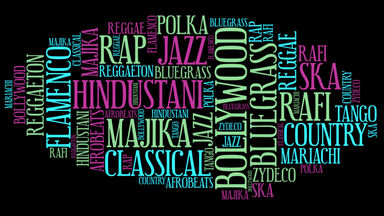
    General styles of music include: classical, long-hair*, serious, medieval, modern, folk, primitive, popular, national, sacred, secular, impressionistic, neoteric, baroque, neoclassical, neo-Bachian, modernistic, formal, romantic, a cappella, program, pure, jazz; rhythm and blues, R and B, blues, jive, ragtime, boogiewoogie, light rock, hard rock, folk rock, acid rock, heavy metal, new wave, punk rock, funk, technopop, rock-and-roll, bebop, bop, soul, New Age, rap, grunge, reggae, zydeco, fusion, ragtime, swing, barrelhouse, big band, bluegrass, country and western, country.

  4. Styles of music according to its technical form include: melodic, polyphonic, contrapuntal, homophonic, Gregorian, strict, free, harmonic, lyric, epic, dramatic, pastoral, figured, atonal, whole toned, diatonic, pentatonic, twelve-tone, aleatoric, modal, syncopated.

  5. Styles of music according to its method of performance include: vocal, instrumental, solo, choral, orchestral.

  6. Styles of music according to its use include: operatic, symphonic, chamber, dance, concert, motion picture, theatrical, ecclesiastical, church, military, concert, ballet.

  7. The study or writing of music

    musicology, ethnomusicology, musicography, hymnology, hymnography.

  8. Responsiveness to music

    musical appreciation, sensitivity, aesthetic sense; see appreciation 3, feeling 4.

face the music*

accept the consequences of one's actions, suffer, undergo; see endure 2.

set to music

compose music for, write a song around, provide a musical setting; see compose 3.

music Usage Examples

Converse of object

  • compose: Bach's task was to train the choir, play the organ and compose new music.
  • play: The Ramones merely played rock music, only faster!

Adjective modifier

  • classical: John Self 5th Jul 2005, 11:58 Now hang on - are we talking classical guitar music here?
  • live: Is there a music system you can use or space for live music to be played?
  • loud: Drink in perspiring caverns filled with too many people and lots of loud music.
  • contemporary: His rise back home was meteoric, and he is quite a champion of modern and contemporary Hungarian music.
  • traditional: Back then, traditional music had bad press in France.
  • popular: Notes for editors 1. Simon Warner teaches popular music at the University of Leeds.

Modifies a noun

  • scene: Her take on her place in the music scene was what I felt I gained from the exchange.
  • festival: British Sea Power A music festival - at a fort?
  • lover: From Beck to Tom Waits, we've heard plenty of exciting new releases for discerning music lovers.
  • downloads: While the US market for legitimate music downloads is already off the starting blocks, the European market lagged.
  • industry: Guest speakers will discuss their first-hand experiences of working in the music industry.
  • video: Editing to a soundtrack You can easily edit to a soundtrack for a music video or title sequence.

Noun used with modifier

  • folk: Outside Brittany, another outpost of folk music is central France.
  • pop: Through the years, the love song has been the most enduring and endearing pop music art form.
  • dance: There's lots of dance music in this, meaning plenty of bass.
  • chamber: He obtained many prizes in national violin and chamber music competitions.
  • sheet: This was born out when I spotted this sheet music from 1960 for sale on E-Bay!
  • rock: The Ramones merely played rock music, only faster!