god
| Jump To: |
|
| Also found in: |
|
god (gäd, gôd)
noun
- any of various beings conceived of as supernatural, immortal, and having special powers over the lives and affairs of people and the course of nature; deity, esp. a male deity: typically considered objects of worship
- an image that is worshiped; idol
- a person or thing deified or excessively honored and admired
- in monotheistic religions, the creator and ruler of the universe, regarded as eternal, infinite, all-powerful, and all-knowing; Supreme Being; the Almighty
Etymology: ME < OE, akin to Ger gott, Goth guth, prob. < IE base *ĝhau-, to call out to, invoke > Sans havaté, (he) calls upon
interjection
God willing
Webster's New World College Dictionary Copyright © 2005 by Wiley Publishing, Inc., Cleveland, Ohio.
Used by arrangement with John Wiley & Sons, Inc.
Alternate definitions:
god
n.
A supernatural being
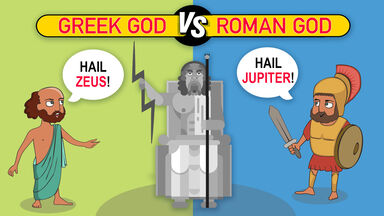
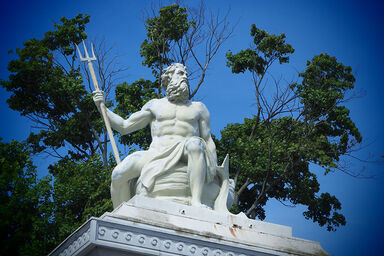
deity, male deity, divinity, divine being, superhuman being, spirit, numen, power, tutelary, Olympian, Valhallan, demigod, demiurge, oversoul, prime mover, godhead, omnipotence, world spirit, world soul, universal life force, infinite spirit, totem, idol, demon, daimon, daemon. Greek gods and their Roman counterparts include: Zeus, Jupiter, Jove; Phoebus, Phoebus Apollo, Apollo; Ares, Mars; Hermes, Mercury; Poseidon, Neptune; Hephaestus, Vulcan; Dionysus, Bacchus; Hades, Pluto; Kronos, Saturn; Eros, Cupid.
Norse gods, known as the Aesir and Vanir, include: Aegir, Bragi, Balder, Frey, Freyr, Heimdall, Höder, Hoenir, Loki, Odin, Woden, Wotan, Thor, Donar, Tyr, Tiu, Ull, Ullr, Vali, Vidar, Ymir.
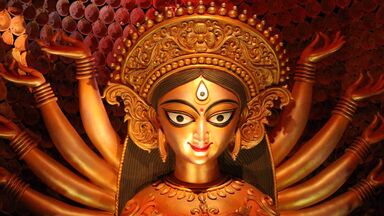
Hindu and Brahmanic gods include: Agni, Dyaus, Ganesa, Ganpati, Hanuman, Indra, Marut, Savitar, Soma, Surya, Varuna, Vayu, Yama.
The avatars of Vishnu include: Buddha, Kalki, Karma, Krishna, Matsya, Narsinh, Parshuram, Rama, Vaman, Varah, Jagannath.
Egyptian gods include: Anubis, Bast, Horus; Isis, Khem, Min, Neph, Nephthys, Nut, Osiris, Ptah, Ra, Amun, Amen-Ra, Set, Shu, Thoth.
Other gods include: Baal, Moloch, Shamash (all Semitic); Dagon (Philistine); Astarte, Ashtoreth (both Phoenician); Anu, Bel, Ea (all Babylonian); Quetzalcoatl (Mexican).
Capitalized, the Jewish-Christian-Islamic deity
Lord, Jehovah, Yahweh, YHWH, Jhvh, Adonai, Allah, the Almighty, the King of Kings, the Omnipotent, the Compassionate, the Merciful, Lord of Mercies, the Godhead, the Creator, the Maker, the Supreme Being, the Ruler of Heaven, the All-holy, the Everlasting, the Divine Author, Our Father in Heaven, Almighty God, God Almighty, the Preserver, the Deity, the Divinity, the Omniscient, Providence, the All-knowing, the Infinite Spirit, the Absolute, the Infinite, the Eternal, I Am, the All-father, the Author of All Things, the First Cause, the Lord of Lords, the Supreme Soul, the All-wise, the All-merciful, the All-powerful. Capitalized, the Christian deity
the Trinity, the Holy Trinity, the Triune God, Threefold Unity, Three in One and One in Three; Father, Son, and Holy Ghost; Holy Spirit, Paraclete; God the Son, Jesus Christ, Christ, Jesus, Jesus of Nazareth, the Nazarene, the Galilean, the Man of Sorrows, the Messiah, the Savior, the Redeemer, the Advocate, the Son of God, the Son of Man, the Son of Mary, the Only Begotten, the Lamb, the Lamb of God, Immanuel, Emmanuel, the King of Glory, the King of the Jews, the Prince of Peace, the Good Shepherd, the Way, the Truth, the Life, the Light, the Christ Child. Capitalized, the supreme deity of other religions
Brahman, the Supreme Soul, Atman, the Universal Self, Brahma, the Creator, Vishnu, the Preserver, Shiva, the Destroyer (all Hinduism); Adibuddha, the Primordial Buddha (Buddhism); Ahura Mazda, Ormazd (Zoroastrianism).
Webster's New World Roget's A-Z Thesaurus Copyright © 1999 by Wiley Publishing, Inc., Cleveland, Ohio.
Used by arrangement with John Wiley & Sons, Inc.
Converse of object
- worship: They refused to worship false gods that were no gods at all.
Adjective modifier
- false: They refused to worship false gods that were no gods at all.
Noun used with modifier
- flesh-and-blood: The suggestion here is that the biblical patriarch Abraham was involved in the historical affairs of flesh-and-blood gods.
Preposition: of
- underworld: Here you will be exposed to the individuals sacrificed to the gods of the underworld.
Possessives
- sake: It's two weeks until the election, for god's sake; how can you not have made your mind up by now?
Preposition: of
- pantheon: She is the best known god of the African pantheon and the nymph of the Ogun river.
The word usage examples above have been gathered from various sources to reflect current and historical usage. They do not represent the opinions of YourDictionary.com.
Nam tibi carior est ille filius equae quam ille filius Dei? Is this son of a mare dearer to you, then, than that son of God?
Nec audiendi qui solent dicere, vox populi, vox Dei, quum tumultuositas vulgi semper insaniae proxima sit. We should not listen to those who like to affirm that the voice of the people is the voice of God, for the tumult of the masses is truly close to madness.
All things bright and beautiful, All creatures great and small, All things wise and wonderful, The Lord God made them all.
Webster's New World Dictionary of Quotations Copyright © 2005 by Chambers Harrap Publishers Ltd. All rights reserved. Published by Wiley, Hoboken, NJ. Used by arrangement with John Wiley & Sons, Inc.
Link to this page:
Cite this page:
MLA Style
"god." Webster's New World College Dictionary. 2009
- Your Dictionary. 4 July 2009
- <www.yourdictionary.com/god>
APA Style
god. (2009). In Webster's New World College Dictionary
- Retrieved July 4th, 2009, from www.yourdictionary.com/god
Browse dictionary definitions near god

Comments:
Please Login or Register to post a comment