science
sci·ence (sī′əns)
noun
- Archaic the state or fact of knowledge; knowledge
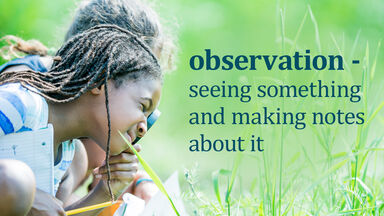
- systematized knowledge derived from observation, study, and experimentation carried on in order to determine the nature or principles of what is being studied
- any specific branch of scientific knowledge, esp. one concerned with establishing and systematizing facts, principles, and methods, as by experiments and hypotheses the science of mathematics
- the systematized knowledge of nature and the physical world
- any branch of this
- skill based upon systematized training the science of cooking
- ☆ Christian Science
Etymology: OFr < L scientia < sciens, prp. of scire, to know, orig., to discern, distinguish < IE base *skei-, to cut, separate > sheath, shin, ship, ski, L scindere, to cut
science
n.
An organized body of knowledge
classified information, department of learning, branch of knowledge, system of knowledge, body of fact; see also anthropology, archaeology, astronomy, biology, botany, chemistry, cybernetics, geography, geology, mathematics, medicine 3, physics, physiology, psychology, social science, sociology, zoology for commonly recognized sciences.A highly developed skill
Converse of object
- teach: Back to Preston Lodge today to teach science for the rest of the week.
- promote: We donate money, time and expertise to promote science and engineering education and to support charities and good causes.
Adjective modifier
- social: Other teams in social sciences are also working on aging.
- biomedical: Our sister divisions of Environmental Biology and other groups within the Biomedical sciences are in the adjacent building.
- biological: A proper understanding of global change requires a fusion of the ' old ' academic disciplines and the integration of physical and biological sciences.
- forensic: Modern forensic science is also featured, with an example of a scene of crime kit used by the police.
- cognitive: This is a problem for philosophy, for art, and for cognitive science.
- physical: Reductionism is not the right approach to all problems, even in physical science.
Modifies a noun
- fiction: Law is science fiction: part science, part fiction.
- writer: By Jon Turney, a science writer based in London.
- graduate: It is suitable for life science graduates or graduates with experience of computing.
- curriculum: From September 2006 all schools will be introducing the new Science curriculum.
- museum: That our television and science museums rate of discharge.
- teacher: A stock example is that school lavatories are capital spending; more money for science teachers is current spending.
Noun used with modifier
- rocket: Fire Plan Making a fire plan does not require rocket science.
- computer: He received a PhD degree in computer science in 1990 at the University of Leiden, in the Netherlands.
- earth: Students take core modules in biology, geography and earth sciences but the course also offers considerable choice through a range of module options.
- sport: Q: Can you apply sports science know-how to any sport?
- soil: HDRA leads the economic workpackage of the project and has a soil science input as well.
- life: We are a long way from a single " life science industry " .
Advertising may be described as the science of arresting human intelligence long enough to get money from it.
The aim of science is always to reduce complexity to simplicity.
There is at least one philosophical problem in which all thinking men are interested. It is the problem of cosmology: the problem of understanding the worldöincluding ourselves, and our knowledge, as part of the world. All science is cosmology, I believe, and for me the interest of philosophy, no less than that of science, lies solely in the contributions which it has made to it.
All science requires mathematicsthe knowledge of mathematical things is almost innate in usthis is the easiest of sciences. A fact which is obvious in that no one's brain rejects it. For laymen and people who are utterly illiterate know how to count and reckon.
The assaying of tea is an art and not a science. It is the man, and not his instruments, which is the most important.There can be no substitute for myexperience and intuited knowledge.
Formerly, when religion was strong and science weak, men mistook magic for medicine, now, when science is strong and religion weak, men mistake medicine for magic.
The instruments of labour, when they assume the form of machinery, acquire a kind of material existence which involves the replacement of human forces by the forces of Nature, and of rule-of-thumb methods by the purposeful application of natural science.
He who would do good to another man must do it in Minute Particulars. General Good is the plea of the scoundrel, hypocrite, and flatterer; For Art and Science cannot exist but in minutely organized Particulars.
Oncea manor womanbeginstotakea seriousinterest in the way the universe worksöthat is to say in science öthere is no telling what may turn up.
How little, mark! that portion of the ball, Where, faint at best, the beams of science fall.
Man lives by science as well as bread.
Science is intimately integrated with the whole social structure and cultural tradition. They mutually support one anotheröonly in certain types of society can science flourish, and conversely without a continuous and healthy development and application of science such a society cannot function properly.
When physics, chemistry, biology, medicine, contribute to the detection of concrete human woes and to the development of plans for remedying them and relieving the human estate, they become moral; they become part of the apparatus of moral inquiry or science When the consciousness of science is fully impregnated with the consciousness of human value, the greatest dualism which now weighs humanity down, the split between the material, the mechanical and the scientific and the moral and ideal will be destroyed.
A body of work such as Pasteur's is inconceivable in our time: no manwould be given a chance to create a whole science. Nowadays a path is scarcely opened up when the crowd begins to pour in.
Creativity in science could be described as the act of putting two and two together to make five.
Detection is, orought to be, an exact science, and should be treated in the same cold and unemotional manner.You have attempted to tinge it with romanticism, which produces much the same effect as if you worked a love- story oran elopement into the fifth proposition of Euclid.
We are living now, not in the delicious intoxication induced by the early successes of science, but in a rather grisly morning-after, when it has become apparent that what triumphant science has donehitherto isto improve the means for achieving unimproved or actually deteriorated ends.
Economics as a positive science is a body of tentatively accepted generalizations about economic phenomena thatcanbe used topredicttheconsequences ofchanges in circumstances.
Economics is the science which studies human behaviour as a relationship between scarce resources and ends which have alternative uses It does not attempt to pick out certain kinds of behaviour, but focusesattentionona particular aspect of behaviour, the form imposed by the influence of scarcity.
One impulse from a vernal wood May teach you more of man, Of moral evil and of good, Than all the sages can. Sweet is the lore which Nature brings; Our meddling intellect Mis-shapes the beauteous forms of things:ö We murder to dissect. Enough of science and of art; Close up those barren leaves; Come forth and bring with you a heart That watches and receives.
There is one [disease] which is widespread, and from whichmenrarelyescape.This disease varies indegree in different men I refer to this: that every person thinks his mindmore clever and more learned than it is I have found that this disease has attacked many an intelligent person Theyexpress themselves [not only] upon the science with which they are familiar, but upon other sciences about which they know nothing If met with applauseso does the disease itself become aggravated.
Here rest his head upon the lap of earth Ayouth to fortune and to fame unknown. Fair Science frowned not on his humble birth, And Melancholy marked him for her own.
I believe that the scientist is trying to expand absolute truth and the artist absolute beauty, so that I find in art and science, and in an attempt to live a good life, all the religion I want.
The essential characteristic of philosophy, which makes it a study distinct from science, is criticism. It examines critically the principles employed in science and in daily life; it searches out any inconsistencies there may be in these principles, and it onlyaccepts them when, as the result of a critical inquiry, there is no reason for rejecting them.
Furnished as all Europe is with Academies of Science, with nice instruments and the spirit of experimentation, the progress of human knowledge will be rapid and discoveries made of which we have at present no conception. I begin to be almost sorry I was born since I cannot have the happiness of knowing what will be known a hundred years hence.
The generalizations of science sweep in ever-widening circles, and more aspiring flights, through a limitless creation.
One of the strongest motives that lead people to give their lives to art and science is the urge to flee from everyday life, with its drab and deadly dullness and thus to unshackle the chains of one's own transient desires, which supplant one another in an interminable succession so long as the mind is fixed on the horizon of daily environment.
We have genuflected before the god of science only to find that it has given us the atomic bomb, producing fears and anxieties that science can never mitigate.
The grand aim of all science is to cover the greatest number of empirical facts by logical deduction from the smallest number of hypotheses or axioms.
SoTomwent homewith Ellieand heisnowa great man of scienceand knows everything about everything, except whya hen's egg don't turn into a crocodile, and two or three other little things which no one will know till the coming of the Cocqcigrues. And all this fromwhat helearnt whenhewas awater-baby, underneaththesea. 'And of course,Tom married Ellie?'My dear child, what a silly notion! Don't you know that no one ever marries in a fairy tale, under the rank of a prince or a princess?
The great tragedy of Scienceöthe slaying of a beautiful hypothesis byan ugly fact.
Of all affliction taught a lover yet, 'Tis sure the hardest science to forget! How shall I lose the sin, yet keep the sense, And love th'offender, yet detest th'offence? How the dear object from the crime remove, Or how distinguish penitence from love? 659
But even Archimedes was not free from the prevailing notion that geometry was degraded by being employed to produce anything useful. It was with difficulty that he was induced to stoop from speculation to practice. He was half ashamed of those inventions which were the wonder of hostile nations, and always spoke of them slightingly as mere amusements, as trifles in which a mathematician might be suffered to relax his mind after intense application to the higher parts of his science.
L'histoire n'est pas une science, c'est un art.Onn'y re¤ ussit que par l'imagination. History isnot a science. It is an art.One can succeed in it only through the imagination.
When the history of science reaches AlanTuring, it hardly feels like history at all.
Great isthe powerof steady misrepresentationöbut the Davidson history of science shows how, fortunately, this power does not long endure.
The hope of science isthe perfection of the human race. The hope of theology is the salvation of a fewand the damnation of almost everybody.
As soon as questions of will or decision arise, human science is at a loss.
My kingdom is as wide as the universe and my wants have no limits. I go forward always, freeing spirits and weighing words, without fear, without compassion, without love, without God. I am called science.
Economics, if it is to be a science at all, must be a mathematical science.
If we ought not to fear mortal truth, still less should we dread scientific truth. In the first place it can not conflict with ethics But if science is feared, it is above all because it can give no happiness Man, then, can not be happy through science buttoday he canmuch less be happy without it.
The student must remember, for his consolationthat his failures are almost as important to the cause of scienceand tothosewhofollow himinthesameroad, as his successes. It is much to know what we cannot do in any given directionöthe first step, indeed, toward the accomplishment of what we can do.
Sceptical scrutiny is the means, in both science and religion, by which deep thoughts can be winnowed from deep nonsense.
In everything that relates to science, I am a whole Encyclopedia behind the rest of the world.
False facts are highly injuriousto the progress of science, for they often long endure; but false views, if supported by some evidence, do little harm, as every one takes a salutary pleasure in proving their falseness.
In science, the best precept is to alter and exchange our ideas as fast as science moves ahead.
In science the credit goes to the man who convinces the world, not to the man to whom the idea first occurs.
It is only in science, I find, that we can get outside ourselves. It's realistic, and to a great degree verifiable, and it has this tremendous stage on which it plays. I have the same feelingöto a certain degreeöabout some religious expressionsbut only to a certain degree. For me, the proper study of mankind is science, which also means that the proper study of mankind is man.
Whoever, in the pursuit of science, seeks after immediate practical utility may rest assured that he seeks in vain.
In the realm of science, all attempts to find any evidence of supernatural beings, of metaphysical concepts, as God, immortality, infinity, etc have thus far failed, and if we are honest, we must confess that in science there exists no God, no immortality, no soul or mind, as distinct from the body.
Knowledge of physical science will not console me for ignorance of morality in time of affliction, but knowledge of morality will always console me for ignorance of physical science.
Animadverti jam ante aliquot annos quam multa, ineunte aetate, falsa pro veris admiserim, et quam dubia sint quaecunque istis postea superextruxi, ac proinde funditus omnia semel in vita esse evertenda, atque a primis fundamentis denno inchoandum, si quid aliquando firmum et mansurum cupiam in scientiis stabilire. Some years ago now I observed the multitude of errorsthat I had accepted as true inmy earliest years, and the dubiousness of the wholesuperstructure I had since then reared on them; and the consequent need of making a clean sweep foronce in my life, and beginning againfrom the very foundations, if Iwould establish somesecure and lasting result in science.
The latest refinements of science are linked with the cruelties of the Stone Age.
Learn the ABC of science before you try to ascend to its summit.
Literature is not an abstract science, to which exact definitions can be applied.It is an Art rather, the success of which depends on personal persuasiveness, on the author's skill to give as on ours to receive.
The man of science is a poor philosopher.
The wallpaper with which the men of science have covered the world of reality is falling to tatters.
There is only one proved method of assisting the advancement of pure scienceöthat of picking men of genius, backing them heavily, and leaving them to direct themselves.
However far modern science and technics have fallen short of their inherent possibilities, they have taught mankind at least one lesson: Nothing is impossible.
The real accomplishment of modern science and technology consists in taking ordinary men, informing them narrowlyand deeply and then, through appropriate organization, arranging to have their knowledge combined with that of other specialized but equally ordinary men. This dispenses with the need for genius.Theresulting performance, though lessinspiring, is far more predictable.
'Scientific whaling'isliketheprostitutionoftheprofession: using the name of science fora totally bogus purpose.
Natural science does not simply describe and explain nature; it is part of the interplay between nature and ourselves; it describes nature as exposed to our method of questioning.
No science is immuneto the infection of politics and the corruption of power.
I am actually not at all a man of science I am by temperament nothing but a conquistador, an adventurer.
Il n'existe pas de sciences applique¤ es, mais seulement des applications de la science. There are no such things as applied sciences, only applications of science.
Particular facts are never scientific; only generalization can establish science.
In Geometry (which is the only science that it hath pleased God hithertotobestowonmankind) men begin at settling the significations of their words; whichthey call Definitions.
Iamnot yet so lost inlexicographyastoforgetthat words arethe daughters of earth, and thatthings arethesons of heaven. Language is only the instrument of science, and words are but thesigns of ideas: Iwish, however, that the instrument might be less apt to decay, and that signs might be permanent, like the things which they denote.
The origin of all science is in the desire to know causes; and the origin of all false science and imposture is in the desire to accept false causes rather than none; or, which 388 is the same thing, in the unwillingness to acknowledge our own ignorance.
Thus you see, Sir, that these people are not so unpolished as we represent them.'Tis true, their magnificence is of a different taste from ours, and perhaps of a better. I am almost of opinion, they have a right notion of life. They consume it in music, gardens, wine, and delicate eating, while we are tormenting our brains with some scheme of politics, or studying some sciencetowhichwe canneverattain, or, if we do, cannot persuade other people to set that value upon it we do ourselves We die or grow old before we can reap the fruit of our labours.Considering what short-lived weak animals men are, is there any study so beneficial as the study of present pleasure?
The pace of science forces the pace of technique. Theoretical physics forces atomic energy on us; the successful production of the fission bomb forces upon us the manufacture of the hydrogen bomb.We do not choose our problems, we do not choose our products; we are pushed, we are forcedöby what? Bya system which has no purpose and goal transcending it, and which makes man its appendix.
Plain women he regarded as he did the other severe facts of life, tobe faced with philosophyand investigated by science.
Politics is not an exact science.
The puritanical potentialities of sciencehavenever been forecast. If it evolves a body of organized rites, and is established as a religion, hierarchicallyorganized, things more than anything else will be done in the name of 'decency'. The coarse fumes of tobacco and liquors, the consequent tainting of the breath and staining of white fingers and teeth, which is so offensive to many women, will be the first things attended to.
Respectable Professors of the Dismal Science. 193
In order that a new theory should constitute a discovery or step forward it should conflict with its predecessor it should contradict its predecessor; it should overthrow it. In this sense, progress in scienceöor at least striking progressöis always revolutionary.
I am for encouraging the progress of science in all its branches; and notforawing thehumanmind bystories of raw-head and bloody bones to a distrust of its own vision and to repose implicitly on that of others.
Lo! the poor Indian, whose untutored mind Sees God in clouds, or hears him in the wind; His soul proud Science never taught to stray Far as the solar walk, or milky way; Yet simple Nature to his hope has giv'n, Behind the cloud-topped hill, an humbler heav'n.
Religion is far more acute than science, and if it only added judgement to insight, would be the greatest thing in the world.
Let us reunite ourselves with our better mind and with the world through science; and let it be one of our angelic revenges on the Philistines, who among their other sins are theguiltyauthors of Fenianism, tofound at Oxford a chair of Celtic, and to send, through the gentle ministration of science, a message of peace to Ireland.
Science, after all, is onlyan expression for our ignorance of our own ignorance.
Il faut n'appeler Science que l'ensemble des recettes qui re¤ ussissent toujours.öTout le reste est litte¤ rature. Science means simply the aggregate of all the recipes that are always successful. All the rest is literature.
The product of mental labouröscienceöalways stands far below its value, because the labour-time necessary to reproduce it has no relation at all to the labour-time required for its original production.
The poker player learns that sometimes both science and common sense are wrong; that the bumblebee can fly; that, perhaps, one should never trust an expert; that there are more things in heaven and earth than are dreamt of by those with an academic bent.
Science and technology, like all original creations of the human spirit, are unpredictable. If we had a reliable way to label our toys good and bad, it would be easy to regulate technology wisely. But we can rarely see far enough ahead to know which road leads to damnation. Whoever concerns himself with big technology, either topushitforwardor tostop it, isgambling inhumanlives.
Science and technology multiply around us. To an increasing extent they dictate the languages in which we speak and think. Either we use those languages, or we remain mute.
Science appears but what in truth she is, Not as our glory and our absolute boast, But as a succedaneum, and a prop To our infirmity.
Science becomes dangerous only when it imagines that it has reached its goal.
The worst state of affairs is when science begins to concern itself with art.
Science bestowed immense new powers on man, and, at the same time, created conditions which were largely beyond his comprehension and still more beyond his control.
But if science may be said to be blind without philosophy, it is true also that philosophy is virtually empty without science.
Science cannot exist without some small portion of metaphysics.
Science cannot solve the ultimate mystery of nature. And that is because, in the last analysis, we ourselves are part of nature and therefore part of the mystery that we are trying to solve.
Science can only state what is, not what should be.
To a considerable degree science consists in originating the maximum amount of information with the minimum expenditure of energy.
Science creates the future without knowing what the future will be. If scientists knew tomorrow's discovery they would make it.
Science does not permit exceptions.
The more we learn of science, the more we see that its wonderful mysteries are all explained bya few simple laws so connected together and so dependent upon each other, that we see the same mind animating them all.
Science fiction, like Brazil, is where the nuts come from. SeeThomas 852:53.
Ifthere ever was a misnomer, it is'exact science'. Science has always been full of mistakes; they require a genius to correct them.Of course, we do not see our own mistakes. 838
Science had married the wilderness and was taming the savage shrew.
Science has, as its whole purpose, the rendering of the physical world understandable and beautiful. Without this you have only tables and statistics.
It is a fraud of the Christian system to call the sciences human invention; it is only theapplication of themthat is human. Every science has for its basis a system of principles as fixed and unalterable asthose by whichthe universe is regulated and governed. Man cannot make principles, he can only discover them.
Science has 'explained'nothing: the more we know the more fantastic the world becomes and the profounder the surrounding darkness.
Science has nothing to be ashamed of, even in the ruins of Nagasaki. The shame is theirs who appeal to other values than the human imaginative values which science has evolved.
Science has promised us truthöan understanding of such relationships as our minds can grasp; it has never promised us either peace or happiness.
Once regarded as the herald of enlightenment in all spheres of knowledge, science is now increasingly seen as a strictly instrumental system of control. Its use as a system of manipulation and its role in restricting human freedomnow parallel in everydetail itsuseas a means of natural manipulation.
Science in the modern world has many uses; its chief use, however, is to provide long words to cover the errors of the rich.
Science is a cemetery of dead ideas.
Science is all metaphor.
Science is an all-pervasive energy, for it is at once a mode of thought, a source of strong emotion, and a faith as fanatical as any in history.
Science is analytical, descriptive, informative. Man does not live by bread alone, but by science he attempts to do so. Hence the deadliness of all that is purely scientific.
Science is an integral part of culture. It's not this foreign thing, done by an arcane priesthood. It's one of the glories of the human intellectual tradition.
Science is a search for truthöit is not a game in which one tries to best his opponent, to do harm to others.
As the god of contemporary man's idolatry, science is a two-handed engine, and as such science is too important a human activity to leave to the scientists.
Science is a way of thinking much more than it is a body of knowledge.
All science is either physics or stamp collecting.
The entirehistoryof scienceisa progressionofexploded fallacies, not of achievements. 678
Science is facts.Just as houses are made of stones, so science is made of facts. But a pile of stones is not a house and a collection of facts is not necessarily a science.
People must understand that science is inherently neithera potential forgood nor forevil.It is a potential to be harnessed by man to do his bidding.
Science [is] knowledge of the truth of Propositions and how things are called.
Science is not everything, but science is very beautiful.
Science is nothing but trained and organized common sense, differing from the latter onlyas a veteran may differ from a raw recruit: and its methods differ from those of common sense only as far as the guardsman's cut and thrust differ from the manner in which a savage wields his club.
Important science is not just any similarity glimpsed for the first time.It offers analogiesthat map thegatewaysto unexplored terrain.
Science is organized knowledge.
Science, at bottom, is really anti-intellectual. It always distrusts pure reason, and demands the production of objective fact.
A science is said to be useful if its development tends to accentuate the existing inequities in the distribution of wealth, or more directly promotes the destruction of human life.
DefinitionöScience is systematized positive knowledge, what has been taken as such in different ages and in different places. TheoremöThe acquisition and systematization of positive knowledge are the only human activities which are truly cumulative and progressive.CorollaryöThe history of science is the only history which can illustrate the progress of mankind. In fact, progress has no definite and unquestionable meaning in other fields than the field of science.
Science is the father of knowledge, but opinion breeds ignorance.
Science isthegreat antidoteto the poison of enthusiasm and superstition.
Science is the knowledge of consequences and the dependence of one fact upon another.
Science is the only truth and it is the great lie. It knows nothing, and people think it knows everything. It is misrepresented. People think that science is electricity, automobilism, and dirigible balloons. It is something very different. It is life devouring itself. It is the sensibility transformed into intelligence. It is the need to know stifling the need to live. It is the genius of knowledge vivisecting the vital genius.
Science is the reduction of the bewildering diversity of unique events to manageable uniformity within one of a number of symbol systems, and technology is the art of using thesesymbol systemssoastocontrol and organize unique events. Scientific observation is always a viewing of things through the refracting medium of a symbol system, and technological praxis is always handling of things in ways that some symbol system has dictated. Education in science and technology is essentially education on the symbol level.
What Art was to the ancient world, Science is to the modern.
Science is triumphant with far-ranging success, but its triumph is somehow clouded by growing difficulties in providing for the simple necessities of human life on earth.
Science is voiceless; it is the scientists who talk.
I have seen the science I worshipped and the aircraft I loved, destroying the civilization I expected them to serve.
I am imbued with two deep impressions; the first, that science knows no country; the second, which seems to contradict the first, although it is really a direct consequence of itthat science is the highest personification of the nation. Science knows no country because knowledge belongs to humanity, and is the torch which illuminates the world. Science is the highest personification of the nation because that nation will remain the first which carries the furthest the works of thought and intelligence.
DieWissenschaft kennt nur ein Gebot: den wissenschaftlichen Beitrag. Science knows only one commandment: contribute to science.
The pursuit of science leads only to the insoluble.
Science may be described as the art of systematic over- simplification.
Science may carry us to Mars, but it will leave the Earth peopled as ever by the inept.
Some day science may have the existence of mankind in its power and the human race commit suicide by blowing up the race.
Science might almost be redefined as the process of substituting unimportant questions which can be answered for important questions which cannot.
Science moves, but slowly slowly, creeping on from point to point.
Science must be understood as a social phenomenon, a gutsy, human enterprise, not the work of robots programmed to collect pure information.
Je ne suis pas innocente. L'innocence est une science du sublime. Et je ne suis qu'au tout de¤ but de l'apprentissage. I am not innocent.Innocence is a science of thesublime. And I am only at the very beginning of the apprenticeship.
Scienceis so greatly opposed to history and tradition that it cannot be absorbed by our civilization.
Science proceeds by successive answers to questions more and more subtle, coming nearer and nearer to the very essence of phenomena.
Science provides a vision of reality seen from the perspective of reason, a perspective that sees the vast order of the universe, living and non-living matter, as a material system governed by rules that can be known by the human mind.It is a powerful vision, formal and austere but strangely silent about many of the questions that deeplyconcernus. Scienceshowsuswhat existsbut not what to do about it.
L'Art est fait pour troubler, la Science rassure. Art was made to disturb, science reassures.
Science rejects the indeterminate.
Science robs men of wisdom and usually converts them into phantom beings loaded up with facts.
Science says the first word on everything and the last word on nothing.
[Science] seldom proceedsinthestraightforward logical manner imagined by outsiders. Instead, its steps forwardare often very human events in which personalities and cultural traditions play major roles.
In science men have discovered an activity of the very highest value in which they are no longer, as in art, dependent for progress upon the appearance of continually greater genius, for in science the successors stand upon the shoulders of their predecessors; where one man of supreme genius has invented a method, a thousand lesser men can apply it.
Science, which cuts its way through the muddy pond of daily lifewithout mingling with it, casts its wealthtoright and left, but the puny boatmen do not know how to fish for it.
More and more mankind will discover that we have to turn to poetry to interpret life for us, to console us, to sustain us.Without poetry, our science will appear incomplete; and most of what now passes with us for religion and philosophy will be replaced by poetry.
Science sans conscience n'est que ruine de l'a" me. Science without conscience is the soul's perdition.
Science without religion is lame, religion without science is blind.
Science starts only with problems.
I can't help thinking that science would be more appealing if it had no practical use.
Ever since I was engaged on Principia Mathematica, I have had a certainmethod of whichat first Iwasscarcely conscious, but which has gradually become more explicit in my thinking. The method consists in an attempt to build a bridge between the world of sense and the world of science.
Sociology isthescience of talk, and there is onlyone law in sociology. Bad talk drives out good.
When every fact, every present or past phenomenon of [the] universe, every phase of present or past lifetherein, has been examined, classified, and coordinatedwith the rest, thenthemissionof sciencewill be completed.What isthisbut saying thatthetaskof science canneverend till man ceases to be, till history is no longer made, and development itself ceases?
It is the man of science, eager to have his every opinion regenerated, his every idea rationalized, by drinking at the fountain of fact, and devoting all the energies of his life to the cult of truth, not as he understands it, but as he does not yet understand it, that ought properly to be called a philosopher.
It isnot his possession of knowledge, of irrefutabletruth, that makes the man of science, but his persistent and recklessly critical quest for truth.
The general public has long beendivided intotwo parts: thosewho think that science candoanything, and those who are afraid that it will.
Ac thorugh his science soothy was nevere no soule ysaved, Ne broght by hir bokes to blisse ne to joye.
Oh, how much is today hidden by science! Oh, how much it is expected to hide!
To pursue science is not to disparage things of the spirit.
A touch of science, even bogus science, gives an edgeto the superstitious tale.
Randolph Churchill went into hospitalto have a lung removed. It was announced that the trouble was not 'malignant'. Seeing Ed Stanley in White's, on my way to Rome,Iremarked that it was atypicaltriumph of modern science to find the only part of Randolph that was not malignant and remove it.
True science teaches, above all, to doubt and to be ignorant.
True science teaches us to doubt and, in ignorance, to refrain.
To understand a science it is necessary to know its history.
The physics of motion provides one of the clearest examples of the counter-intuitive and unexpected nature of science.
The very power of science to hold knowledge as collective knowledge is founded upon a degree and a quality of trust which are arguably unparalleled elsewhere in our culture Scientists know so much about the natural world by knowing so much about whom they can trust.
To us, men of the West, a very strange thing happened at the turn of the century; without noticing it, we lost science, orat least thething that had been called by that name for the last four centuries.What we now have in place of it is something different, radically different, and we don't know what it is. Nobody knows what it is.
What countsinscience isto be not so muchthe first as the last.
What is called science today consists of a haphazard heap of information, united by nothing, often utterly unnecessary, and not only failing to present one unquestionable truth, but as often as not containing the grossest errors today put forward as truths, and tomorrow overthrown.
What isscience? Science is angling in the mudöangling for immortalityand for anything elsethat may happen to turn up.
At bottom, the society of scientists ismore important than theirdiscoveries.What science has to teach us here isnot its techniques but its spirit: the irresistible need to explore.
What we gain by science is, after all, sadness, as the Preacher saith.Themore weknowofthelaws and nature of the Universe the more ghastly a business we perceive it all to beöand the non-necessity of it.
It is not in the outward and visible world of material life that the Celtic genius of Wales or Ireland can at this day hope to count for much; it is in the inward world of thought and science.What it has been, what is has done, what it will be or will do, as a matter of modern politics.
Browse dictionary entries near science
- sciatica
- sciatic
- sciamachy
- sciaenid
- sci-fi
- sci
- Schwyz
- Schwerin
- Schweiz
- Schweitzer
- science fiction
- scienter
- sciential
- scientific
- scientific method
- scientific notation
- scientifically
- scientism
- scientist
- scil.