Nor Definition
nôr; nər when unstressed
conjuntion
And not; or not; and not either.
Webster's New World
Than.
Webster's New World
Than.
American Heritage
(literary) And not (introducing a negative statement, without necessarily following one)
Nor did I stop to think, but ran.
Wiktionary
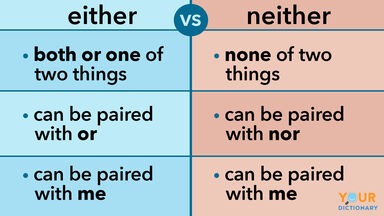
A function word introducing each except the first term or series, indicating none of them is true.
I am neither hungry nor thirsty nor tired.
Wiktionary
Synonyms:
- nor yet
- not-one
- not either
- not any
- and not
noun
A logical operator that consists of a logical OR followed by a logical NOT and returns a true value only if both operands are false.
American Heritage
(logic, electronics) Alternative form of NOR.
Wiktionary
abbreviation
Norman.
Webster's New World
North.
Webster's New World
Northern.
American Heritage
Norway.
Webster's New World
Norwegian.
Webster's New World
prefix
An unaltered parent compound.
Norepinephrine.
American Heritage
contraction
North.
Nor'western.
Webster's New World
affix
Normal.
Webster's New World
A compound lacking a particular radical, often methyl, when compared to another compound.
Norepinephrine vs. epinephrine.
Webster's New World
The straight-chain isomer.
Norleucine.
Webster's New World
Other Word Forms of Nor
Noun
Singular:
norPlural:
norsOrigin of Nor
-
Middle English ne no no1 or or or1
From American Heritage Dictionary of the English Language, 5th Edition
-
Possibly Blend of not and or; alternatively, short for "negation of OR".
From Wiktionary
-
Middle English perhaps ultimately from nor nor nor1
From American Heritage Dictionary of the English Language, 5th Edition
-
Middle English nauther, from nother. Cognate with neither.
From Wiktionary
Short for normal
From American Heritage Dictionary of the English Language, 5th Edition




Find Similar Words
Find similar words to nor using the buttons below.