neither

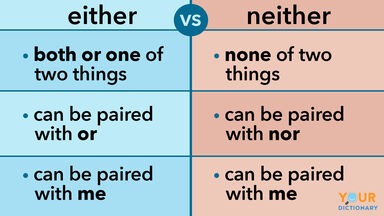
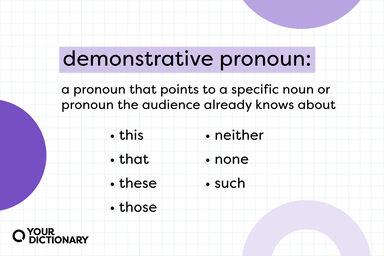
Neither means not one or the other of two things.

(pronoun)

An example of neither is when Jim did not go to the party and Sally did not go to the party.

Neither is defined as not one nor the other of two things actually happened or was true.

(conjunction)

An example of neither is when you are not hot and you are not cold.

YourDictionary definition and usage example. Copyright © 2013 by LoveToKnow Corp.

See neither in Webster's New World College Dictionary

adjective, pronoun

not one or the other (of two); not either: neither boy went; neither of them was invited

Origin: ME naither, altered (by assoc. with eyther, either) < nauther < OE na-hwæther, lit., not whether (see no, whether), not either of two

conjunction

  1. not either: the first element of the pair of correlatives neithernor, indicating negation of both parts of the statement [I could neither laugh nor cry]: neithernor is sometimes used to refer to more than two, although this use is objected to by some [the shop sells neither tobacco, beer, nor wine]
  2. nor yet; and … not: he does not smoke, neither does he drink

adverb

Informal, Dialectal any more than the other; also: used after negative expressions: if she won't go, I won't neither

See neither in American Heritage Dictionary 4

adjective
Not one or the other; not either: Neither shoe feels comfortable.
pron.
Not either one; not the one or the other: Neither of the twins is here. Neither will do. Neither of them is incorrect.
conjunction
  1. Not either; not in either case. Used with the correlative conjunction nor: Neither we nor they want it. She neither called nor wrote. I got neither the gift nor the card.
  2. Also not: If he won't go, neither will she.
adverb
Similarly not; also not: Just as you would not, so neither would they.

Origin:

Origin: Middle English

Origin: , from Old English nāwther, nāhwǽther (influenced by ǽghwǽther, ǽgther, either)

Origin: : , not; see ne in Indo-European roots

Origin: + hwǽther, which of two; see kwo- in Indo-European roots

.

Usage Note: According to the traditional rule, neither is used only to mean “not one or the other of two.” To refer to “none of several,” none is preferred: None (not neither) of the three opposition candidates would make a better president than the incumbent. • The traditional rule also holds that neither is grammatically singular: Neither candidate is having an easy time with the press. However, it is often used with a plural verb, especially when followed by of and a plural: Neither of the candidates are really expressing their own views. • As a conjunction neither is properly followed by nor, not or, in formal style: Neither prayers nor curses (not or curses) did any good. See Usage Notes at either, every, he1, none, nor1, or1.

Learn more about neither

link/cite print suggestion box