molecule Hear it!

molecule Definition

mol·ecule (mälə kyo̵̅o̅l′)

noun

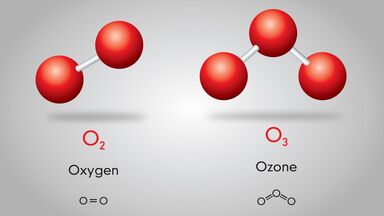
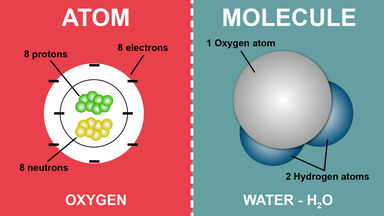
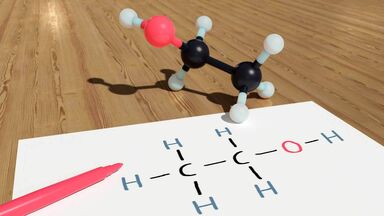
  1. the smallest particle of an element or compound that can exist in the free state and still retain the characteristics of the element or compound: the molecules of elements consist of one atom or two or more similar atoms; those of compounds consist of two or more different atoms
  2. a small particle

Etymology: Fr molécule < ModL molecula, dim. of L moles, a mass: see mole

molecule Synonyms

molecule

n.

  1. Unit

    particle, fragment, unit; see bit 1.

  2. Atom

    electron, ion, particle; see atom 2.

molecule Usage Examples

Converse of object

  • adsorb: Organic thin films: determination of orientation of adsorbed molecules.
  • rotate: That means that if you rotate the molecule, the text will also rotate.
  • signal: In order for a cell to use calcium as a signaling molecule, the cell must create calcium gradients across membranes.
  • ionize: By tuning the laser wavelength, it is possible to ionize molecules from selected energy levels.

Adjective modifier

  • chiral: There is thus a pressing need for a reliable means of identifying the hand of a chiral molecule.
  • organic: The first problem with drawing organic molecules is that I can't draw.
  • solvent: Difference density maps were used to locate the ordered solvent molecules, which were included in the refinement.
  • biological: All living organisms consist of cells; spherical aggregates of biological molecules surrounded by a thin membrane.
  • polar: The molecules thus formed are referred to as polar molecules.
  • reactive: One possibility being tested by the Glasgow lab is that very reactive molecules called free radicals may be involved.

Modifies a noun

  • inhibitor: This discovery may pave the way for using small molecule inhibitors of emerin to block HIV infection.
  • crystallography: This work mainly involved small molecule crystallography, physical chemistry and primitive computing.
  • fluorescence: References [ 1 ] Weiss S. , Measuring conformational dynamics of biomolecules by single molecule fluorescence spectroscopy.
  • therapeutics: Oxford BioMedica has also agreed to develop screens for small molecule therapeutics for RPR.

Noun used with modifier

  • adhesion: Moreover, we tested whether the neural adhesion molecule ( N-CAM ) would participate in this process.
  • DNA: Each chromosome is really a very long DNA molecule.
  • ammonia: An ammonia molecule removes a hydrogen ion from the -NH 3 + group in a reversible reaction.
  • reactant: Synchrotron infrared spectroscopy allowed the chemisorption bonds of both surface modifiers and reactant molecules to be probed with high spectral resolution.
  • hemoglobin: These bicarbonate ions immediately latch onto a section of the crocodiles ' hemoglobin molecules, forcing the hemoglobin to release its attached oxygen.
  • oxygen: Most of these free radicals are oxygen molecules or atoms.